


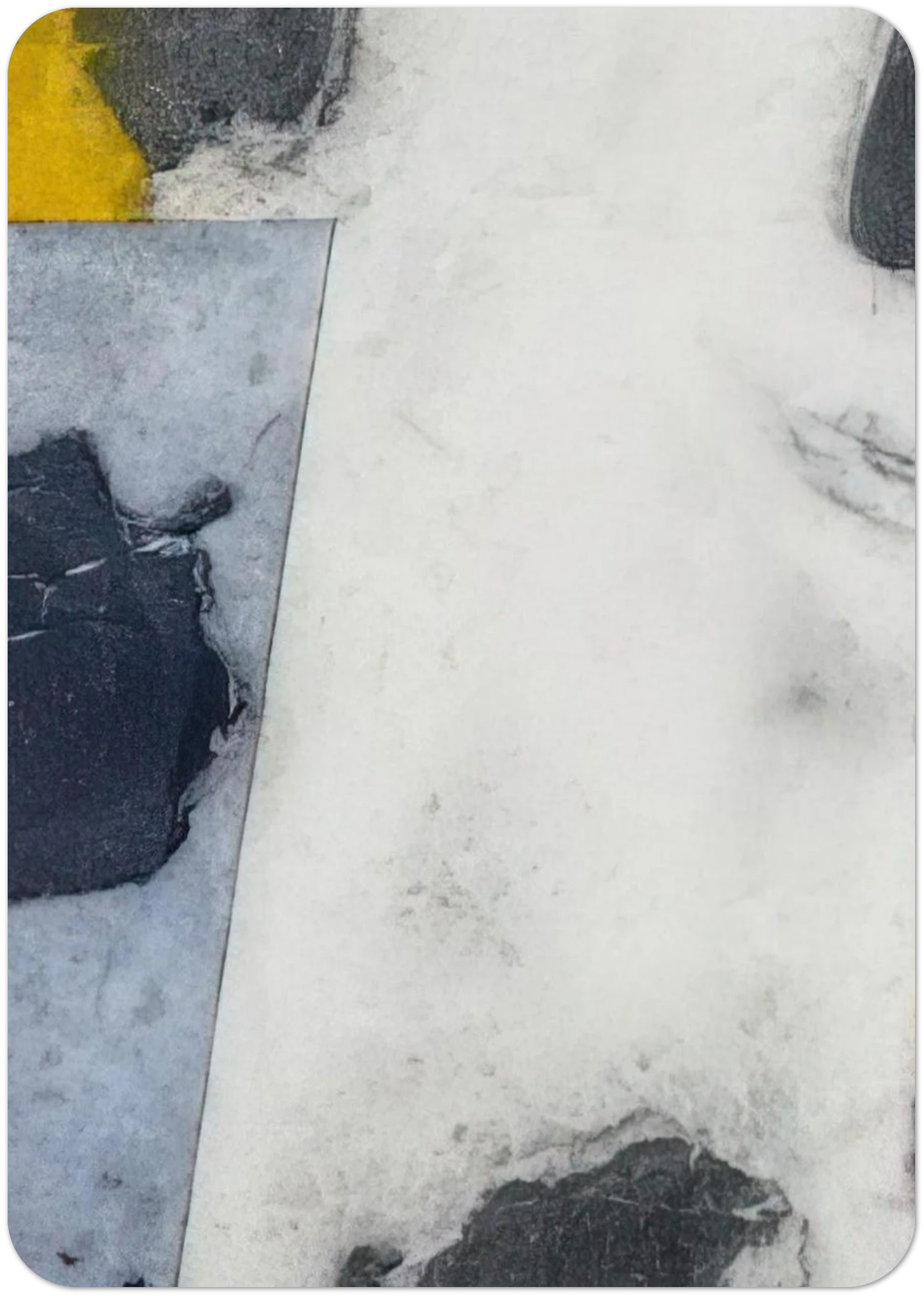
What is the quality of the paper used for these Brice Marden postcards?
We use premium 200 gsm (80 lb) paper with a thickness of 0.26 mm. This ensures a sturdy, professional feel, complemented by a smooth matte finish that eliminates glare, making them ideal for both archival display and personal correspondence.
How does the printing process ensure color accuracy for Marden's work?
RedKalion employs 12-color fine art printing technology. This advanced method captures the intricate tonal shifts and depth of Brice Marden’s linework much more accurately than standard 4-color commercial printing, ensuring a museum-quality reproduction.
Are the materials used for these postcards environmentally friendly?
Yes. These postcards are printed on FSC-certified paper, sourced from responsibly managed forests. We prioritize sustainability alongside print quality, ensuring our fine art reproductions are environmentally conscious and ethically produced.
What size are these postcards and can they be framed?
Each card is A6 size (10.5 x 14.8 cm / 4.1 x 5.8 inches). Their standard dimensions and high-quality matte finish make them exceptionally easy to frame for a curated, modern aesthetic in any small space.
How are the postcards packaged and shipped?
Our postcards are printed on demand to ensure the highest quality control and reduce waste. They are carefully packaged in a pack of 10 to prevent bending during transit, with no minimum order requirements.
What defines the artistic style of Brice Marden in #10 - 2011?
#10 - 2011 represents Marden's mastery of calligraphic abstraction. The piece features winding, overlapping lines that create a sense of organic movement and spatial depth, moving away from his earlier minimalist monochromatic panels into a more fluid, lyrical expression.
Why is #10 - 2011 considered a significant part of Marden's later career?
This work reflects Marden's fascination with the 'Cold Mountain' style and Chinese calligraphy. It demonstrates his ability to maintain minimalist restraint while introducing a complex, layered complexity that became a hallmark of his late-career evolution in contemporary art.