
Discover Unlimited Art Possibilities
At RedKalion, you can find virtually any artwork from any artist, available in a wide range of sizes to perfectly match your space.
If you didn’t find what you’re looking for, contact us at support@redkalion.com . We will source any artwork and produce it in any size and format you need, including art prints, posters, canvas, framed pieces, framed canvas, and more.
For dedicated art enthusiasts, we also offer handcrafted replicas of any artwork, carefully painted by highly skilled artists using traditional techniques.
For custom requests, contact us at support@redkalion.com .
What is the paper quality of this Alberto Burri print?
We use Master's Edition archival paper, a museum-quality 250 gsm (110 lb) stock that provides a premium, heavy-weight feel suitable for high-end gallery displays.
How does the matte finish enhance the artwork?
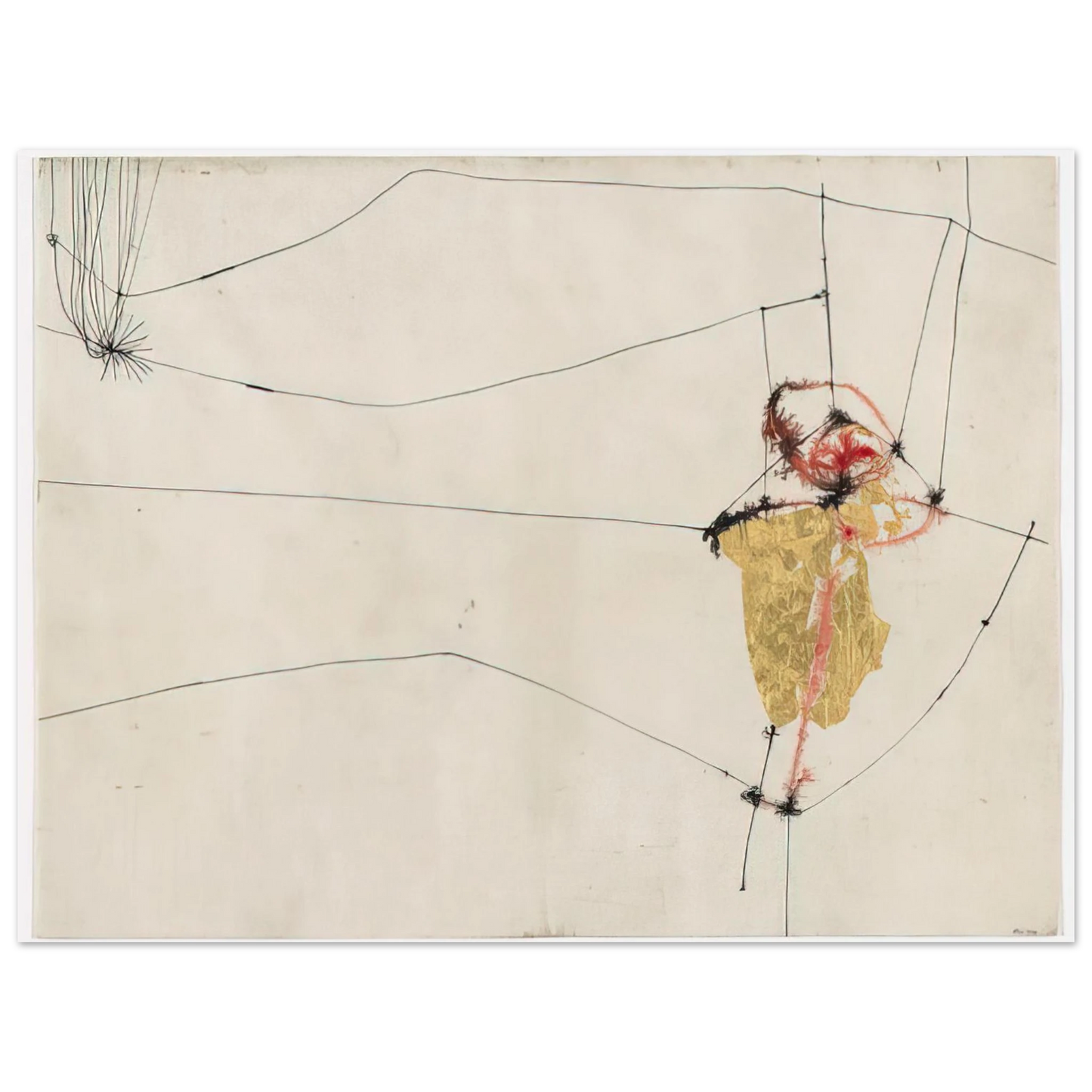
The matte, uncoated natural white finish eliminates reflections and glare, allowing the viewer to appreciate the subtle textures and depth inherent in Burri's 1955 abstract composition.
Will this fine art poster yellow over time?
No. Our prints are made using acid-free paper with a pH above 7, which prevents yellowing and preserves the archival integrity of the reproduction for generations.
Is the paper used for this print sustainable?
Yes, all prints from RedKalion are produced on FSC-certified paper, ensuring that your art meets the highest environmental and social responsibility standards.
What are the shipping and order requirements?
RedKalion offers on-demand printing with no minimum order requirements. Each piece is meticulously printed and shipped to ensure it arrives in pristine, museum-ready condition.
What is the historical significance of the "17 variazioni" title?
The title refers to a collaborative project between Burri and poet Emilio Villa, bridging the gap between visual abstraction and phonetic ideology during the Italian post-war avant-garde era.
How does this work reflect Burri's role in the Art Informel movement?
Created in 1955, this piece showcases Burri's focus on "the matter" (la materia), prioritizing texture and material presence over traditional figurative representation, a hallmark of Art Informel.