
What is the paper quality of this René Magritte print?
This reproduction is printed on 250 gsm (110 lb) archival museum-quality paper. The natural white, matte finish ensures vibrant colors and deep blacks without glare, meeting the highest standards for fine art collectors.
Does the frame come ready to hang?
Yes. Your framed René Magritte print arrives with a pre-installed hanging kit. The 70x100 cm frame is designed for immediate mounting, allowing for a seamless transition from box to wall.
How is the artwork protected during shipping and display?
We use shatterproof plexiglass to protect the print surface. This provides the clarity of glass with added durability, ensuring your artwork remains safe during transit and throughout its life on your wall.
What kind of wood is used for the black frame?
The frame is constructed from responsibly sourced, solid oak and ash wood. It features a 20mm (0.79") thickness and width, offering a premium feel and superior structural integrity compared to thinner alternatives.
Is the paper environmentally friendly?
Absolutely. We prioritize sustainability by using FSC-certified paper or equivalent certifications. This ensures that your museum-quality reproduction is as kind to the planet as it is beautiful in your home.
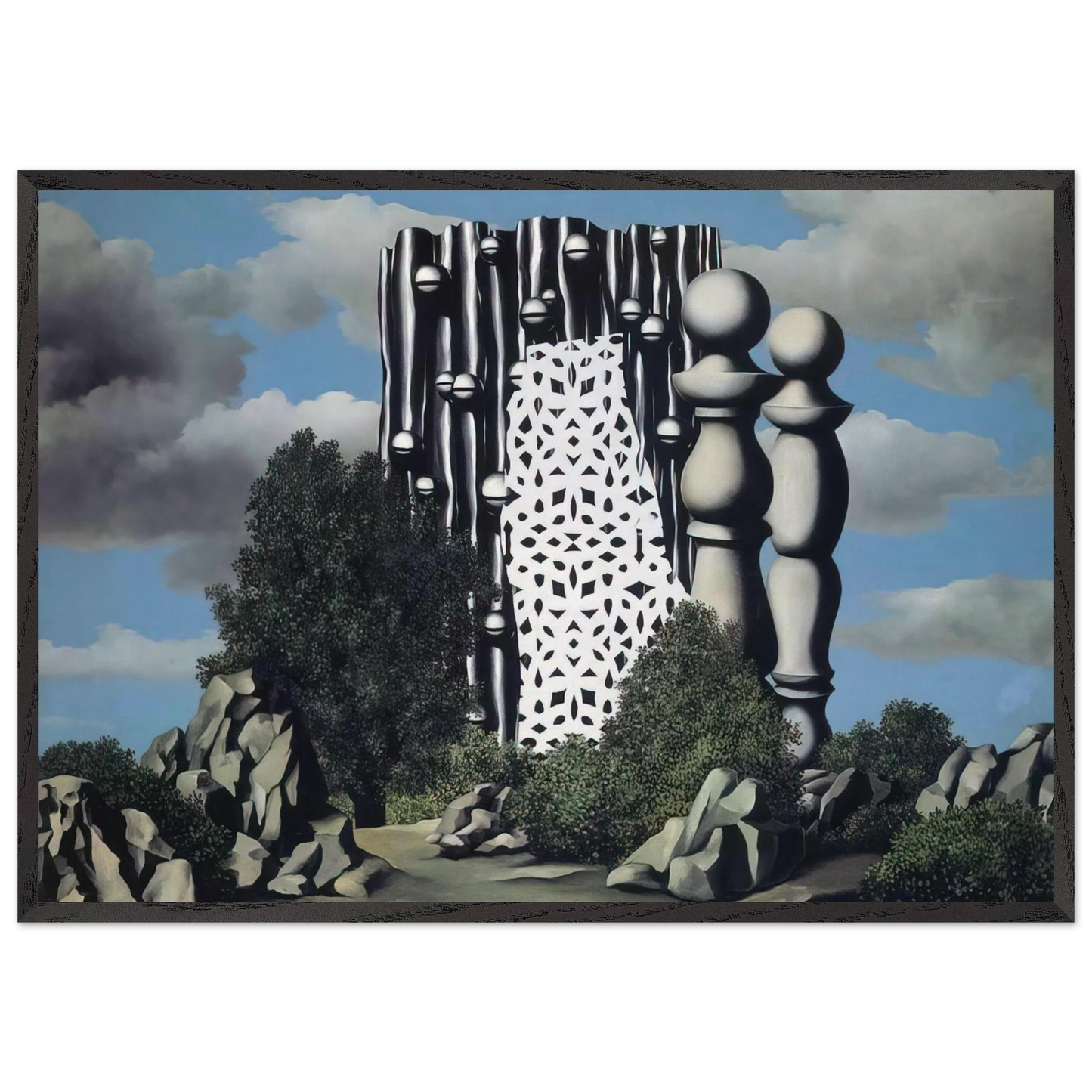
What is the significance of the bells in Magritte's Annunciation?
The 'grelots' (sleigh bells) are a recurring motif in Magritte's work, representing the mystery of the everyday. In Annunciation, they replace traditional figures to challenge the viewer's perception of reality and sound.
Where was the original Annunciation (1930) created?
Magritte painted this piece in 1930, during a highly productive period in Brussels after his return from Paris. It marks his mastery of creating 'impossible' landscapes using precisely rendered, realistic objects.