
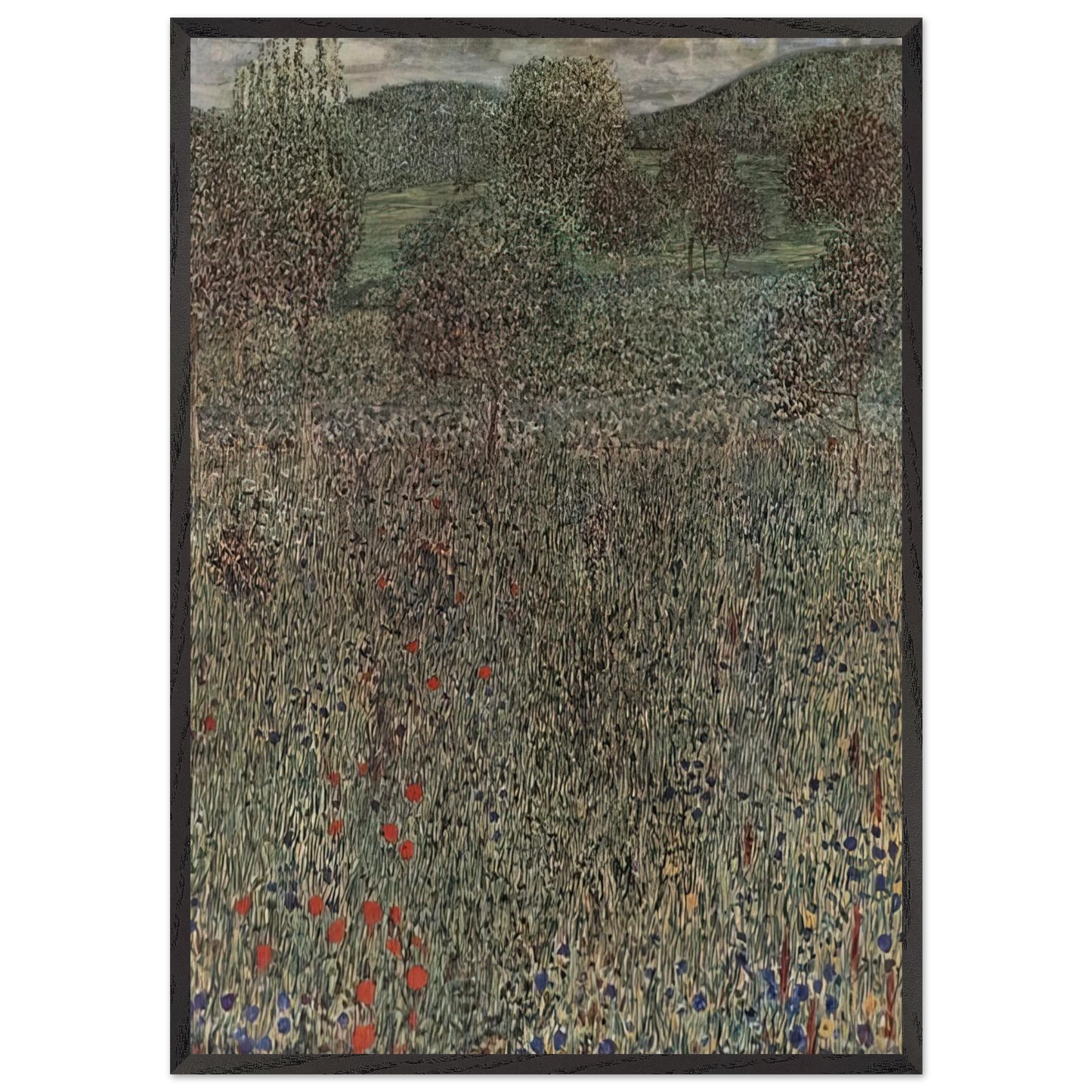
What materials are used for the Blooming Field print?
We use 250 gsm (110 lb) archival museum-quality paper. The paper is natural white, uncoated, and matte-finished, ensuring the vibrant colors of Klimt's work remain rich and fade-resistant over time.
Is the frame durable and sustainably sourced?
Yes, our frames are made from FSC-certified ash and oak wood. We use a premium 20mm (0.79") thick profile, which is wider and sturdier than standard 14mm gallery frames.
Does the framed art print arrive ready to hang?
Absolutely. Every RedKalion framed art print includes a pre-installed hanging kit. Your artwork is ready to be mounted on your wall the moment it arrives.
How is the artwork protected during shipping and display?
We protect the print with shatterproof plexiglass, which offers superior clarity and safety compared to standard glass. All items are shipped in specialized protective packaging to ensure safe delivery.
What is the archival life of this museum-quality reproduction?
Using 250 gsm archival paper and museum-grade inks, our prints are designed to last for decades without yellowing or fading, maintaining their aesthetic value as a true heirloom piece.
Why did Gustav Klimt choose to paint landscapes like Blooming Field?
Klimt turned to landscapes during his summer retreats to Attersee. They served as an experimental space where he could explore rhythmic patterns and color theory away from his portrait commissions.
What art movement does Blooming Field belong to?
It is a hallmark of the Vienna Secession. This piece showcases Klimt’s transition toward Symbolism and a decorative, mosaic-like style that emphasizes the surface texture over realistic depth.