
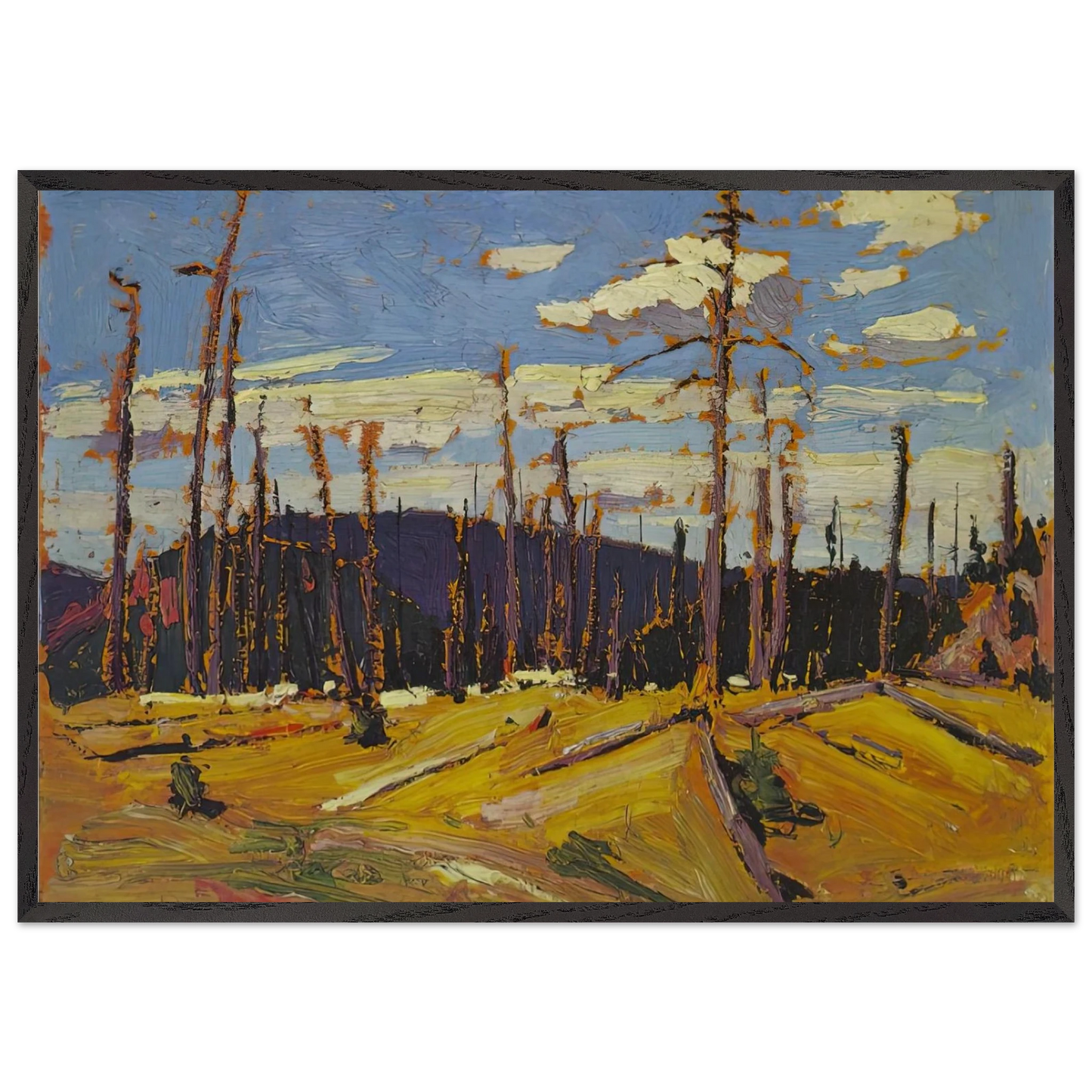
What defines the quality of this Tom Thomson fine art print?
Our prints use 250 gsm museum-quality, archival paper. This heavy-duty, natural white paper is acid-free and uncoated, ensuring your Tom Thomson reproduction maintains its vibrant colors and structural integrity without yellowing over time.
Is the black wooden frame durable?
Yes, each frame is crafted from responsibly sourced oak or ash. At 20mm (0.79") thick, it is wider and more robust than standard frames, providing a premium aesthetic and enhanced durability for large-scale 70x100 cm prints.
How is the artwork protected during shipping and display?
We use shatterproof plexiglass to protect the print from UV damage and physical impact. The artwork is securely packaged and arrives ready-to-hang with all necessary hardware included for a seamless installation.
Is the paper used for RedKalion prints sustainable?
Absolutely. We prioritize the environment by using FSC-certified paper and materials or local equivalents. This ensures that your high-end art print supports responsible forest management and sustainability.
Will the colors of the print fade over time?
No. By utilizing archival-grade paper and high-pigment printing processes, RedKalion prints are designed to resist fading, ensuring the dramatic pinks and charred blacks of Thomson’s work remain vivid for decades.
What is the historical significance of Burnt Over Forest (1916)?
Painted in Algonquin Park, this work showcases Tom Thomson's shift toward Post-Impressionism. It highlights his unique ability to find vibrant color and architectural beauty in the rugged, often scarred landscapes of the Canadian North.
What technique did Tom Thomson use for this piece?
Thomson primarily painted "en plein air," using bold, directional brushstrokes and a heightened color palette. This reproduction captures those tactile details, reflecting his transition from commercial illustrator to a visionary fine artist.