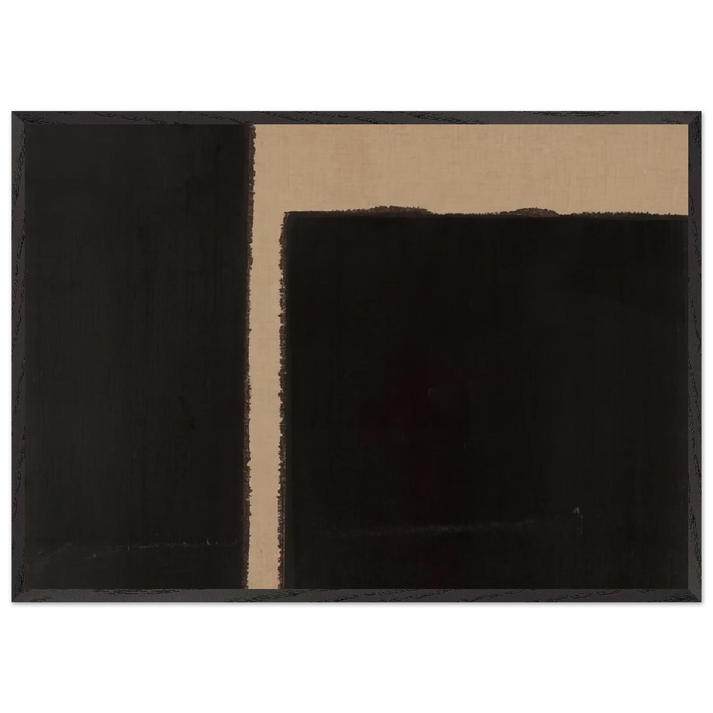

Discover Unlimited Art Possibilities
At RedKalion, you can find virtually any artwork from any artist, available in a wide range of sizes to perfectly match your space.
If you didn’t find what you’re looking for, contact us at support@redkalion.com . We will source any artwork and produce it in any size and format you need, including art prints, posters, canvas, framed pieces, framed canvas, and more.
For dedicated art enthusiasts, we also offer handcrafted replicas of any artwork, carefully painted by highly skilled artists using traditional techniques.
For custom requests, contact us at support@redkalion.com .
What defines the quality of this Yun Hyong-keun print?
This reproduction utilizes archival-grade 250 gsm (110 lb) natural white paper with a matte finish. This ensures museum-quality depth, color accuracy, and long-term durability, meeting the highest standards for fine art collectors.
How is the artwork framed?
The print is housed in a 20mm (0.79") thick black frame made from responsibly sourced ash and oak. It features shatterproof plexiglass for optimal protection and visual clarity.
Is the print ready to hang upon arrival?
Yes. Every RedKalion framed art print includes a professional hanging kit. The 70x100 cm frame is constructed for stability and ease of installation directly on your wall.
How does RedKalion ensure the sustainability of its products?
We prioritize environmental responsibility by using FSC-certified or equivalent sustainably sourced wood and paper materials, ensuring your fine art print supports ethical forestry practices.
What is the archival lifespan of this reproduction?
Printed on acid-free, 0.29 mm thick museum-quality paper, this reproduction is designed to resist yellowing and fading, preserving Yun Hyong-keun’s somber tones for generations.
What is the significance of the colors Burnt Umber and Ultramarine Blue?
In Yun's philosophy, Burnt Umber represents the earth, and Ultramarine Blue represents the heavens. Their mixture creates a dark, void-like color that symbolizes the intersection of the terrestrial and the celestial.
What was Yun Hyong-keun’s 'Dansaekhwa' technique?
Yun applied highly diluted layers of oil paint to raw surfaces, allowing the pigment to bleed naturally. This 'non-action' approach creates organic edges that reflect meditation and the passage of time.