


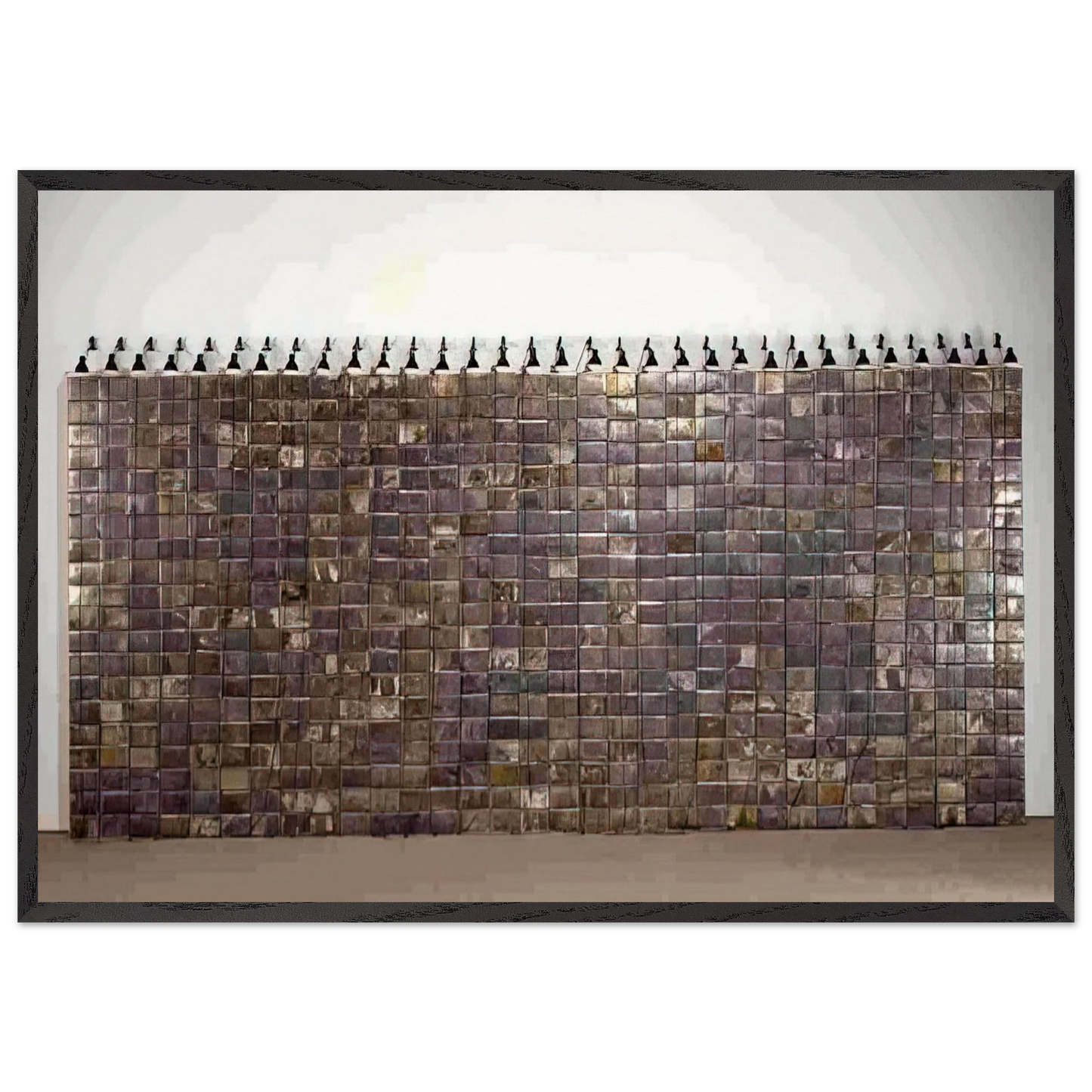
What defines the quality of this Christian Boltanski print?
RedKalion utilizes 250 gsm archival museum-quality paper. This ensures that the deep blacks and subtle grays of Boltanski’s 1989 work remain vibrant and resist fading for decades, making it a true investment in fine art.
Is the frame included with the Archives 1989 artwork?
Yes, this piece comes fully framed in a 20mm thick black ash or oak wood frame. It is wider than standard frames, providing a premium, robust aesthetic that is ready to hang immediately.
How is the artwork protected during shipping and on the wall?
Each print is protected by shatterproof, transparent plexiglass. This provides the clarity of glass with significantly higher durability, ensuring your museum-quality reproduction arrives safely and remains protected in your home.
Are the materials used in the frame and paper sustainable?
Absolutely. We use FSC-certified paper and responsibly sourced wood for our frames. RedKalion is committed to providing premium art reproductions that respect both cultural heritage and environmental sustainability.
What is the significance of the Archives series by Christian Boltanski?
Boltanski's Archives series investigates the concept of death and the preservation of identity. By using photographic portraits, he transforms individual memories into a collective archive, questioning how we remember those who have passed.
Why is 1989 considered a pivotal year for Boltanski’s work?
1989 marked a period where Boltanski moved toward large-scale installations involving metal boxes and industrial lights. This era solidified his reputation for using mundane materials to evoke profound emotions regarding the Holocaust and human frailty.
How do I maintain the archival longevity of this print?
Thanks to the 250 gsm archival paper and shatterproof plexiglass, maintenance is minimal. Keep the print away from direct, harsh sunlight and wipe the frame with a dry microfiber cloth to maintain its pristine condition.