Ga direct naar productinformatie
1 van 1

RedKalion

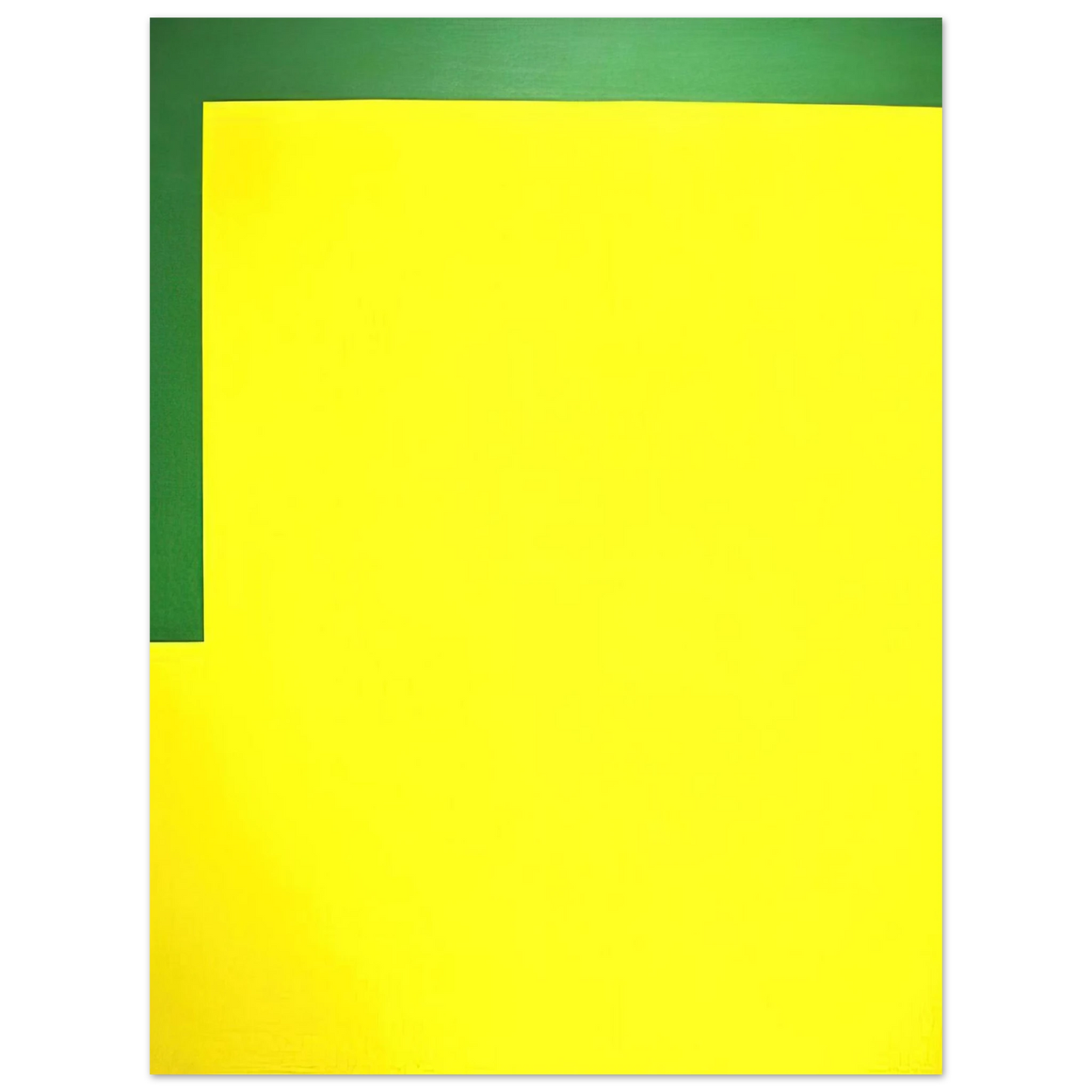
Carmen Herrera - More yellow, less green - 1989 75x100 cm / 30x40inches Fine Art Poster

Carmen Herrera - More yellow, less green - 1989 75x100 cm / 30x40inches Fine Art Poster

Normale prijs $207.99 USD
Normale prijs $311.00 USD Aanbiedingsprijs $207.99 USD
Aanbieding Uitverkocht
Aantal

An Icon of Hard-Edge Abstraction: Carmen Herrera's 'More yellow, less green'

Experience the precision and rhythmic energy of Carmen Herrera, a pioneer of geometric abstraction whose recognition by the art world arrived late but with undeniable force. Created in 1989, More yellow, less green is a masterful demonstration of Herrera's philosophy that 'less is more.' This fine art print captures the striking juxtaposition of color and form, where the tension between the hues defines the structure of the space itself.

As a key figure in the Minimalist and Hard-edge movements, Herrera’s work is characterized by a quest for clarity. In this piece, the vibrant interplay of yellow and green suggests a mathematical yet deeply intuitive balance. This museum-quality reproduction allows collectors to bring the sophisticated aesthetic of high-modernism into their personal environment, elevating any room with its bold, architectural presence.

Premium RedKalion Craftsmanship

At RedKalion, we curate our prints for the discerning eye. This archival fine art poster is produced to the highest standards of the industry, ensuring that the vibrancy and sharp lines of Herrera’s original vision are preserved for generations. Each print features:

  • Master's Edition Paper: A heavy 250 gsm (110 lb) archival paper with a thickness of 0.29 mm, providing a substantial, premium feel.
  • Museum-Quality Texture: A luxurious matte, uncoated finish in natural white (off-white) that eliminates glare and enhances color depth.
  • Archival Longevity: Acid-free paper (pH above 7) prevents yellowing or degradation, ensuring your investment remains pristine.
  • Sustainable Excellence: We utilize FSC-certified paper, supporting responsible forest management with every print.

By choosing a RedKalion reproduction, you are investing in an archival masterpiece that endures, bringing the transformative power of 20th-century abstraction into the modern home.

Alle details bekijken
What kind of paper is used for this Carmen Herrera print?

We use Master's Edition archival paper. It is a 250 gsm (110 lb) museum-quality paper with a thickness of 0.29 mm, featuring a luxurious matte, uncoated, natural white finish for an authentic fine art aesthetic.

Will the colors in 'More yellow, less green' fade over time?

No. Our prints are produced on acid-free paper with a pH level above 7. This archival quality prevents yellowing and ensures that the vibrant pigments of the artwork remain stable for decades.

How is the artwork shipped and are there minimum orders?

There are no minimum orders at RedKalion. Each print is produced and shipped on demand in protective, high-quality packaging to ensure it arrives in gallery-perfect condition at your doorstep.

Is the production of this fine art poster eco-friendly?

Yes. We use FSC-certified paper, which ensures the materials are sourced from responsibly managed forests. Our on-demand fulfillment model also reduces waste by printing only what is ordered.

What are the physical dimensions and weight of the print?

This specific print measures 75x100 cm (30x40 inches). The paper weight is a robust 250 gsm (110 lb), providing the structural integrity required for a large-format museum-quality reproduction.

What is the significance of the 'More yellow, less green' period in Herrera's career?

During the late 1980s, Herrera refined her 'Hard-edge' style, focusing on the reduction of color palettes to create maximum visual impact through minimal geometric interaction, a hallmark of her late-career mastery.

What defines the Hard-edge abstraction seen in this work?

Hard-edge abstraction is defined by abrupt transitions between color areas, often with sharp, clear edges. Herrera’s work utilizes this to create a sense of movement and architectural depth without using traditional perspective.