
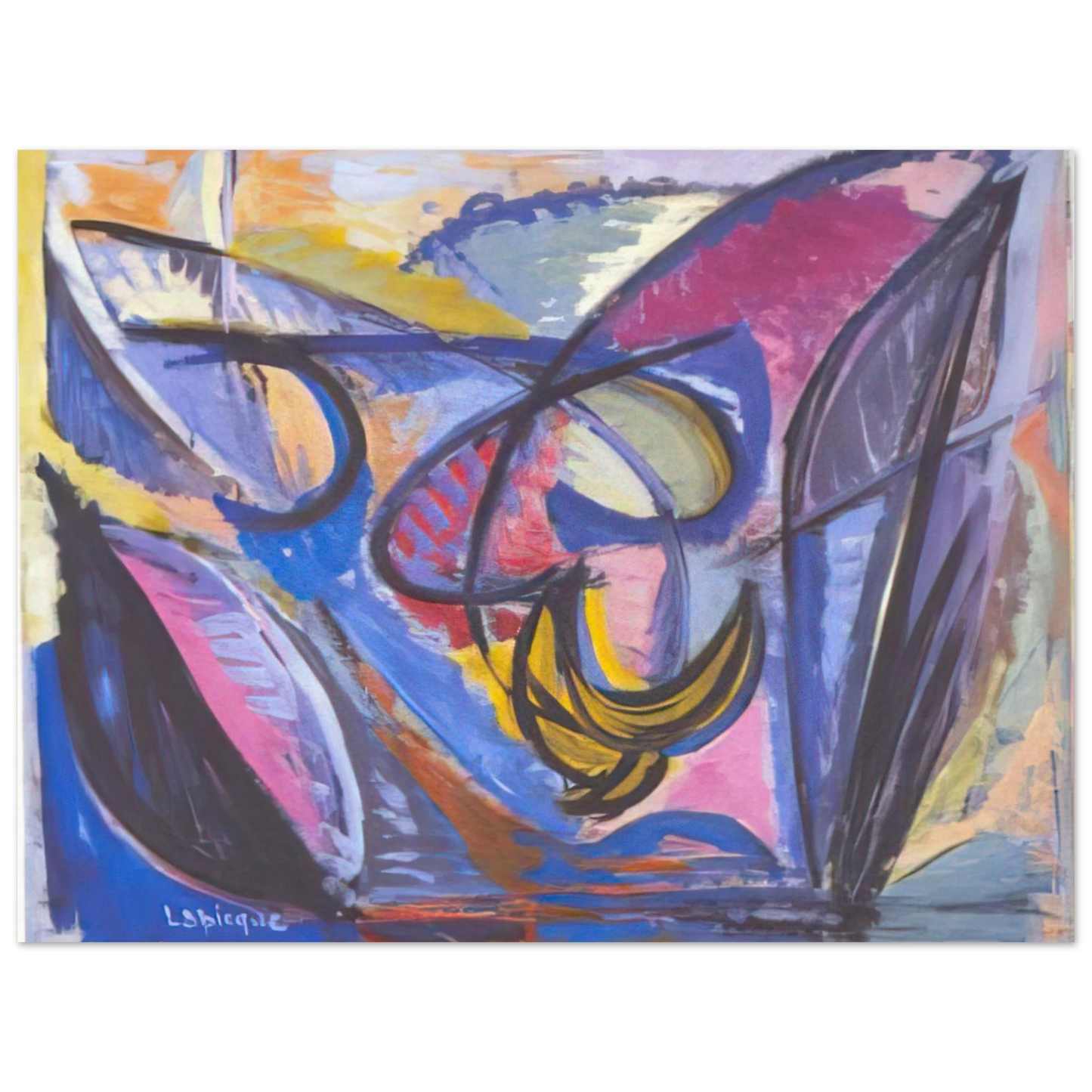
What makes the "Rencontre dans la campagne" print museum-quality?
RedKalion uses 250 gsm Master's Edition archival paper with an uncoated matte finish. This natural white paper ensures rich color reproduction and a sophisticated texture, mirroring the quality found in world-class art galleries.
Will the colors of this Charles Lapicque print fade over time?
No. Our prints utilize acid-free paper with a pH above 7. This archival-grade material prevents yellowing and degradation, ensuring that Lapicque's complex color palette remains vibrant for decades.
How is the artwork shipped?
Each fine art poster is printed on demand to ensure freshness and quality. We ship globally in secure, protective packaging with no minimum order requirements, ensuring your masterpiece arrives in perfect condition.
Is the paper used for this reproduction sustainable?
Yes. RedKalion prioritizes environmental responsibility. We use FSC-certified paper, which guarantees that the materials are sourced from responsibly managed forests that provide environmental, social, and economic benefits.
What are the physical dimensions and weight of the print?
This specific edition measures 75x100 cm (30x40 inches). It is printed on 250 gsm (110 lb) paper with a thickness of 0.29 mm (11.4 mils), providing a robust and premium feel.
Why is the year 1944 significant for Charles Lapicque's style?
In 1944, Lapicque was refining his "spatial color" theory. During this period, he broke from traditional perspective, using color to define depth in ways that challenged both Cubism and Fauvism, making "Rencontre dans la campagne" a key historical work.
Who was Charles Lapicque in the context of French art history?
Charles Lapicque was a polymath and artist who bridged science and art. He was a central figure in the "Nouvelle École de Paris," known for his intellectual approach to landscape and his influence on postwar abstraction.