Ga direct naar productinformatie
1 van 1

RedKalion

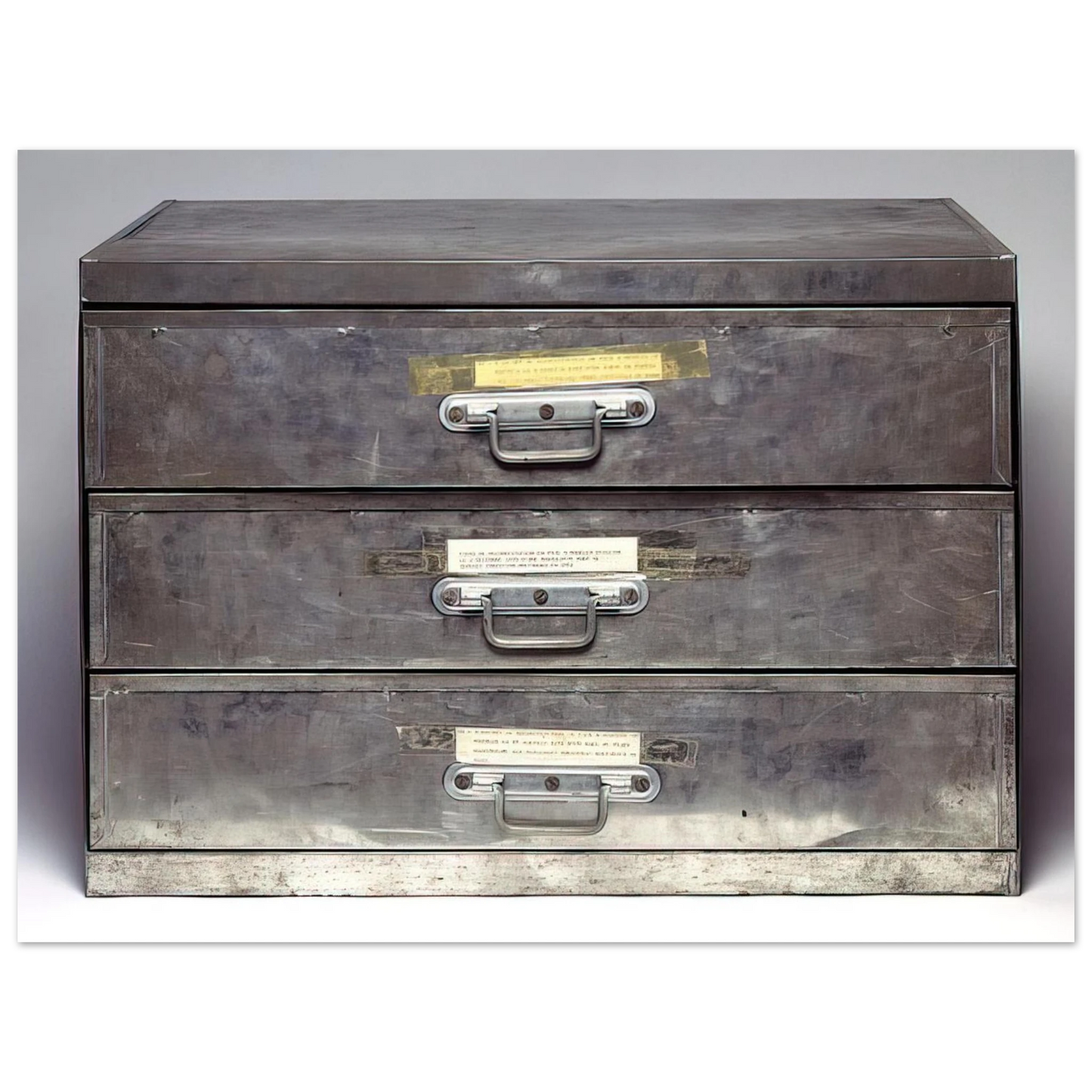
Christian Boltanski - ATTEMPT AT RECREATION THREE DRAWERS 1971 75x100 cm / 30x40inches Fine Art Poster

Christian Boltanski - ATTEMPT AT RECREATION THREE DRAWERS 1971 75x100 cm / 30x40inches Fine Art Poster

Normale prijs $207.99 USD
Normale prijs $311.00 USD Aanbiedingsprijs $207.99 USD
Aanbieding Uitverkocht
Aantal

The Poetics of Memory: Christian Boltanski's 1971 Masterpiece

Christian Boltanski’s Attempt at Recreation Three Drawers (1971) stands as a seminal work in the landscape of contemporary conceptual art. This piece captures Boltanski's profound exploration of childhood, memory, and the ephemeral nature of human existence. By utilizing a clinical, almost archaeological aesthetic, the artist attempts to reconstruct personal history through the arrangement of modest, everyday objects, inviting the viewer into a haunting dialogue between presence and loss.

As a leading figure in post-war French art, Boltanski's 1971 series represents his transition into 'individual mythology.' This specific fine art print allows collectors to appreciate the intricate details of his archival approach, where the arrangement of drawers serves as a metaphor for the organized yet fragmented way we store our past. It is an essential acquisition for those who value art that functions as both a visual experience and a philosophical inquiry.

Museum-Quality Reproduction for Discerning Collectors

RedKalion is proud to offer this museum-quality reproduction of Boltanski's work, curated to meet the highest standards of the global art market. We utilize Master's Edition archival paper, chosen specifically for its ability to render deep shadows and subtle tonal shifts without the glare of traditional photographic papers. This Christian Boltanski fine art poster is more than a print; it is a legacy piece designed to endure for generations.

  • Paper Quality: Master's Edition archival, museum-quality for a tactile, luxurious feel.
  • Finish: Matte, uncoated, natural white (off-white) to preserve the artist's original intent.
  • Longevity: Acid-free (pH above 7) composition ensures the paper will not yellow or degrade.
  • Specifications: Heavyweight 250 gsm (110 lb) paper with a thickness of 0.29 mm (11.4 mils).
  • Sustainability: Printed on FSC-certified paper, reflecting a commitment to environmental stewardship.

By choosing RedKalion, you are investing in an archival masterpiece that elevates your space with the authority of a gallery-curated object. Our on-demand printing process ensures that each piece is handled with the precision and care that Boltanski’s work demands.

Alle details bekijken
What defines the quality of this Christian Boltanski print?

This print is produced on our Master's Edition archival paper. It is a museum-quality, natural white, matte paper that provides a luxurious texture and superior color accuracy for Christian Boltanski's monochromatic and conceptual works.

Is the paper used for this reproduction sustainable?

Yes, RedKalion utilizes FSC-certified paper or equivalent certifications depending on regional availability. This ensures that your museum-quality reproduction supports responsible forest management and environmental sustainability.

How does RedKalion ensure the longevity of the artwork?

We use acid-free paper with a pH level above 7. This archival standard prevents the paper from yellowing or becoming brittle over time, ensuring your investment remains in pristine condition for decades.

What are the exact dimensions and weight of the poster?

This specific edition measures 75x100 cm (30x40 inches). It is printed on 250 gsm (110 lb) paper with a thickness of 0.29 mm, providing a robust, premium feel compared to standard posters.

How is the order fulfilled and shipped?

Each Christian Boltanski print is produced on demand with no minimum order requirements. It is carefully packaged and shipped globally to ensure it arrives in gallery-ready condition without unnecessary environmental waste.

What is the significance of the "Three Drawers" in Boltanski’s work?

In "Attempt at Recreation Three Drawers," Boltanski uses the drawer as a metaphor for the human mind and memory. It reflects his 1970s focus on reconstructing his own childhood through organized, archival-style presentations.

Why does Boltanski use archival aesthetics in "Attempt at Recreation"?

Boltanski employs a pseudo-scientific or museum-like aesthetic to highlight the tension between the cold, objective act of cataloging and the warm, subjective nature of personal human memories.