
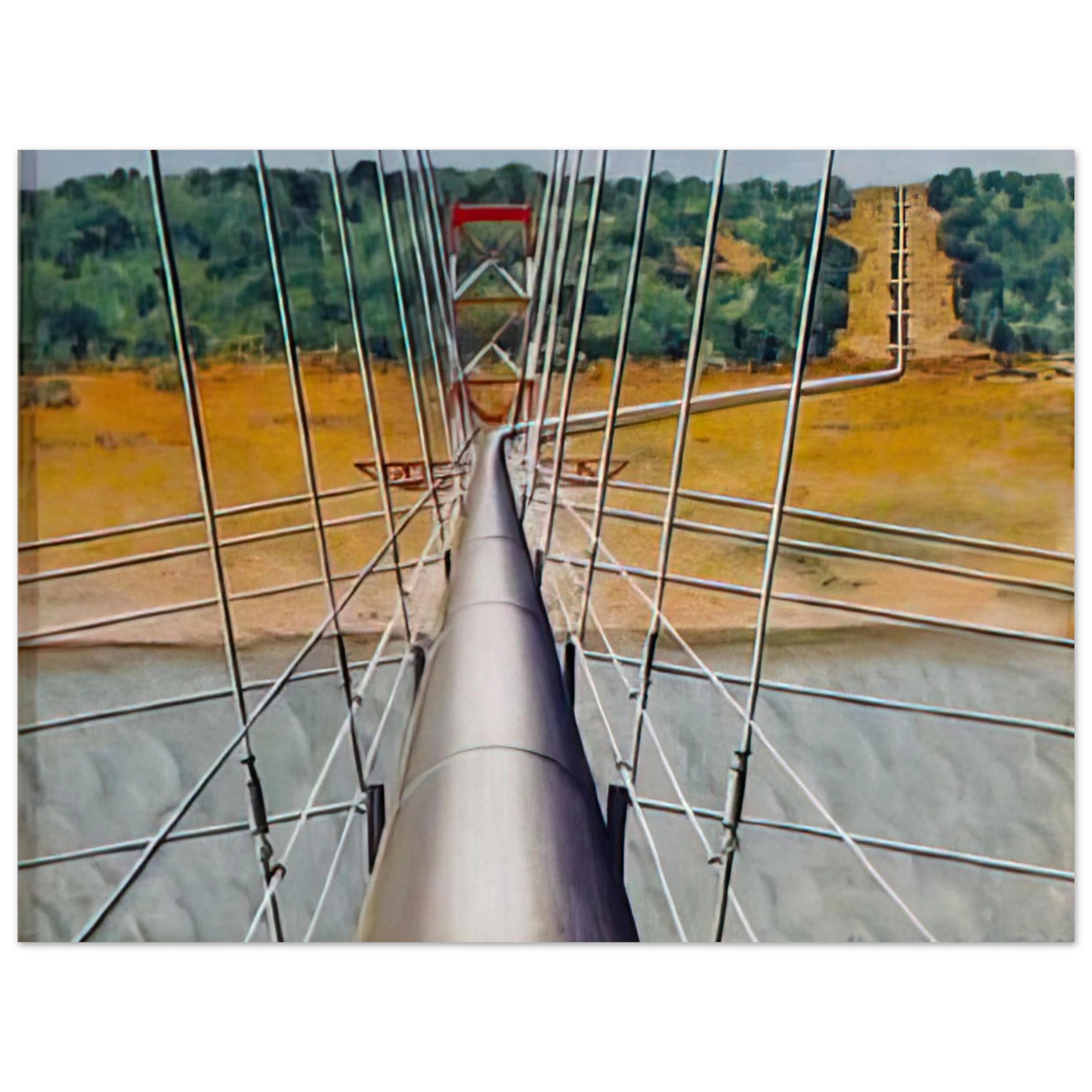
What is the historical context of Clarence Holbrook Carter's 'Pipeline'?
Painted in 1955, 'Pipeline' reflects the post-war American fascination with industrial infrastructure. Carter used his 'Magic Realism' style to transform these massive steel structures into symbolic, almost metaphysical forms that represent the hidden power and connectivity of the modern world.
What artistic style does 'Pipeline' represent?
This piece is a premier example of American Magic Realism. It combines the clean, sharp lines of Precisionism with a dreamlike, slightly surreal atmosphere, making industrial subjects appear monumental and full of silent mystery.
What kind of paper is used for this fine art reproduction?
We use Master's Edition archival paper. It is a 250 gsm (110 lb) museum-quality substrate with a matte, uncoated finish and a natural white tone, providing a luxurious, glare-free surface for high-end art display.
How does the archival quality prevent the print from aging?
Our paper is acid-free with a pH level above 7. This chemical balance prevents the paper from yellowing or becoming brittle, ensuring the vibrant contrast of the Clarence Holbrook Carter reproduction lasts for generations.
Are the materials used in the print environmentally friendly?
Yes, RedKalion is committed to sustainability. All prints are produced on FSC-certified paper, which guarantees that the materials are sourced from responsibly managed forests that provide environmental and social benefits.
How is my order handled and shipped?
Each print is produced on demand to ensure maximum quality control. We have no minimum order requirements, and our specialized packaging ensures your museum-quality poster arrives in perfect condition, ready for framing.
Is there a minimum order requirement for this museum-quality print?
No, there are no minimum orders. At RedKalion, we fulfill every request on demand, allowing private collectors and interior designers to acquire individual archival prints as needed with no overhead or extra fees.