

RedKalion
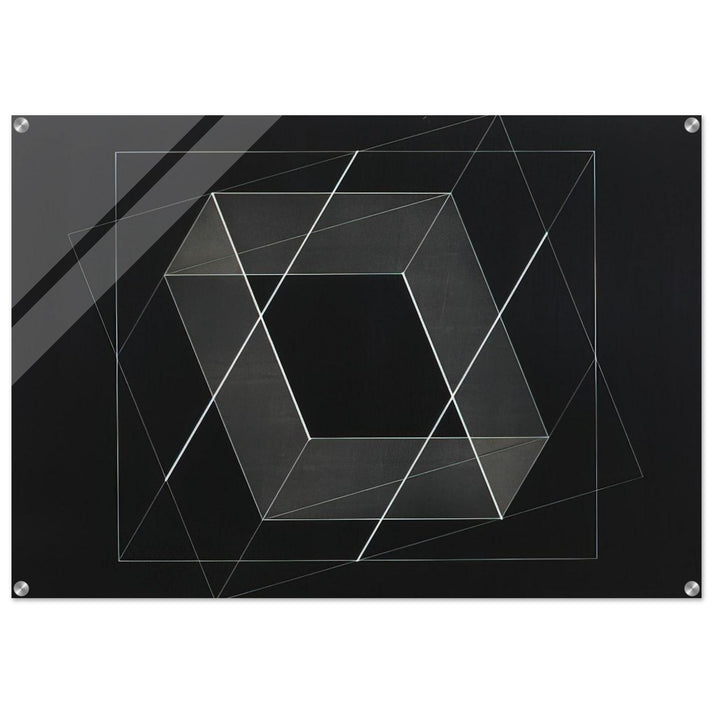
F NO 13 MULTI MOBILE 1952 - Josef Albers Acrylic Print - 70x100 cm / 28x40″ inches | Josef Albers Wall Art | Josef Albers Prints
F NO 13 MULTI MOBILE 1952 - Josef Albers Acrylic Print - 70x100 cm / 28x40″ inches | Josef Albers Wall Art | Josef Albers Prints
Kan beschikbaarheid voor afhalen niet laden
F NO 13 MULTI MOBILE 1952 - Josef Albers Acrylic Print
Immerse yourself in the geometric precision and chromatic brilliance of Josef Albers' F NO 13 MULTI MOBILE 1952, now available as a museum-quality acrylic print from RedKalion. This iconic work from Albers' "Structural Constellations" series exemplifies his lifelong exploration of color theory and spatial relationships, where intersecting lines and vibrant hues create a dynamic, optical interplay that challenges perception. Crafted with archival-grade materials, this 70x100 cm (28x40 inch) reproduction captures every subtle nuance of the original, offering a sophisticated centerpiece for modern interiors.
RedKalion's premium acrylic print elevates this masterpiece with a 4mm (0.15") acrylic face, ensuring a sleek, vibrant, and durable finish that resists fading and scratches. The design features straight-cut corners for a contemporary aesthetic, with transparent backgrounds defaulting to white to enhance visual clarity. Each print includes a complete hanging kit with hardware, screws, and pre-drilled screw holes at each corner (14mm/0.55" from the edge, 8mm/0.31" diameter, 15mm/0.6" screw head) for effortless installation. As a trusted curator of fine art reproductions, RedKalion combines historical authenticity with cutting-edge craftsmanship, allowing you to own a piece of art history that endures.
Did you know? Josef Albers, a pivotal figure in the Bauhaus movement, developed his "Homage to the Square" series alongside works like this, using meticulous layering to study how colors interact and transform based on their context—a principle vividly embodied in F NO 13 MULTI MOBILE 1952.
- Dimensions: 70x100 cm / 28x40 inches
- Material: 4mm (0.15") archival acrylic for vibrant color and durability
- Design: Straight-cut corners; transparent backgrounds set to white
- Included: Hanging kit with hardware, screws, and pre-drilled holes
- Quality: Museum-grade reproduction on premium acrylic
Elevate your space with this archival masterpiece, where Albers' innovative vision meets RedKalion's commitment to excellence in fine art prints.


Discover Unlimited Art Possibilities
At RedKalion, you can find virtually any artwork from any artist, available in a wide range of sizes to perfectly match your space.
If you didn’t find what you’re looking for, contact us at support@redkalion.com . We will source any artwork and produce it in any size and format you need, including art prints, posters, canvas, framed pieces, framed canvas, and more.
For dedicated art enthusiasts, we also offer handcrafted replicas of any artwork, carefully painted by highly skilled artists using traditional techniques.
For custom requests, contact us at support@redkalion.com .
What is the historical significance of Josef Albers' F NO 13 MULTI MOBILE 1952?
This artwork is part of Albers' "Structural Constellations" series, reflecting his Bauhaus-influenced exploration of color theory and geometric abstraction in mid-20th century modern art.
How does the acrylic material enhance this fine art print?
The 4mm (0.15") archival acrylic provides a sleek, vibrant finish with UV resistance, ensuring durability and color fidelity for this museum-quality reproduction.
What are the dimensions and hanging details for this wall art?
It measures 70x100 cm (28x40 inches) with pre-drilled screw holes 14mm from the edge, 8mm diameter, and includes a full hanging kit for easy installation.
How does RedKalion ensure the quality of Josef Albers prints?
We use archival-grade materials and precise color matching to create durable, high-fidelity reproductions that capture the artist's original intent.
What is the return policy for acrylic prints?
RedKalion offers a 30-day return policy for undamaged items, with detailed care instructions to preserve your Josef Albers wall art.
Why are the corners straight-cut and backgrounds white in this design?
Straight-cut corners offer a modern look, while white backgrounds optimize presentation by enhancing the geometric clarity of Albers' composition.
How does this piece fit into Josef Albers' broader artistic legacy?
It exemplifies his focus on optical effects and color interaction, bridging his earlier Bauhaus work and later "Homage to the Square" series.