
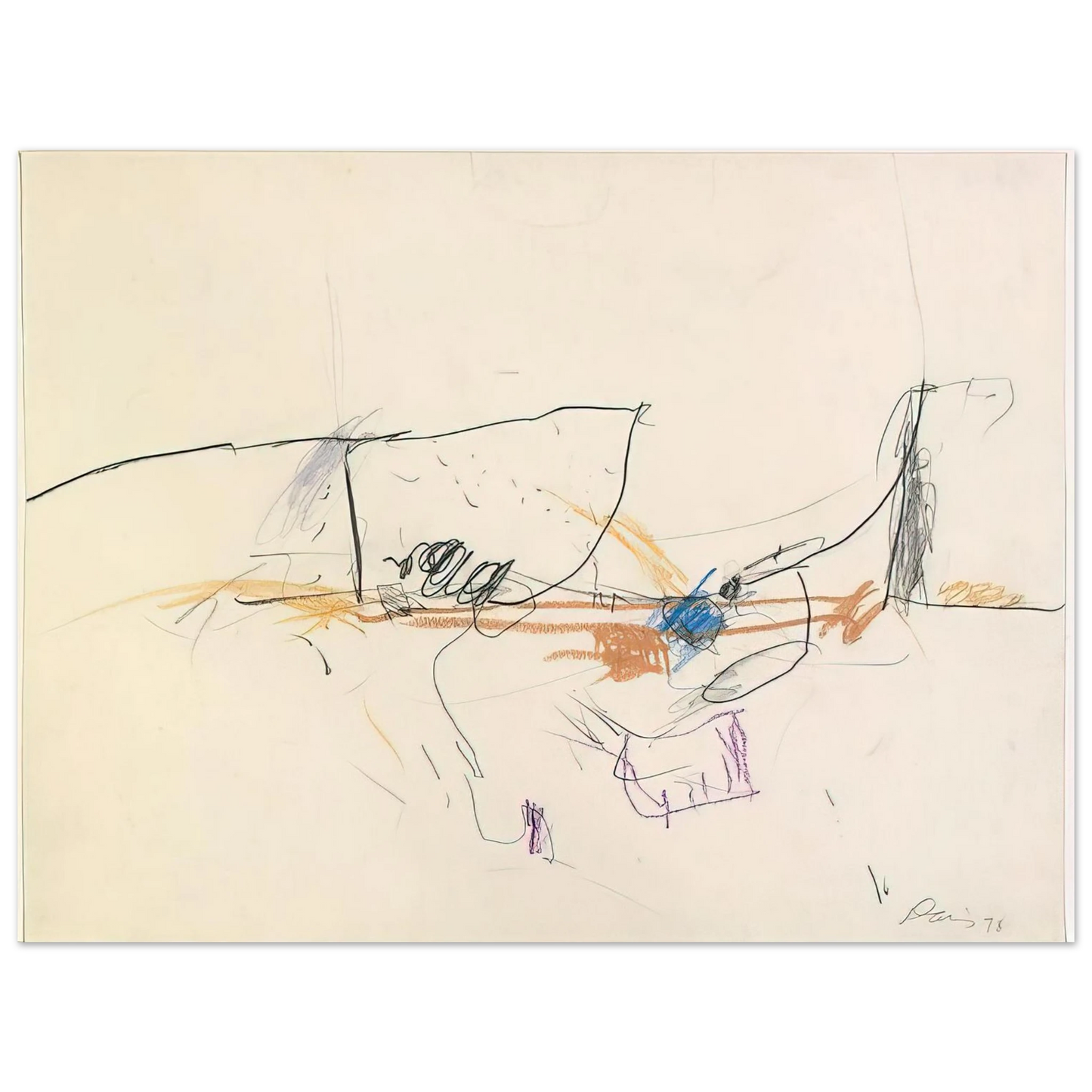
What is the historical significance of Gene Davis's Jumping Jack?
Jumping Jack (1978) is a key work by Gene Davis, a leader of the Washington Color School, known for using vibrant vertical stripes to explore color perception and rhythmic abstraction in late-20th-century American art.
How does the color scheme in Jumping Jack create its visual impact?
The artwork features contrasting bold stripes that generate optical vibration and a sense of dynamic movement, reflecting Davis's mastery of color theory to evoke energy and modernity.
What are the specifications of this fine art print?
This museum-quality reproduction measures 75x100 cm (30x40 inches), printed on Master's Edition archival paper with a matte, uncoated finish for a luxurious texture and lasting display.
Is the paper archival and long-lasting?
Yes, it uses acid-free paper (pH above 7) to prevent yellowing over time, ensuring your Gene Davis print remains vibrant as a durable archival art piece.
What is the weight and thickness of the paper?
The paper is 250 gsm (110 lb) with a thickness of 0.29 mm (11.4 mils), providing a substantial, gallery-worthy feel for this high-quality art print.
Is the paper environmentally sustainable?
Yes, it's FSC-certified paper, making this Gene Davis reproduction an eco-friendly choice for sustainable fine art collecting.
How is the print shipped and are there minimum orders?
We print and ship on demand with no minimum orders, offering convenient fulfillment for your museum-quality Jumping Jack poster.