
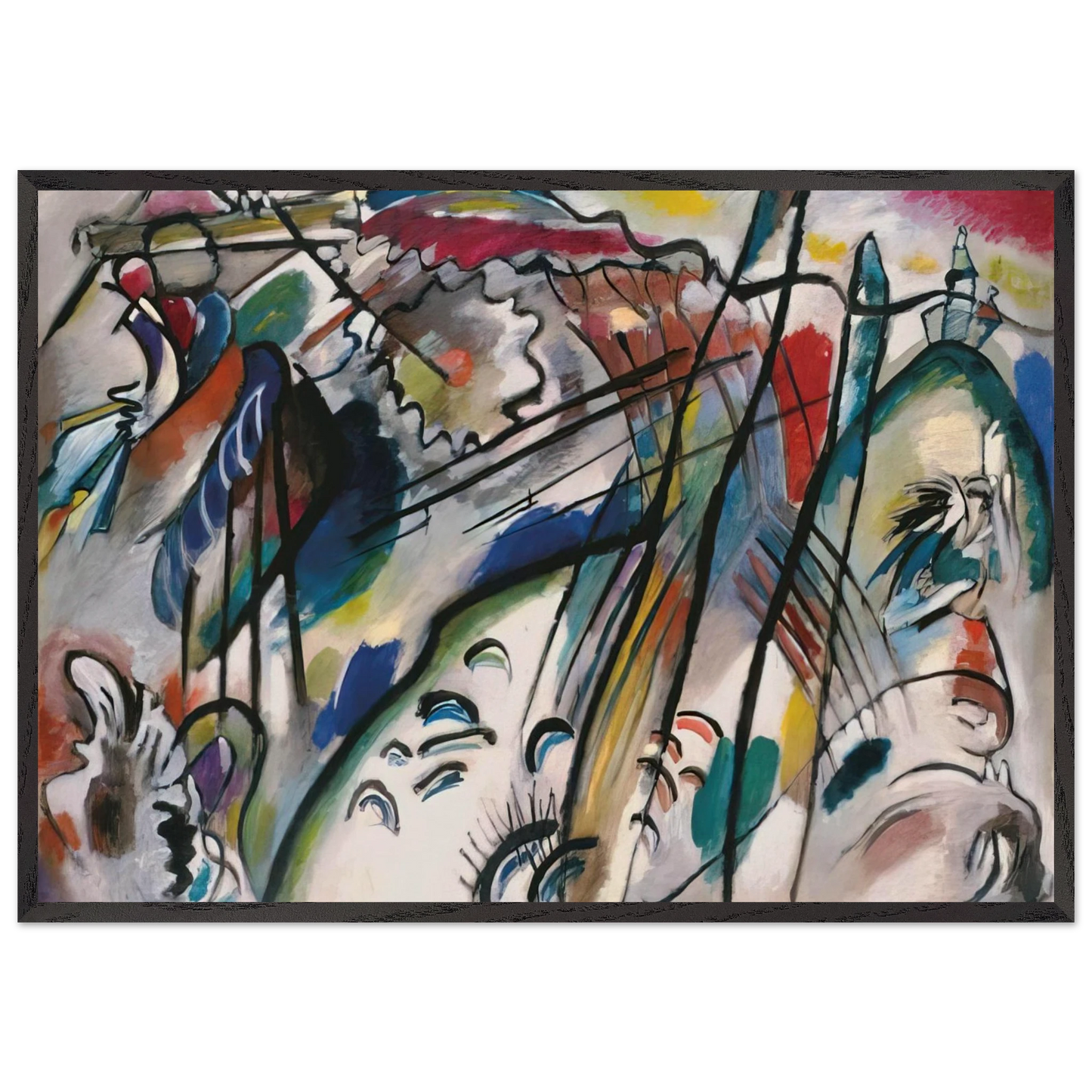
What is the historical significance of Kandinsky's Improvisation 28 (Second Version)?
Created in 1912, this painting is a landmark in abstract art, representing Kandinsky's shift toward non-representational forms to convey emotion and spirituality, making it a pivotal work in modern art history.
How does the frame enhance this art print?
The black wooden frame, made from responsibly sourced oak and ash wood with a 20mm (0.79") thickness, provides a sturdy and elegant gallery-style presentation, wider than classic frames for added visual impact.
What are the specifications of the paper used for this fine art print?
This museum-quality reproduction uses 250 gsm (110 lb) matte, uncoated, natural white archival paper, 0.29 mm (11.4 mils) thick, ensuring durability and vibrant color reproduction for long-lasting display.
Is this framed print ready to hang upon delivery?
Yes, it comes fully assembled with a hanging kit, allowing you to mount it directly on your wall without additional setup, making it a convenient choice for home or office decor.
How is the print protected in the frame?
The artwork is safeguarded by shatterproof plexiglass, which offers clear visibility and protection against UV light, scratches, and breakage, ensuring your investment remains pristine over time.
What makes this a sustainable art print option?
We use FSC-certified or equivalent sustainable materials for the paper and frame, supporting responsible forestry practices and reducing environmental impact while delivering premium quality.
Can you describe the artistic details in Improvisation 28 (Second Version)?
Kandinsky employed dynamic lines, bold colors, and abstract shapes to create a sense of musical improvisation, with swirling forms that suggest movement and emotional depth, reflecting his theories on art and spirituality.