
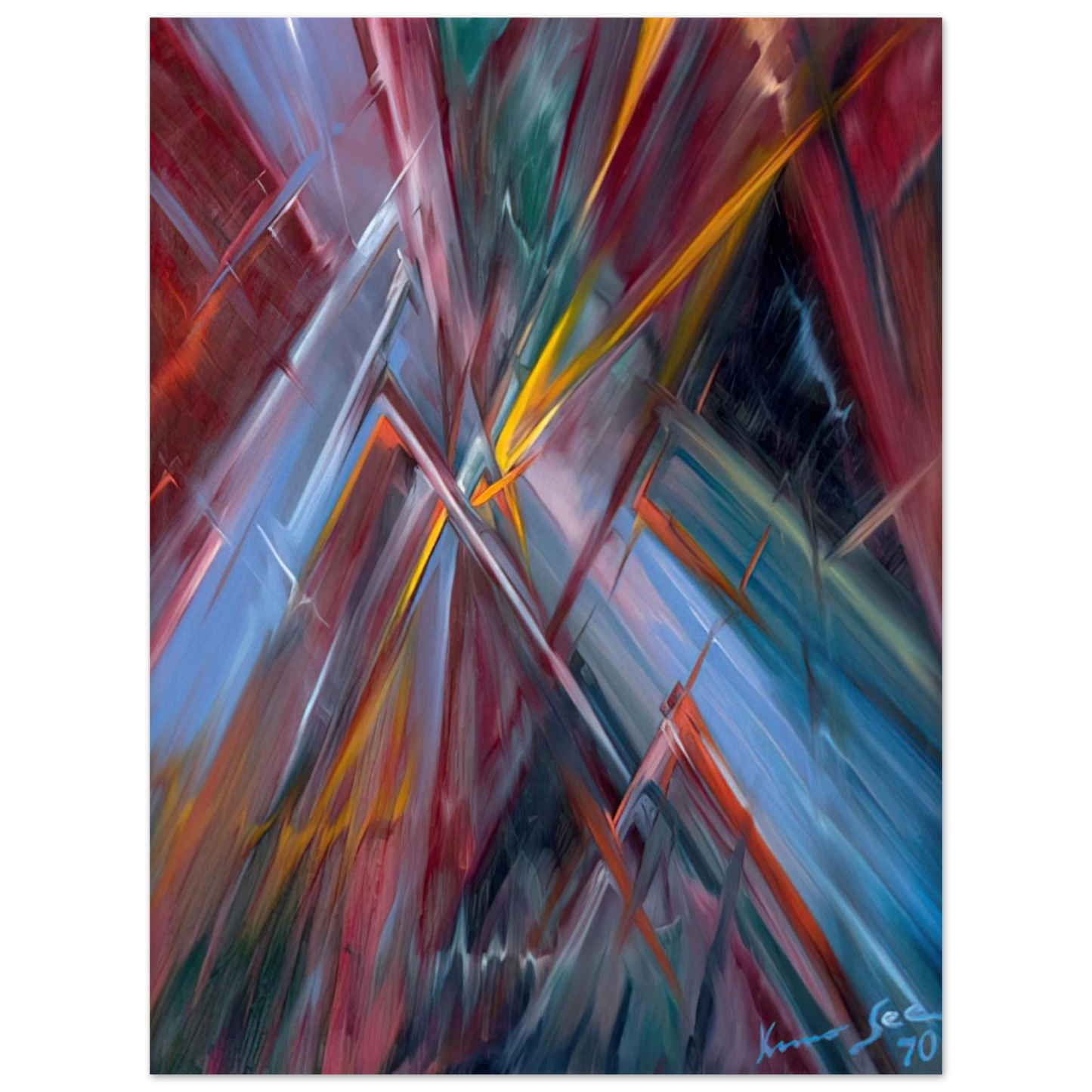
What is the historical significance of Konrad Zuse's "Colorful Flashes"?
Konrad Zuse, known as the inventor of the first programmable computer, created "Colorful Flashes" as part of his exploration into digital art, blending mathematical algorithms with abstract expression to pioneer computer-generated aesthetics in the mid-20th century.
How does the color palette in "Colorful Flashes" reflect Zuse's technical background?
The vibrant, geometric colors in "Colorful Flashes" mimic computational logic and data visualization, showcasing Zuse's unique ability to translate binary code into emotionally resonant art through precise, algorithmic color arrangements.
What paper is used for this fine art print?
This museum-quality reproduction is printed on Master's Edition archival paper, an acid-free, FSC-certified material with a matte, uncoated finish in natural white, ensuring vibrant color accuracy and long-term durability for your fine art poster.
How durable is this archival print?
With acid-free properties (pH above 7) and a weight of 250 gsm (0.29 mm thickness), this print resists yellowing and fading, offering archival longevity that preserves Konrad Zuse's artwork as a lasting investment in home decor.
What are the shipping and fulfillment options?
RedKalion prints and ships on demand with no minimum orders, providing efficient delivery for your 75x100 cm fine art poster while reducing waste through sustainable, FSC-certified paper practices.
Can this print be customized in size or frame?
This reproduction is available exclusively in the original 75x100 cm (30x40 inches) dimensions to maintain artistic integrity; framing options are not included, but the matte finish complements standard frames for easy display.
How does the matte finish enhance the artwork?
The matte, uncoated finish on natural white paper reduces glare and adds a luxurious texture, highlighting the geometric details and color depth of "Colorful Flashes" for an authentic, gallery-like presentation in your space.