
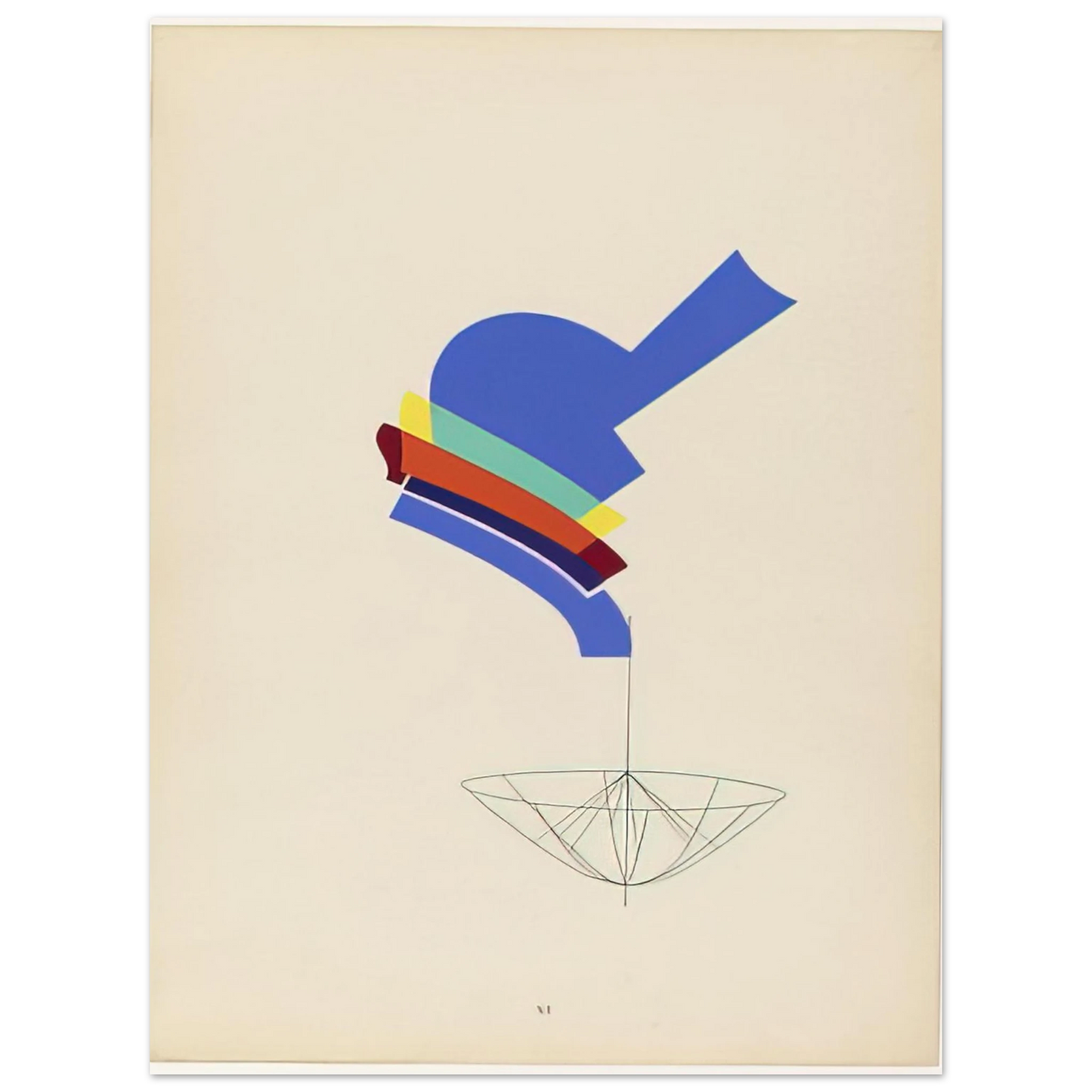
What is the historical significance of Man Ray's "Decanter" from Revolving Doors?
Created in 1926, this piece is part of Man Ray's Revolving Doors portfolio, a key Dadaist work that used pochoir techniques to explore surrealism and abstraction in 1920s Paris, blending art and avant-garde philosophy.
What are the specifications of the Master's Edition archival paper used for this fine art print?
Our Master's Edition paper is museum-quality, featuring a matte, uncoated finish in natural white, 250 gsm weight, 0.29 mm thickness, acid-free for longevity, and FSC-certified for sustainable art reproduction.
How does the matte finish enhance this Man Ray reproduction?
The matte, uncoated finish provides a luxurious texture that reduces glare, mimicking original gallery displays and highlighting the abstract details of this Dadaist masterpiece for a premium art experience.
What is the shipping and fulfillment process for this on-demand print?
We print and ship this archival reproduction on demand with no minimum orders, ensuring fresh, high-quality delivery directly to your door for convenient fine art collecting.
How long will this acid-free print last without yellowing?
With an acid-free composition (pH above 7), this museum-quality print is designed to resist yellowing and maintain vibrancy for decades, offering archival longevity for your art collection.
What technique did Man Ray use in the original "Decanter" artwork?
Man Ray employed pochoir, a stencil-based printing method, to create the original, allowing for bold colors and precise forms that defined the surrealist aesthetic of his Revolving Doors series.
Why is the 75x100 cm size ideal for this Dadaist print?
The 75x100 cm (30x40 inches) scale perfectly captures the dramatic impact of Man Ray's abstract composition, making it a statement piece for modern interiors while honoring the original's proportions.