
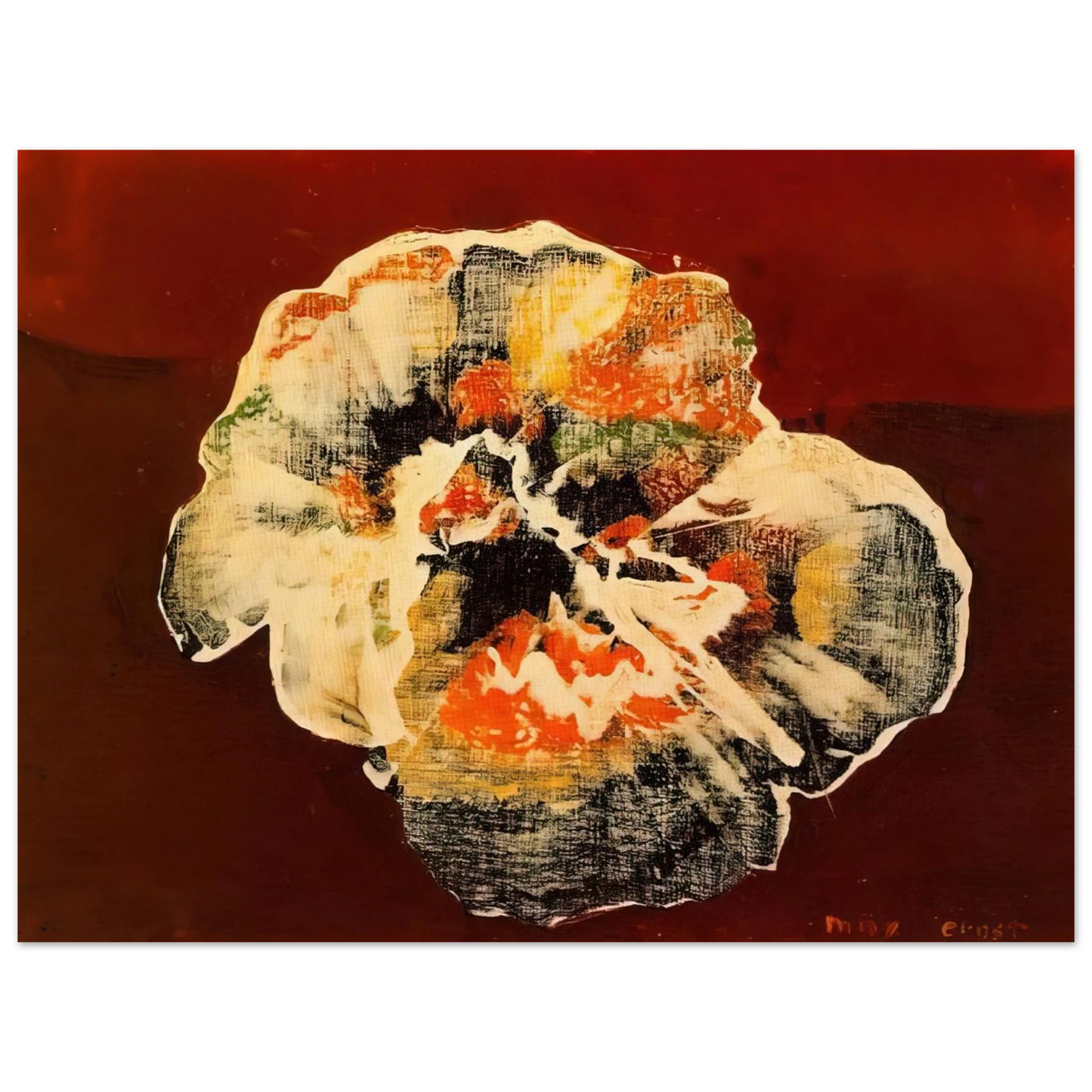
What is the historical significance of Max Ernst's "Flower Shell"?
"Flower Shell" embodies Max Ernst's Surrealist innovation, blending organic and mechanical elements to explore subconscious imagery, reflecting his techniques like frottage that revolutionized 20th-century art.
What details make this fine art print museum-quality?
This reproduction uses Master's Edition archival paper with a matte, uncoated finish and acid-free properties (pH above 7) to prevent yellowing, ensuring a premium, long-lasting fine art poster.
What are the specifications of the paper used for this art print?
The paper is 250 gsm (110 lb) weight, 0.29 mm (11.4 mils) thick, FSC-certified for sustainability, and features a natural white, off-white color for an authentic texture.
How is this Max Ernst print shipped and handled?
It's printed and shipped on demand with no minimum orders, ensuring each fine art poster is carefully produced and delivered directly to you.
How long will this archival reproduction last without fading?
With acid-free, pH-balanced paper, this museum-quality print resists yellowing and fading, designed to endure for generations as a durable fine art reproduction.
What artistic techniques did Max Ernst use in "Flower Shell"?
Ernst likely employed frottage or grattage in "Flower Shell," methods that involve rubbing or scraping to create textured, dreamlike surfaces characteristic of his Surrealist style.
Why is the matte finish chosen for this fine art poster?
The matte, uncoated finish enhances the artwork's depth and reduces glare, providing a luxurious, tactile experience that mimics original Surrealist prints.