
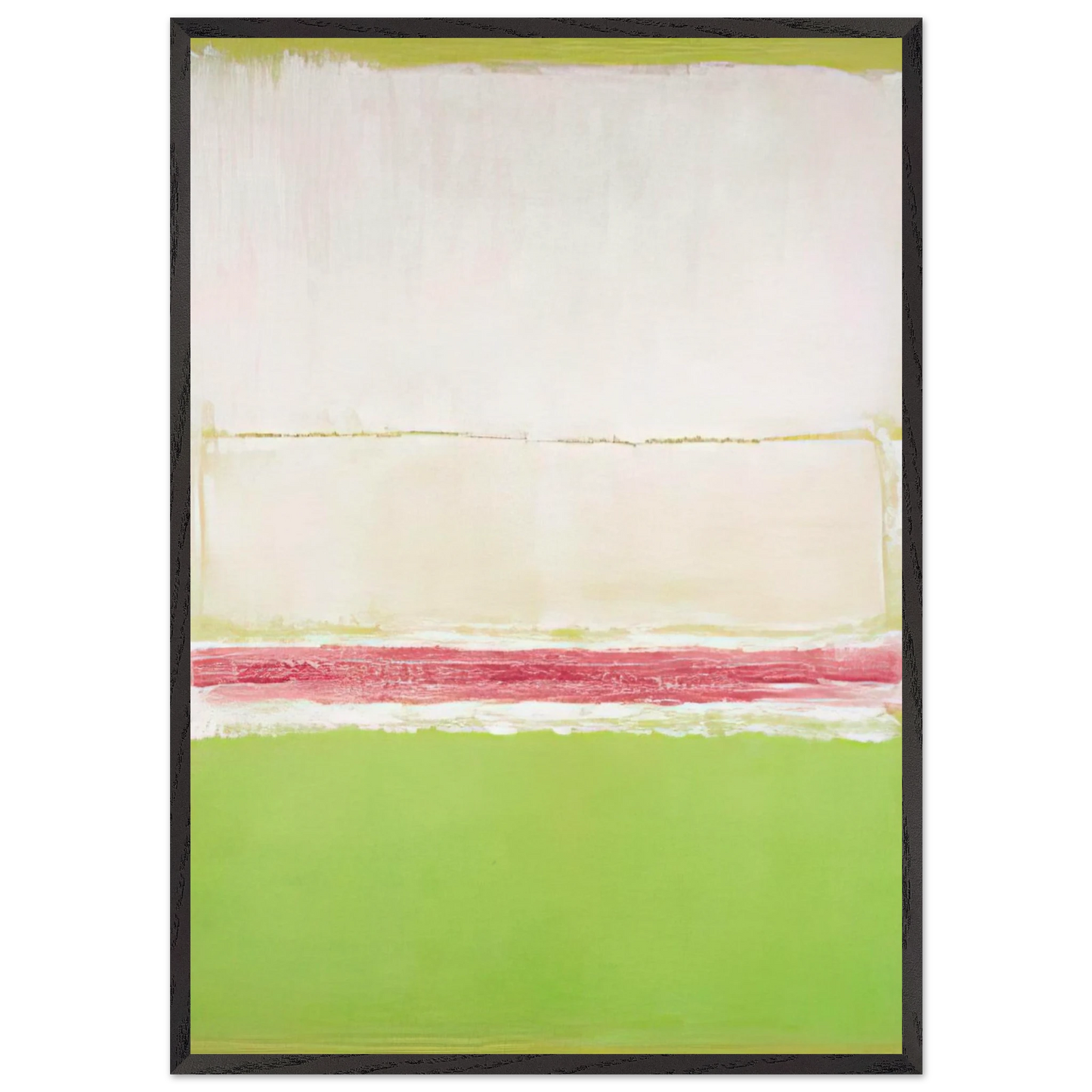
What is the significance of Mark Rothko's "No. 2, No. 7 and No. 2 - 1951" in art history?
This painting is a key work from Rothko's Color Field period, exemplifying his use of layered, luminous rectangles to evoke emotional and spiritual depth, central to Abstract Expressionism and 20th-century modern art.
How does the frame enhance this Rothko reproduction?
The 20mm thick black wooden frame, made from responsibly sourced oak and ash, provides a bold, modern border that accentuates the painting's expansive composition and ensures durability for your fine art print.
What are the specifications of the paper used for this museum-quality print?
We use 250 gsm (110 lb) matte, uncoated, natural white archival paper, 0.29 mm thick, which is FSC-certified for sustainability and ideal for capturing Rothko's subtle color variations in a premium art reproduction.
Is this framed print ready to hang upon delivery?
Yes, this ready-to-hang framed art print includes a complete hanging kit, allowing for immediate wall display without additional assembly, perfect for easy installation of your Rothko masterpiece.
How does the plexiglass protect the artwork?
The shatterproof plexiglass shields the print from dust, UV light, and physical damage, ensuring long-term preservation and clarity for your archival-grade Rothko reproduction.
What makes this reproduction archival and long-lasting?
Combining FSC-certified 250 gsm paper with shatterproof plexiglass and a sturdy wooden frame creates a durable, museum-quality piece designed to resist fading and degradation over time.
Can you describe Rothko's technique in this painting?
Rothko applied thin, translucent layers of paint in a staining technique on canvas, creating luminous, floating color fields that seem to glow from within, a hallmark of his emotive abstract style.