
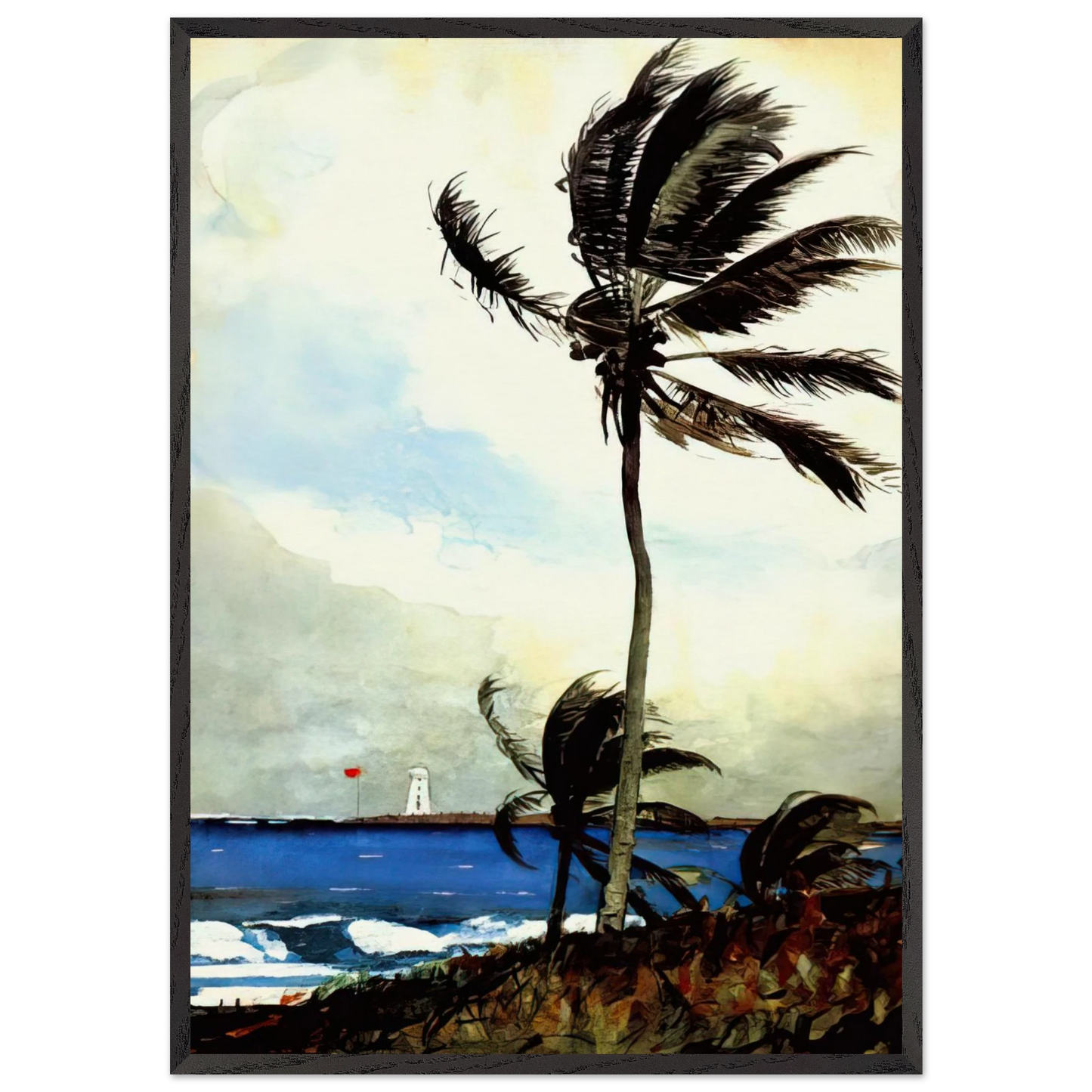
What is the historical significance of Winslow Homer's "Palm Tree Nassau"?
"Palm Tree Nassau" (1885) marks Winslow Homer's shift to tropical subjects after his Civil War illustrations, showcasing his mastery of watercolor to capture Bahamian light and atmosphere, making it a key piece in 19th-century American art.
How does the frame enhance this fine art print?
The black wooden frame, made from responsibly sourced oak and ash wood and measuring 20mm thick and wide, provides a sturdy, gallery-style border that complements the artwork's elegance and ensures durability.
What are the specifications of the archival museum-quality paper?
The print uses 250 gsm (110 lb) paper with a 0.29 mm thickness and matte uncoated finish, offering superior color reproduction and longevity for a premium fine art print experience.
Is this framed art print ready to hang?
Yes, it includes a hanging kit and is ready to hang directly on the wall, providing a convenient setup for immediate display of your museum-quality reproduction.
How does the shatterproof plexiglass protect the print?
The shatterproof plexiglass safeguards the print from dust, moisture, and damage while maintaining clarity, ensuring your Winslow Homer artwork remains pristine over time.
What sustainable materials are used in this product?
We use FSC-certified or equivalent sustainable paper, aligning with eco-friendly practices to deliver a high-quality framed art print that respects the environment.
Can you describe Winslow Homer's technique in this artwork?
Homer employed transparent watercolor washes and precise brushstrokes in "Palm Tree Nassau" to render the tropical light and texture, highlighting his innovative approach to capturing natural scenes.