
Discover Unlimited Art Possibilities
At RedKalion, you can find virtually any artwork from any artist, available in a wide range of sizes to perfectly match your space.
If you didn’t find what you’re looking for, contact us at support@redkalion.com . We will source any artwork and produce it in any size and format you need, including art prints, posters, canvas, framed pieces, framed canvas, and more.
For dedicated art enthusiasts, we also offer handcrafted replicas of any artwork, carefully painted by highly skilled artists using traditional techniques.
For custom requests, contact us at support@redkalion.com .
What are the dimensions of this Ronnie Landfield fine art print?
This museum-quality reproduction measures 75x100 cm (30x40 inches), matching the original 1968 artwork's scale for an authentic display experience.
What type of paper is used for this Green Line Painting print?
It's printed on Master's Edition archival paper, a matte, uncoated, natural white (off-white) sheet that offers a luxurious texture and acid-free longevity to prevent yellowing.
How durable is this archival fine art poster?
With 250 gsm weight (110 lb), 0.29 mm thickness (11.4 mils), and acid-free properties, it's designed for long-term display without fading or deterioration.
Is this print eco-friendly and sustainable?
Yes, it uses FSC-certified paper, ensuring responsible sourcing and environmental stewardship for your Color Field painting reproduction.
How is shipping handled for this on-demand print?
RedKalion prints and ships each order individually with no minimums, ensuring careful packaging and timely delivery of your Ronnie Landfield artwork.
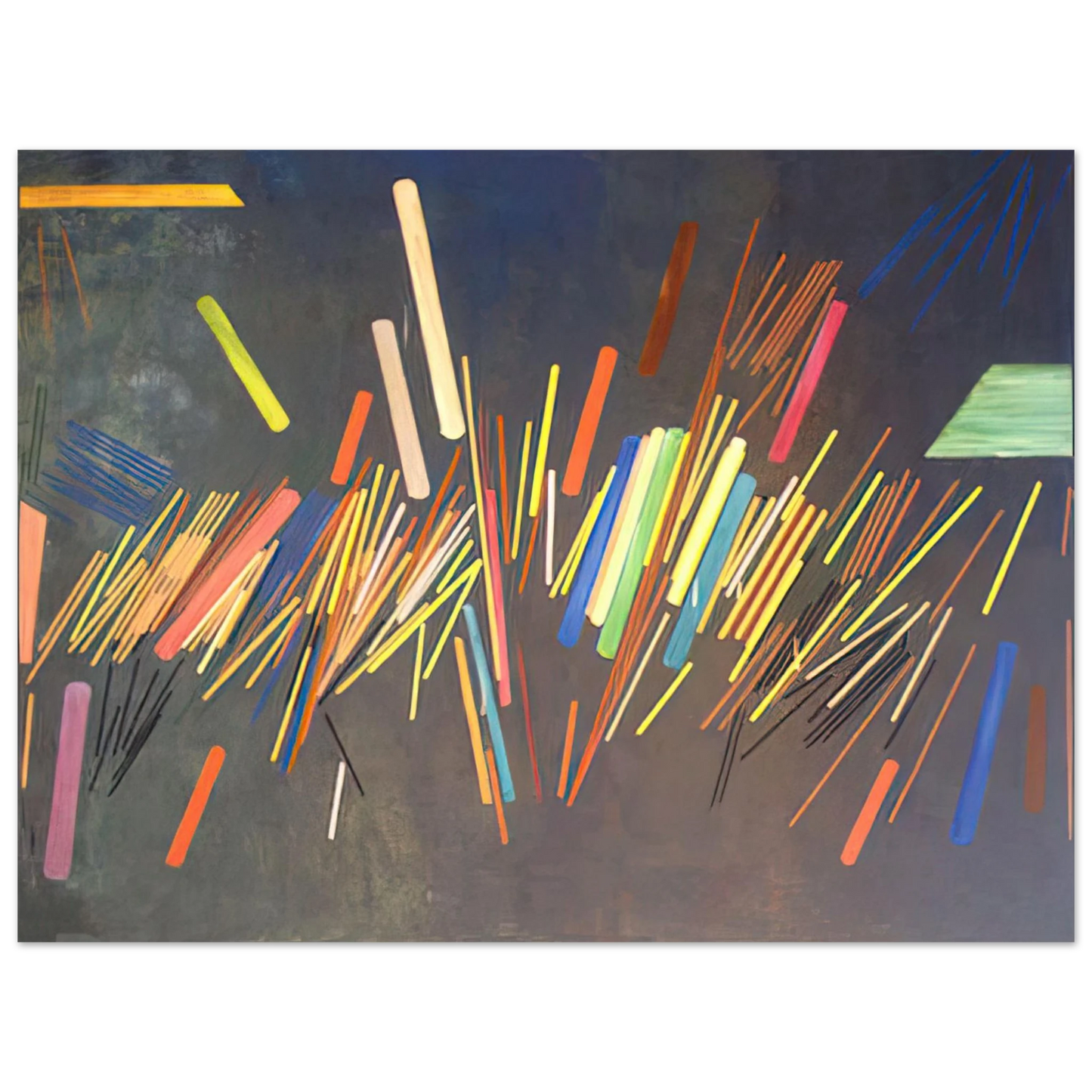
What makes Ronnie Landfield's Green Line Painting historically significant?
Created in 1968, it exemplifies the Color Field movement, where Landfield used bold, abstract lines and vibrant hues to explore emotional depth beyond traditional forms.
Can you describe the artistic technique in this 1968 masterpiece?
Landfield employed fluid, gestural brushstrokes and layered color fields, emphasizing the green line as a dynamic focal point that guides the viewer's eye across the canvas.