
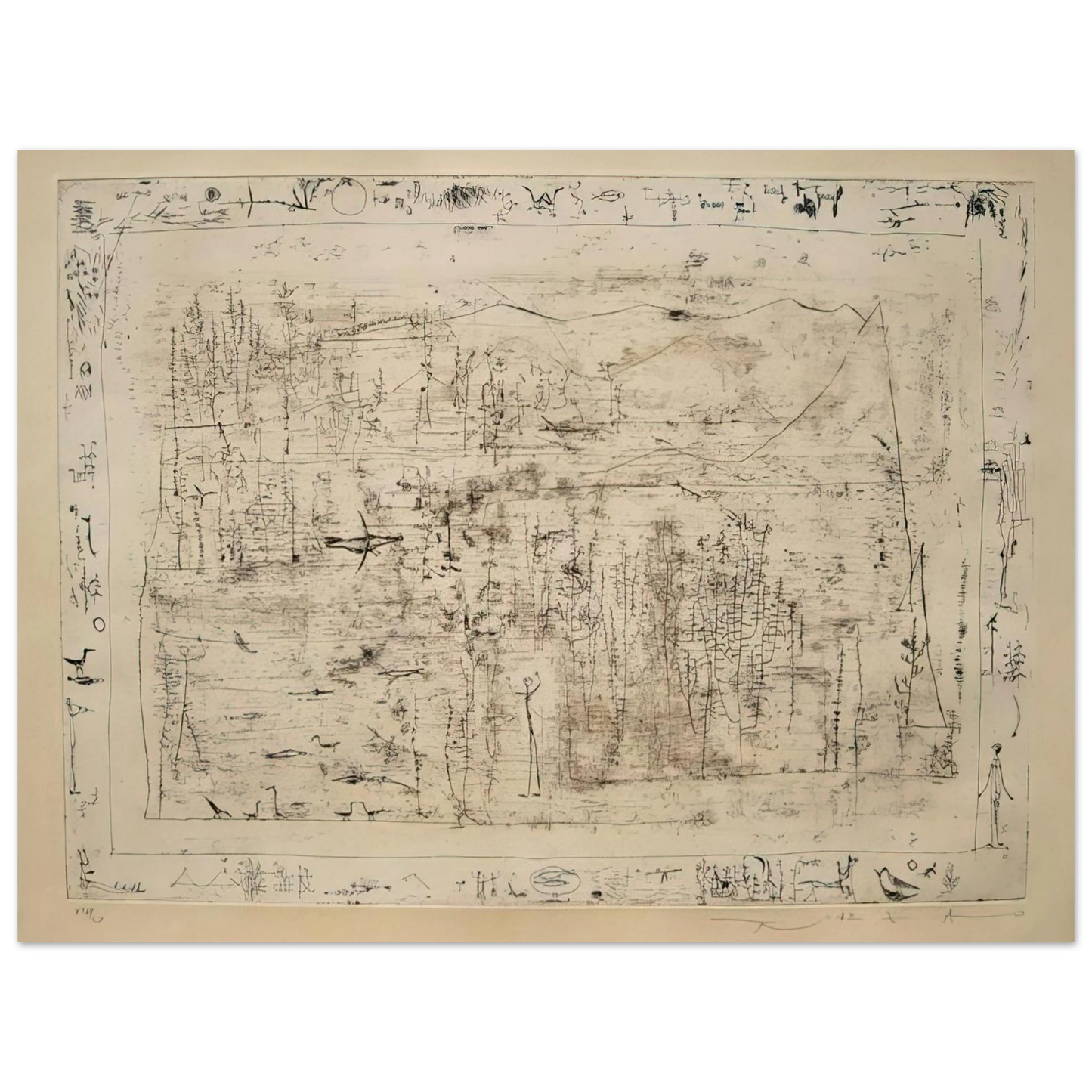
What is the significance of Zao Wou-Ki's "Flora and Fauna" from 1951?
This artwork marks a key moment in Zao Wou-Ki's career, blending Chinese ink techniques with Western abstraction to create lyrical, organic forms that evoke natural elements, showcasing his transition to a more personal style in post-war Paris.
How does this fine art print capture the details of the original artwork?
Our museum-quality reproduction uses high-resolution imaging to preserve the delicate brushstrokes and tonal nuances of Zao Wou-Ki's original, ensuring an authentic representation of this 1951 masterpiece on archival paper.
What are the specifications of the Master's Edition archival paper used for this print?
The paper is matte, uncoated, and natural white (off-white), with a weight of 250 gsm (110 lb) and thickness of 0.29 mm (11.4 mils), made from acid-free, FSC-certified materials for longevity and a premium texture.
How is this print shipped and are there minimum order requirements?
We offer no minimum orders and print on demand, with careful packaging to ensure your 75x100 cm fine art poster arrives safely and ready to display in your space.
What makes this print archival and how long will it last without yellowing?
Made from acid-free paper (pH above 7), this museum-quality reproduction resists yellowing over decades, backed by RedKalion's commitment to archival standards for enduring beauty.
What inspired Zao Wou-Ki's abstract style in "Flora and Fauna"?
Influenced by Chinese calligraphy and European modernists like Paul Klee, Wou-Ki developed a unique abstract language in post-war Paris, using fluid lines and washes to suggest natural forms rather than depict them literally.
How does the matte finish enhance the viewing experience of this artwork?
The matte, uncoated finish reduces glare and provides a soft, tactile surface that mimics the texture of original art paper, allowing the subtle colors and details of "Flora and Fauna" to shine authentically.