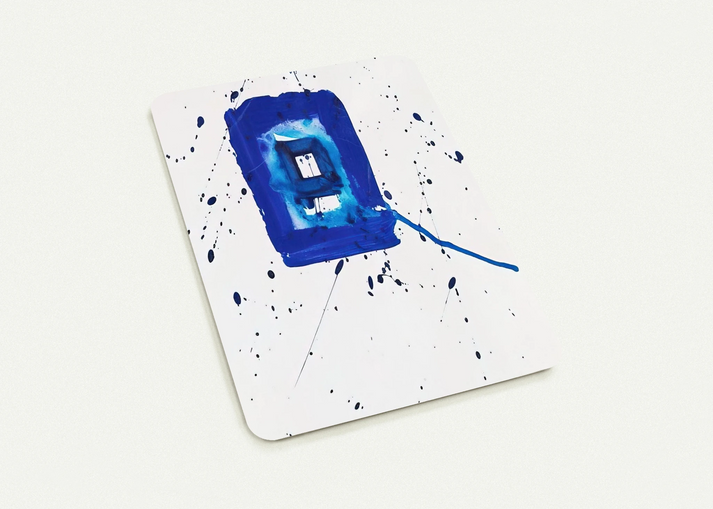


Discover Unlimited Art Possibilities
At RedKalion, you can find virtually any artwork from any artist, available in a wide range of sizes to perfectly match your space.
If you didn’t find what you’re looking for, contact us at support@redkalion.com . We will source any artwork and produce it in any size and format you need, including art prints, posters, canvas, framed pieces, framed canvas, and more.
For dedicated art enthusiasts, we also offer handcrafted replicas of any artwork, carefully painted by highly skilled artists using traditional techniques.
For custom requests, contact us at support@redkalion.com .
What is the print quality of these Sam Francis postcards?
We use 12-color fine art printing technology, which provides superior color vibrancy and depth compared to standard inkjet prints, ensuring the blues in Francis's work remain true to the original.
What paper is used for the Blue Frame postcards?
The postcards are printed on premium 200 gsm (80 lb) FSC-certified paper with a thickness of 0.26 mm, featuring a smooth matte finish for a glare-free, museum-quality feel.
Are these postcards eco-friendly?
Yes, all our prints utilize environmentally conscious, FSC-certified paper, ensuring that your art collection supports responsible forest management.
How are these postcards shipped and produced?
Each pack is printed on demand to ensure the highest quality control. We have no minimum order requirements and use secure packaging to protect the archival integrity of the cards.
What is the exact size of the Sam Francis postcards?
These are standard A6 postcards, measuring 10.5 x 14.8 cm (4.1 x 5.8 inches), making them perfect for standard frames or mailing.
What was Sam Francis’s inspiration for ‘Blue Frame’?
Francis was deeply influenced by the concept of 'the void' and negative space, using the frame-like structure to suggest that the artwork extends infinitely beyond the physical boundaries of the canvas.
Why is ‘Blue Frame’ significant in Abstract Expressionism?
It represents the 'second generation' of Abstract Expressionism, moving away from heavy angst toward a focus on luminosity, rhythmic splatter, and the spatial relationship between color and white space.