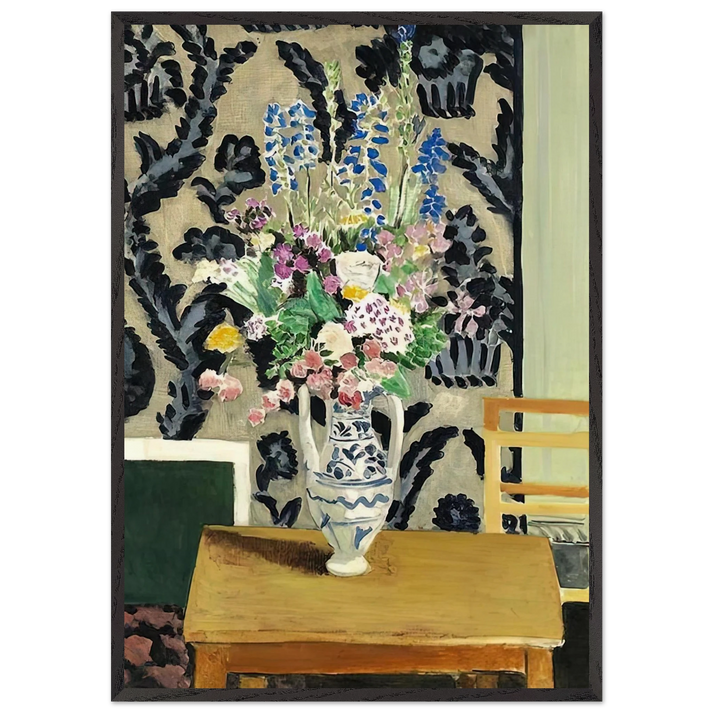

Discover Unlimited Art Possibilities
At RedKalion, you can find virtually any artwork from any artist, available in a wide range of sizes to perfectly match your space.
If you didn’t find what you’re looking for, contact us at support@redkalion.com . We will source any artwork and produce it in any size and format you need, including art prints, posters, canvas, framed pieces, framed canvas, and more.
For dedicated art enthusiasts, we also offer handcrafted replicas of any artwork, carefully painted by highly skilled artists using traditional techniques.
For custom requests, contact us at support@redkalion.com .
What defines the quality of this Henri Matisse art print?
Our Matisse prints use 250 gsm archival-grade, natural white paper. This museum-quality material is acid-free and FSC-certified, ensuring the vibrant colors and fine details remain preserved without fading for decades.
Is the frame included with the artwork?
Yes, this artwork comes professionally framed in a 20mm thick black wooden frame made from responsibly sourced oak or ash. It is wider and more durable than standard 14mm gallery frames.
How is the print protected during display?
We use high-quality, shatterproof plexiglass to protect the surface. This provides the clarity of glass with added safety and UV resistance, ensuring your fine art print remains pristine.
Is the paper used for this reproduction sustainable?
Absolutely. We use FSC-certified paper or equivalent sustainable materials, supporting responsible forest management while delivering a premium, 0.29 mm thick archival product.
How do I hang my new Matisse masterpiece?
Your framed print arrives ready-to-hang. We include a complete hanging kit in every order, allowing you to securely mount your 70x100 cm artwork immediately upon arrival.
What is the historical significance of this 1919 Matisse painting?
Painted in 1919, this piece celebrates the first Quatorze Juillet (Bastille Day) after WWI. It represents a 'return to order' and the joy of peace, characteristic of Matisse's early Nice period.
Why is Matisse's use of color in this piece important?
Matisse utilized a harmonious palette to evoke emotion rather than just reality. In this bouquet, the colors symbolize vitality and the rebirth of French culture during the post-war era.