
Discover Unlimited Art Possibilities
At RedKalion, you can find virtually any artwork from any artist, available in a wide range of sizes to perfectly match your space.
If you didn’t find what you’re looking for, contact us at support@redkalion.com . We will source any artwork and produce it in any size and format you need, including art prints, posters, canvas, framed pieces, framed canvas, and more.
For dedicated art enthusiasts, we also offer handcrafted replicas of any artwork, carefully painted by highly skilled artists using traditional techniques.
For custom requests, contact us at support@redkalion.com .
What are the dimensions and frame specifications for this print?
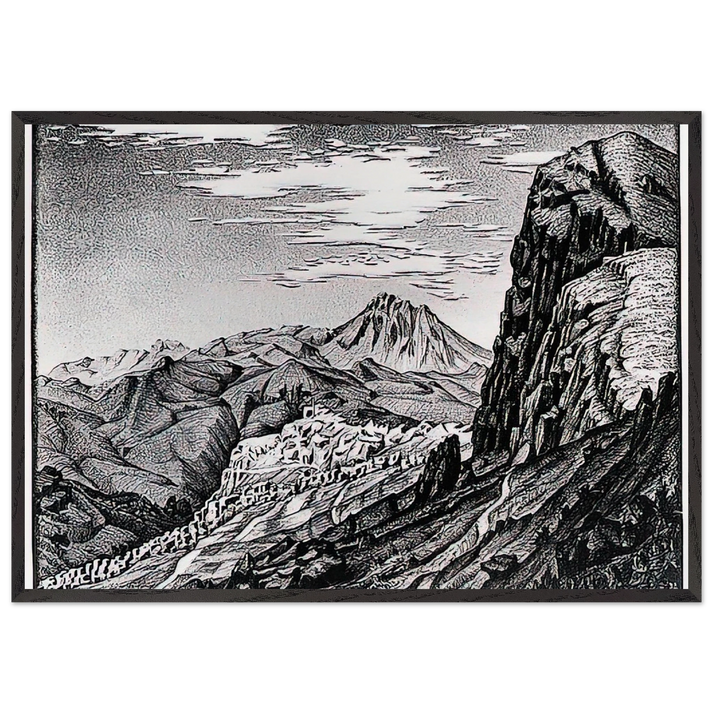
This M.C. Escher print measures 70x100 cm (28x40 inches). It is encased in a 20mm thick frame made from responsibly sourced black oak and ash wood, providing a bold, modern aesthetic.
What is the quality of the paper used for this fine art reproduction?
We use 250 gsm (110 lb) museum-quality, natural white paper. It is archival, acid-free, and features a matte finish to ensure the highest level of detail and color accuracy.
Does the framed print come ready to hang?
Yes. Every RedKalion framed art print arrives with a pre-installed hanging kit, allowing you to display your new artwork immediately upon delivery.
How is the artwork protected during shipping and display?
The print is protected by shatterproof plexiglass, which offers superior durability and clarity. For shipping, we use specialized protective packaging to ensure it arrives in pristine condition.
Is the paper used in this print environmentally sustainable?
Absolutely. We prioritize sustainability by using FSC-certified materials or equivalent standards, ensuring that your art print supports responsible forest management.
What was M.C. Escher’s inspiration for the Caltavuturo piece?
Escher was deeply inspired by the unique topography and ancient architecture of Sicily. This work reflects his fascination with how man-made structures integrate into dramatic, mountainous landscapes.
Is this an authentic representation of Escher’s early style?
Yes, this piece represents Escher's 'Italian period,' where he focused on realistic landscapes and architecture, developing the mastery of light and shadow that would define his later surrealist works.