
Discover Unlimited Art Possibilities
At RedKalion, you can find virtually any artwork from any artist, available in a wide range of sizes to perfectly match your space.
If you didn’t find what you’re looking for, contact us at support@redkalion.com . We will source any artwork and produce it in any size and format you need, including art prints, posters, canvas, framed pieces, framed canvas, and more.
For dedicated art enthusiasts, we also offer handcrafted replicas of any artwork, carefully painted by highly skilled artists using traditional techniques.
For custom requests, contact us at support@redkalion.com .
What is the quality of the paper used for this print?
We use 250 gsm (110 lb) natural white, museum-quality paper. It is archival, acid-free, and features a matte, uncoated finish to ensure the highest fidelity for fine art reproductions and long-term durability.
Is the frame ready for immediate wall mounting?
Yes, each framed art print includes a professional hanging kit. The 20mm thick black wooden frame is designed for easy installation, allowing you to hang your artwork directly upon arrival.
How is the artwork protected during shipping?
Your print is protected by shatterproof plexiglass and secured within reinforced packaging. RedKalion ensures every museum-quality reproduction arrives in pristine condition, ready to elevate your interior space.
What makes the framing materials sustainable?
We prioritize the environment by using responsibly sourced oak and ash wood for our frames. All paper and wood components are FSC-certified, ensuring your art purchase supports sustainable forestry practices.
How long will this archival print last?
Designed to last for decades, our archival-grade materials prevent yellowing and fading. The combination of 250 gsm paper and protective plexiglass ensures the print remains a vibrant heirloom-quality piece for generations.
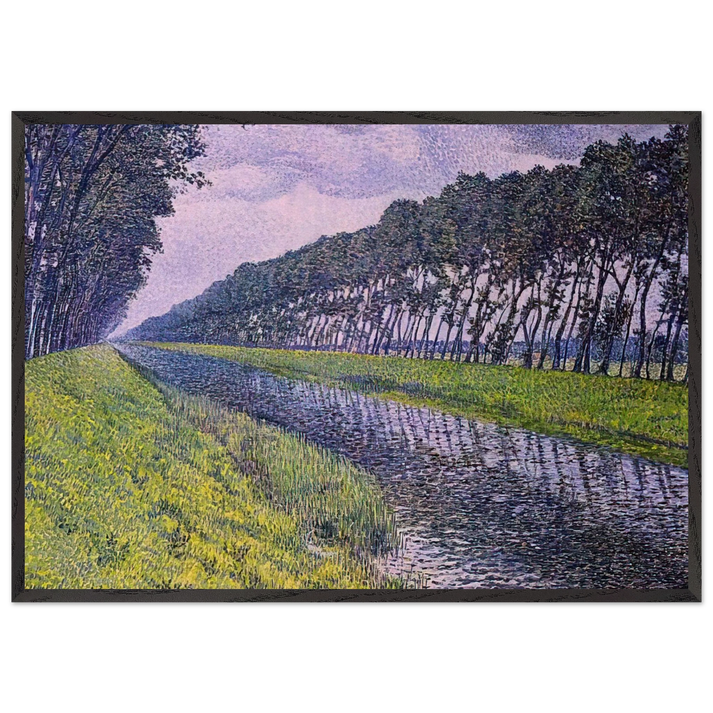
What technique did Theo van Rysselberghe use in Canal in Flanders?
Van Rysselberghe used Pointillism, also known as Divisionism. This involves applying small dots of pure color that the viewer's eye blends together, creating a unique luminosity and atmosphere characteristic of Neo-Impressionism.
Where was Canal in Flanders originally painted?
This masterpiece was painted in 1894 in the Flanders region. It captures the unique light and landscape of the Belgian and Dutch borderlands, reflecting the artist's deep connection to his homeland's topography.