
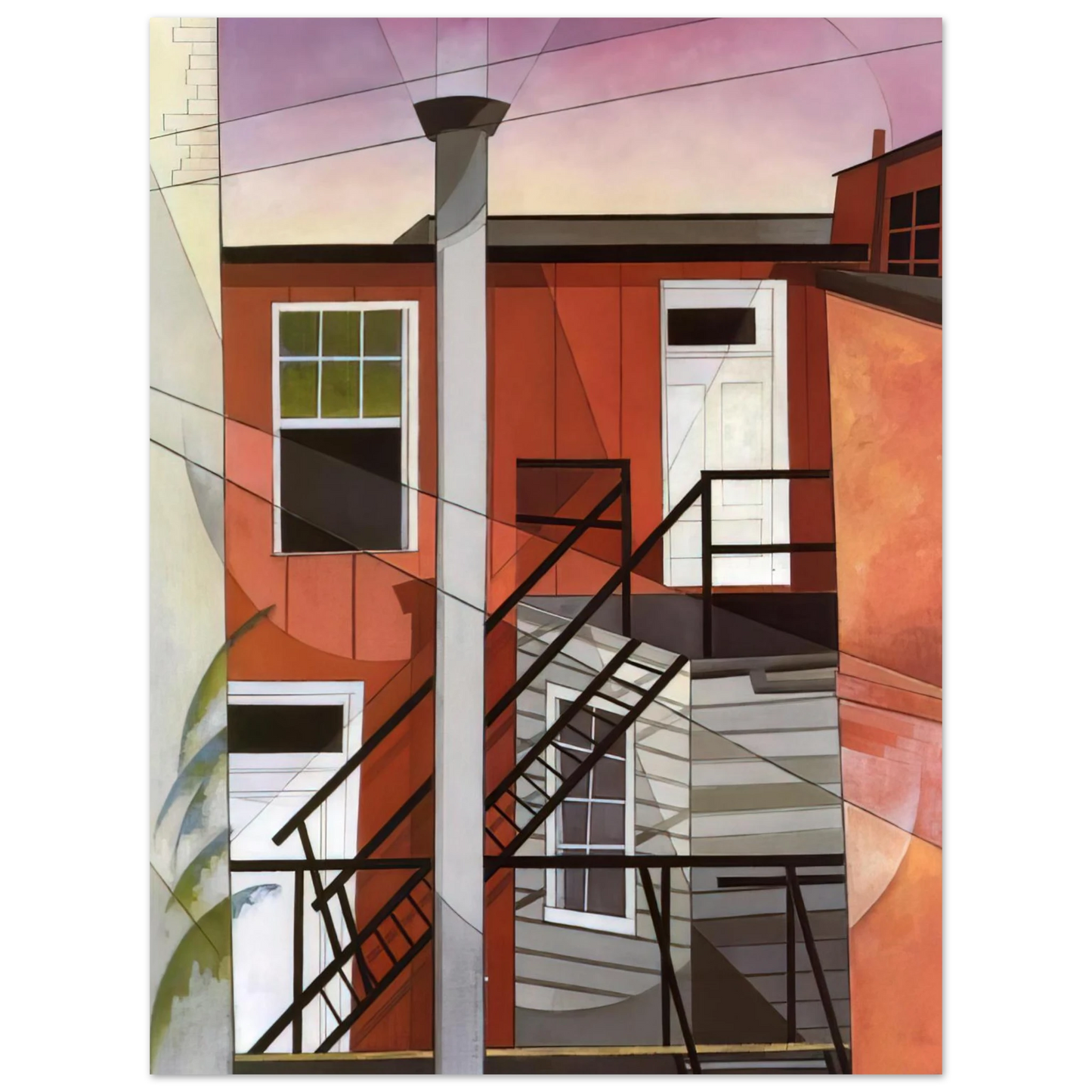
What is the significance of Charles Demuth's 'Modern Conveniences'?
Painted in 1921, 'Modern Conveniences' is a seminal Precisionist work. It highlights Charles Demuth's ability to find geometric beauty in industrial architecture, specifically the factories of Lancaster, PA, blending Cubist influences with uniquely American industrial subject matter.
What are the physical specifications of this fine art print?
This museum-quality print features a heavy 250 gsm (110 lb) weight and a thickness of 0.29 mm. It is printed on natural white, matte archival paper to ensure a premium, non-reflective texture suitable for high-end framing.
Is the paper used for this reproduction archival and sustainable?
Yes. RedKalion uses acid-free paper with a pH above 7 to prevent yellowing. Furthermore, all prints utilize FSC-certified paper, ensuring that your artwork is as environmentally responsible as it is beautiful.
How does RedKalion ensure the longevity of the print?
We use archival-grade, Master's Edition paper designed for longevity. The acid-free composition prevents chemical degradation, ensuring the colors and paper integrity remain museum-standard for decades without fading or becoming brittle.
What is the delivery process for this museum-quality poster?
Each order is printed and shipped on demand with no minimum requirements. We use specialized protective packaging to ensure your Charles Demuth reproduction arrives in pristine condition, ready for immediate display or professional framing.
Does 'Modern Conveniences' reflect a specific art movement?
Yes, it is a quintessential example of Precisionism. This movement emerged in the U.S. post-WWI, characterized by clean lines and a focus on the modern industrial landscape, stripping away detail to emphasize geometric form.
Are there any specific care instructions for the matte finish?
The uncoated, natural white finish is premium and delicate. We recommend handling the print by the edges or using cotton gloves. For maximum protection, frame the piece behind UV-protective glass to preserve the archival inks.