
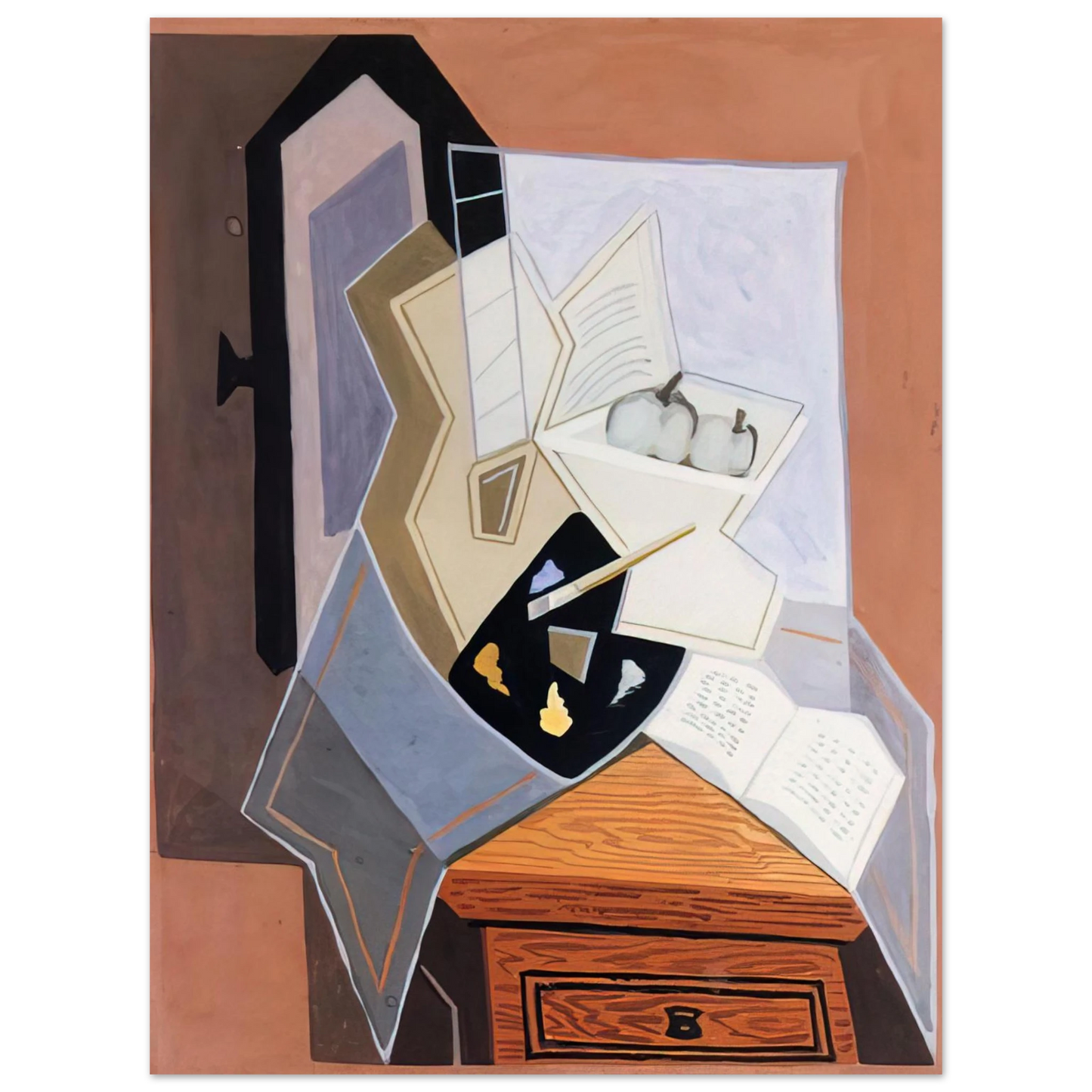
What is the historical significance of Juan Gris's "Still Life at the Open Window" (1925)?
This artwork is a key example of Synthetic Cubism, where Gris used geometric shapes and muted colors to deconstruct everyday objects, blending interior and exterior spaces to explore form and perception in early 20th-century art.
How does the paper quality ensure a museum-grade reproduction?
Our Master's Edition archival paper is acid-free (pH above 7) and 250 gsm thick, preventing yellowing and providing a durable, luxurious matte finish for a premium fine art print that replicates original textures.
What are the shipping and fulfillment details for this print?
We print and ship on demand with no minimum orders, ensuring fast delivery of your high-quality Cubist art reproduction directly to your door.
How long will this fine art poster last without fading or damage?
Made from acid-free, archival materials, this print resists yellowing and fading for decades, offering long-lasting beauty as a museum-quality reproduction for your home or office.
Is the paper environmentally sustainable?
Yes, it uses FSC-certified paper, supporting responsible forestry practices while delivering a premium 30x40 inch fine art poster with eco-friendly credentials.
What techniques did Juan Gris use in this Cubist still life?
Gris employed Synthetic Cubism techniques, layering fragmented objects like a guitar and fruit with precise geometric lines and a subdued palette to create a balanced, intellectual composition in 1925.
Can I customize the size or framing for this print?
This print is available as a 75x100 cm (30x40 inches) fine art poster; we focus on archival quality reproductions with standard sizing for authenticity and ease of display.