
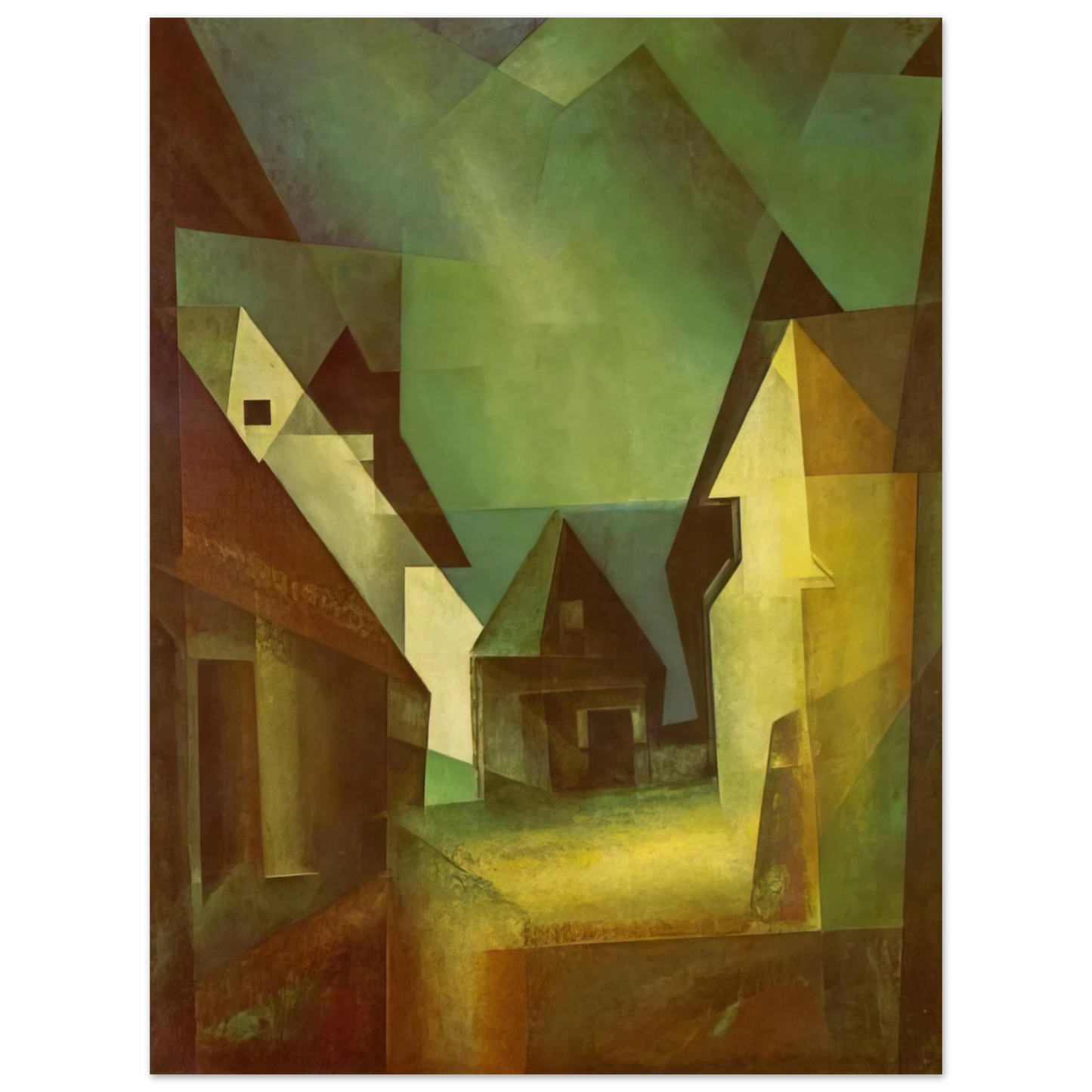
What is the historical significance of Lyonel Feininger's GABERNDORF II 1924?
Created during Feininger's Bauhaus tenure, this artwork exemplifies his Cubist-inspired style, capturing Gaberndorf's village essence with geometric precision and modernist innovation in 1924.
How does the Master's Edition archival paper ensure museum-quality reproduction?
It uses acid-free, pH-above-7 paper with a matte, uncoated finish and natural white hue, preserving fine details and preventing yellowing for a luxurious, long-lasting fine art print.
What are the exact dimensions and paper specifications for this fine art poster?
This 75x100 cm (30x40 inches) print features 250 gsm weight, 0.29 mm thickness, and FSC-certified sustainability, offering a premium, archival-grade reproduction.
How is the print shipped, and are there minimum order requirements?
RedKalion prints and ships on demand with no minimum orders, ensuring each museum-quality reproduction is handled with care and delivered promptly.
Will this archival print resist fading or yellowing over time?
Yes, the acid-free, pH-above-7 paper and archival materials prevent yellowing, maintaining the artwork's vibrancy and quality for generations as a durable fine art poster.
What artistic techniques did Feininger use in GABERNDORF II 1924?
Feininger employed ink and wash with Cubist fragmentation, creating intersecting planes and crystalline forms to depict Gaberndorf's architectural harmony and rhythmic composition.
How does the matte finish enhance the viewing experience of this reproduction?
The matte, uncoated finish reduces glare, highlights texture, and provides a natural white backdrop that deepens the artwork's tonal contrasts and geometric details.