


Discover Unlimited Art Possibilities
At RedKalion, you can find virtually any artwork from any artist, available in a wide range of sizes to perfectly match your space.
If you didn’t find what you’re looking for, contact us at support@redkalion.com . We will source any artwork and produce it in any size and format you need, including art prints, posters, canvas, framed pieces, framed canvas, and more.
For dedicated art enthusiasts, we also offer handcrafted replicas of any artwork, carefully painted by highly skilled artists using traditional techniques.
For custom requests, contact us at support@redkalion.com .
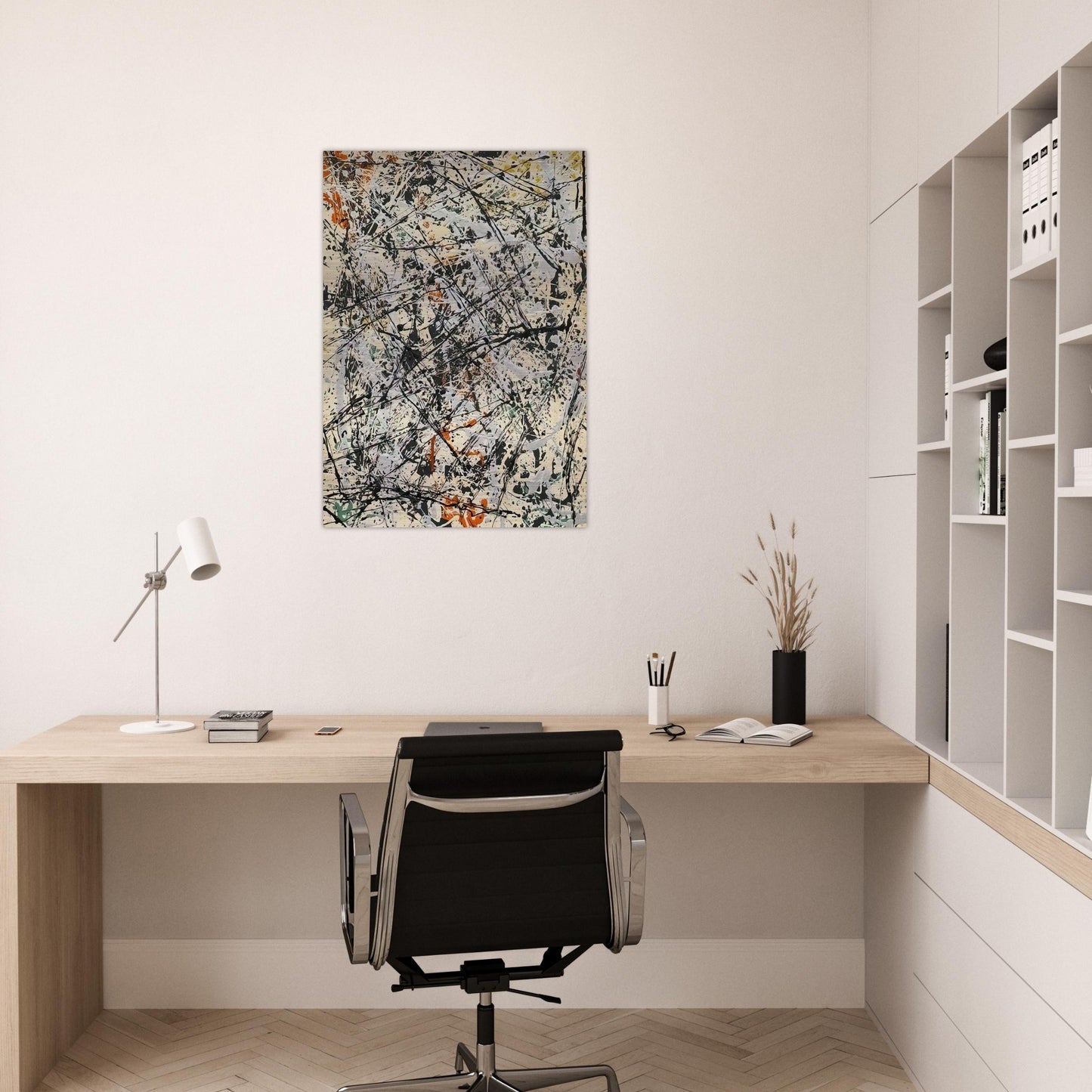
What is the historical significance of Jackson Pollock's NUMBER 32, 1947?
NUMBER 32, 1947 is a seminal work from Pollock's drip painting period, showcasing his revolutionary technique of pouring and splattering paint to create dynamic, abstract compositions that redefined modern art.
How does the brushed aluminum material enhance this Pollock print?
The brushed silver Aluminum DIBOND® adds a metallic sheen and horizontal grain, complementing Pollock's energetic style with a modern, durable finish that highlights the artwork's vivid colors and matte texture.
What are the specifications of this aluminum print?
This print measures 70x100 cm (28x40 inches), features a 3mm thick Aluminum DIBOND® base with direct printing for archival quality, and includes a hanging kit for easy installation.
Is the print glare-free and suitable for various lighting?
Yes, the matte finish ensures a glare-free display, making it ideal for spaces with natural or artificial light, while the metallic silver effect adds depth without reflection.
How is the hanging kit included with this print?
A hanging kit is provided with every order, though specific components may vary by fulfillment country to ensure secure and straightforward mounting.
What makes this reproduction archival-grade and long-lasting?
Using direct print on Aluminum DIBOND® with fade-resistant inks, this print offers museum-quality durability, resisting environmental factors to maintain its vibrant colors for decades.
Can you describe Pollock's technique in NUMBER 32, 1947?
Pollock employed a drip technique, layering enamel and aluminum paint on canvas to create intricate, spontaneous patterns that evoke motion and emotion, a hallmark of his Abstract Expressionist style.