

RedKalion
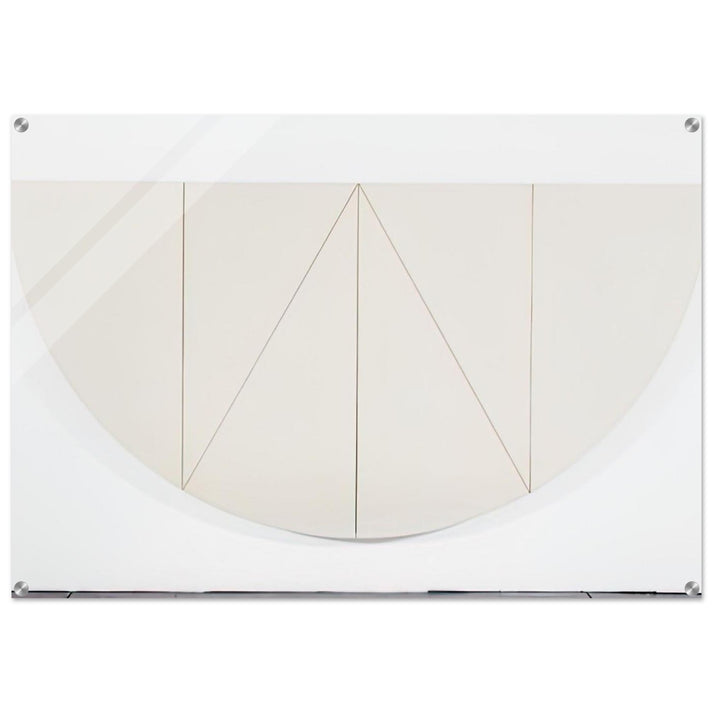
1 2 MANILLA CURVED AREA 1967 - Robert Mangold Acrylic Print - 70x100 cm / 28x40″ inches
1 2 MANILLA CURVED AREA 1967 - Robert Mangold Acrylic Print - 70x100 cm / 28x40″ inches
Couldn't load pickup availability
The Minimalist Vision of Robert Mangold
Experience the profound simplicity of Robert Mangold’s 1/2 Manilla Curved Area (1967), a seminal work that defines the transition of American Minimalism. During the late 1960s, Mangold began exploring the relationship between the boundary of the support and the internal geometry of the plane. This piece, part of his acclaimed 'Areas' series, showcases his mastery over subtle chromatic shifts and the 'shaped canvas' philosophy. By utilizing a neutral, industrial-inspired manila palette, Mangold invites the viewer to focus on the architectural structure and the mathematical grace of the curve.
Museum-Quality Acrylic Reproduction
This RedKalion fine art print is rendered on premium 4mm (0.15") acrylic, providing a depth and luminosity that traditional paper cannot achieve. The acrylic medium enhances the soft, matte-like aesthetic of Mangold's original work while offering a sleek, contemporary finish. Designed with straight-cut corners, this museum-quality reproduction acts as a window into the 1960s avant-garde, preserving the integrity of the original artist's vision with archival-grade precision.
Refined Details and Installation
To ensure your Robert Mangold acrylic print serves as a lasting focal point, each piece is equipped with a professional-grade hanging kit. The kit includes sophisticated hardware with 15mm (0.6") screw heads, designed to fit pre-drilled 8mm (0.31") diameter holes located 14mm (0.55") from each corner. This integrated mounting system ensures a secure, flush-to-wall presentation that complements the modern aesthetic of minimalist art. Elevate your space with an archival masterpiece that endures both in physical quality and historical relevance.


Discover Unlimited Art Possibilities
At RedKalion, you can find virtually any artwork from any artist, available in a wide range of sizes to perfectly match your space.
If you didn’t find what you’re looking for, contact us at support@redkalion.com . We will source any artwork and produce it in any size and format you need, including art prints, posters, canvas, framed pieces, framed canvas, and more.
For dedicated art enthusiasts, we also offer handcrafted replicas of any artwork, carefully painted by highly skilled artists using traditional techniques.
For custom requests, contact us at support@redkalion.com .
What materials are used for this Robert Mangold print?
The artwork is crafted using high-quality 4mm (0.15") acrylic, which ensures a vibrant, durable, and modern finish that protects the integrity of the minimalist color palette.
How is the acrylic print mounted to the wall?
Each print includes a hanging kit with screws and pre-drilled holes at each corner (14mm from the edge), allowing for a professional and secure installation.
How does RedKalion handle international shipping?
We use premium, secure packaging to ship our museum-quality reproductions globally, ensuring your acrylic art arrives in pristine condition regardless of its destination.
Is this print archival and resistant to fading?
Yes, our acrylic prints are designed for archival longevity. The 4mm acrylic provides natural UV protection, ensuring the 'Manilla' tones remain consistent over time.
What happens to transparent areas in the artwork?
For optimal visual presentation and color accuracy, any transparent backgrounds in the digital file default to a solid white backing during the printing process.
What is the significance of the 'Manilla' color in Mangold’s work?
Mangold often used 'industrial' colors like manila or ochre to move away from emotional expressionism, focusing instead on the physical presence of the geometric shape.
What was the 'Shaped Canvas' movement?
Robert Mangold was a leader in the Shaped Canvas movement, which challenged traditional rectangular frames to make the artwork's silhouette a primary element of the composition.