RedKalion
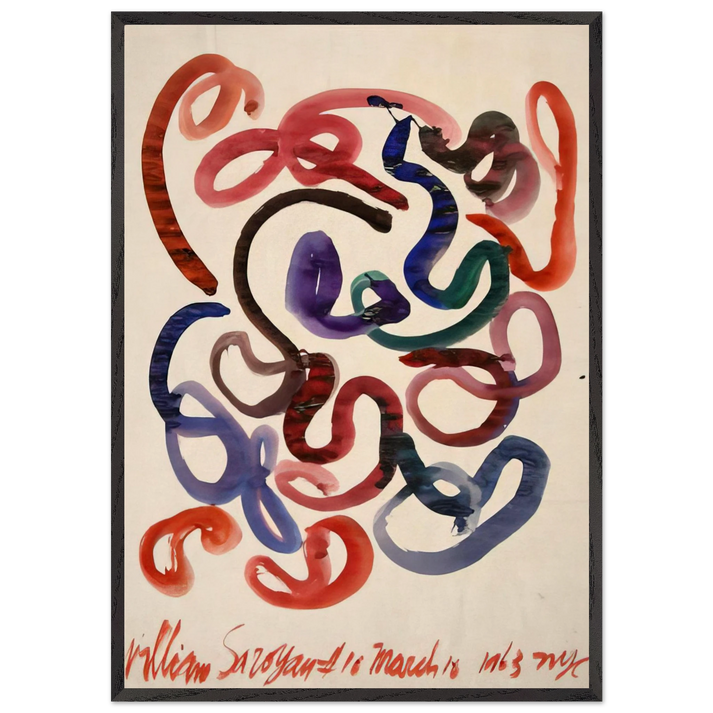
10 March 10 1963 NYC - 1963 - William Saroyan 70x100 cm / 28x40 inches Framed Art Print – Black Wooden Frame
10 March 10 1963 NYC - 1963 - William Saroyan 70x100 cm / 28x40 inches Framed Art Print – Black Wooden Frame
Couldn't load pickup availability
Capture a Moment in Time: William Saroyan’s New York Vision
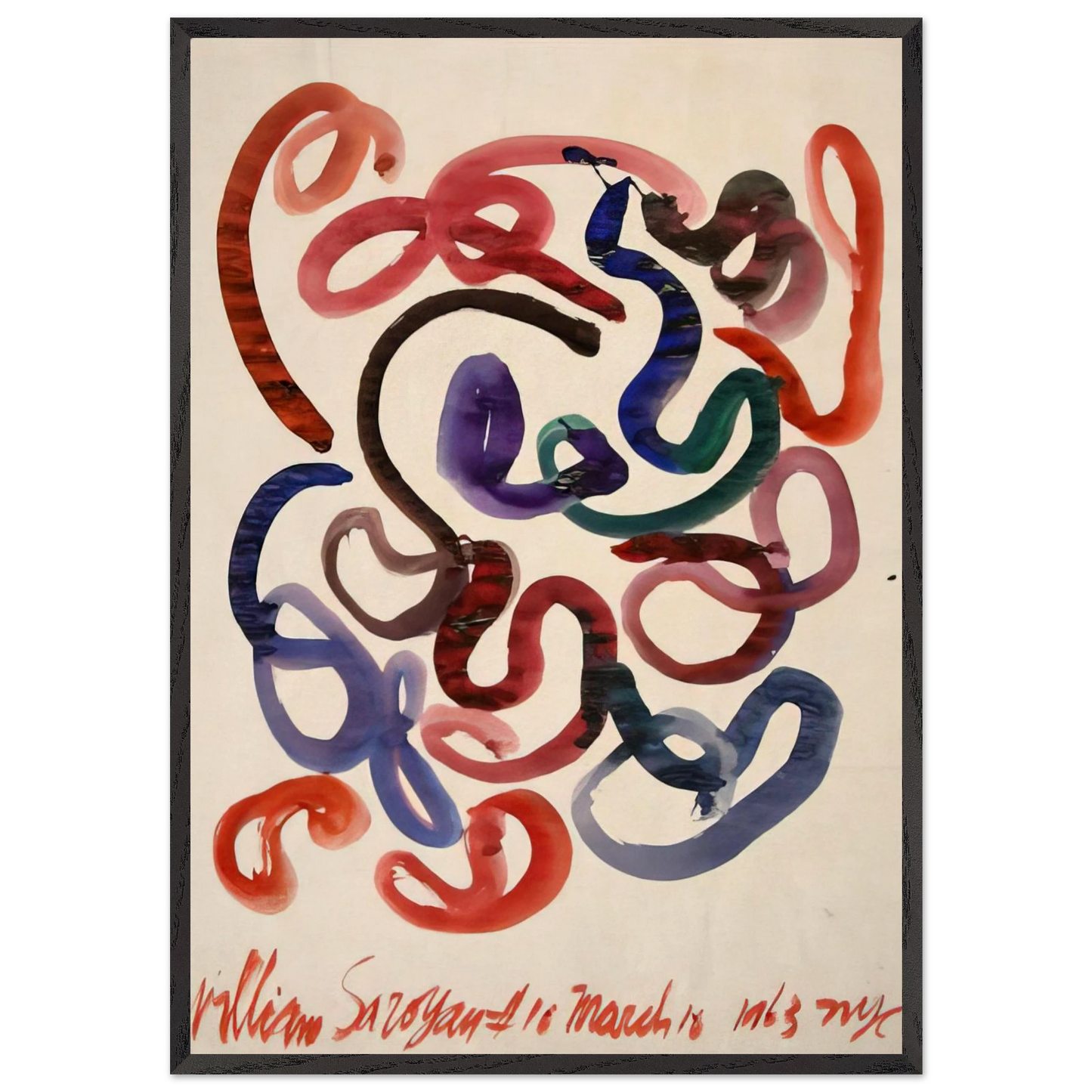
Experience the raw, gestural energy of 10 March 10 1963 NYC, a profound visual statement by the celebrated Pulitzer Prize-winning author and artist William Saroyan. Known for his literary masterpieces, Saroyan’s visual art serves as a spontaneous extension of his writing—a diary of emotion captured through abstract expressionism. This specific piece, dated during the height of the 1960s New York art scene, reflects a mid-century sophistication and a kinetic vitality that only an artist of his caliber could convey.
At RedKalion, we elevate this historical artifact into a centerpiece for your home. This museum-quality reproduction is meticulously crafted to preserve the nuance of Saroyan’s original brushstrokes. Printed on 250 gsm (110 lb) archival paper, the artwork features a matte, natural white finish that eliminates glare while providing a depth of color that is usually reserved for original gallery pieces.
Premium Craftsmanship and Sustainable Elegance
Our commitment to excellence is reflected in the physical presentation of your fine art print. Housed in a responsibly sourced black wooden frame made from oak or ash, this piece offers a substantial presence. With a profile width and depth of 20mm (0.79"), the frame provides a contemporary, high-end feel that surpasses standard commercial framing.
- Shatterproof Protection: Every print is shielded by premium plexiglass, ensuring safety and clarity.
- Archival Integrity: The 0.29 mm thick, acid-free paper ensures your investment remains vibrant for generations.
- Ready to Hang: Includes a professional hanging kit for immediate installation.
- Ethical Sourcing: All materials are FSC-certified, reflecting our dedication to environmental stewardship.
Enhance your collection with an archival masterpiece that bridges the gap between literature and visual art. This framed print is not merely decor; it is a piece of history curated by RedKalion to endure as a legacy of 20th-century creativity.
Discover Unlimited Art Possibilities
At RedKalion, you can find virtually any artwork from any artist, available in a wide range of sizes to perfectly match your space.
If you didn’t find what you’re looking for, contact us at support@redkalion.com . We will source any artwork and produce it in any size and format you need, including art prints, posters, canvas, framed pieces, framed canvas, and more.
For dedicated art enthusiasts, we also offer handcrafted replicas of any artwork, carefully painted by highly skilled artists using traditional techniques.
For custom requests, contact us at support@redkalion.com .
What makes this William Saroyan print museum-quality?
Our Saroyan prints utilize 250 gsm archival-grade paper with a matte finish. This natural white, acid-free paper preserves the high-fidelity detail of the original 1963 NYC series, ensuring it meets the rigorous standards of fine art collectors.
Is the frame included and what are its dimensions?
Yes, this artwork arrives in a premium 20mm thick black frame made from responsibly sourced oak or ash. At 0.79" wide, it offers a more robust and elegant profile than standard 14mm frames.
How does RedKalion ensure the longevity of the print?
We use archival museum-quality paper and shatterproof plexiglass. This combination protects the fine art print from UV light and environmental degradation, ensuring it remains a centerpiece in your home for decades.
What is the shipping and handling process?
Each framed print is securely packaged with reinforced corners and protective padding. We include a pre-installed hanging kit, so your artwork is ready to be displayed immediately upon arrival.
Are the materials used environmentally sustainable?
RedKalion prioritizes the planet. We use FSC-certified wood for our frames and paper, ensuring that your premium art acquisition supports responsible forest management practices.
What is the significance of the date March 10, 1963, in this artwork?
William Saroyan often dated his works to record a specific moment of inspiration. This piece reflects his time in NYC during 1963, capturing the spontaneous, diaristic nature of his mid-century abstract expressionist style.
How does this piece reflect Saroyan’s literary voice?
Saroyan viewed his painting as an extension of his writing. The gestural marks in this 1963 print mirror the rhythm of his prose—bold, humanist, and deeply personal, offering a unique visual narrative.