RedKalion
100 Cans - Andy Warhol Acrylic Print - 70x100 cm / 28x40″ inches | Andy Warhol Wall Art | Andy Warhol Prints
100 Cans - Andy Warhol Acrylic Print - 70x100 cm / 28x40″ inches | Andy Warhol Wall Art | Andy Warhol Prints
Couldn't load pickup availability
The Icon of American Pop: Andy Warhol’s 100 Cans
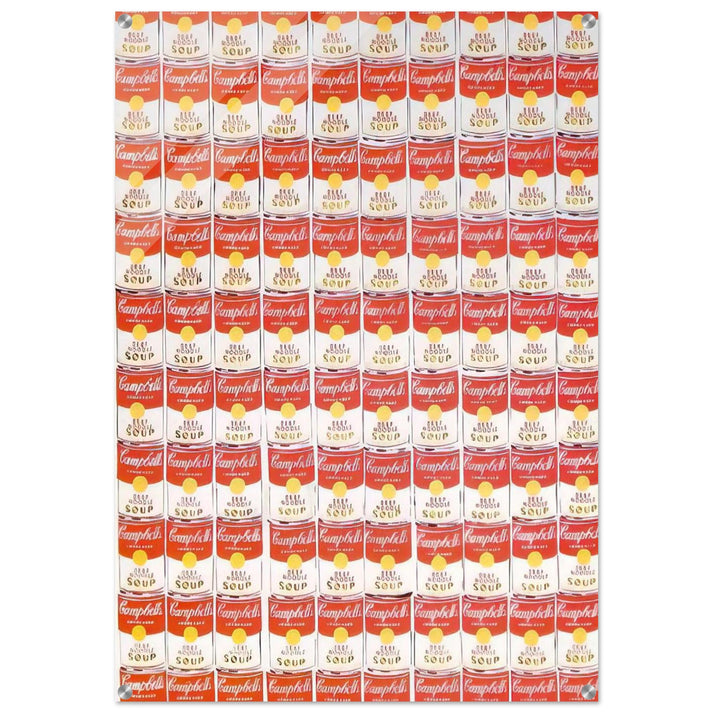
In 1962, Andy Warhol revolutionized the art world by challenging the distinction between fine art and commercial packaging. This museum-quality reproduction of 100 Cans captures the essence of the Pop Art movement, where the repetition of a mundane subject—the Campbell’s Soup can—becomes a profound commentary on mass production and consumer culture. Originally a hand-painted transition into his later silkscreen techniques, this piece remains one of the most recognizable works in 20th-century art history.
Expertly curated by RedKalion, this Andy Warhol wall art is rendered on premium 4mm (0.15") acrylic, providing a depth and luminosity that traditional paper cannot achieve. The sleek, straight-cut corners and high-gloss finish accentuate the grid-like precision of Warhol’s composition, making it a definitive centerpiece for sophisticated modern interiors. This 70x100 cm (28x40″) masterpiece is not just a print; it is a statement of cultural literacy and aesthetic refinement.
Uncompromising Material Excellence
- Premium 4mm Acrylic: A high-grade substrate that offers a vibrant, glass-like finish with enhanced durability.
- Modern Aesthetic: Straight-cut corners provide a crisp, contemporary silhouette that complements the minimalist structure of Warhol’s work.
- Sophisticated Installation: Each piece includes a specialized hanging kit with screws and hardware. Pre-drilled holes (8mm diameter) are placed 14mm from the edges for a secure and balanced mount.
- Archival Integrity: Printed with UV-resistant inks to ensure the colors remain as striking as the day they were produced.
Elevate your space with an archival masterpiece that endures. RedKalion is dedicated to providing collectors with world-class Andy Warhol prints that bridge the gap between historical significance and contemporary luxury.

Discover Unlimited Art Possibilities
At RedKalion, you can find virtually any artwork from any artist, available in a wide range of sizes to perfectly match your space.
If you didn’t find what you’re looking for, contact us at support@redkalion.com . We will source any artwork and produce it in any size and format you need, including art prints, posters, canvas, framed pieces, framed canvas, and more.
For dedicated art enthusiasts, we also offer handcrafted replicas of any artwork, carefully painted by highly skilled artists using traditional techniques.
For custom requests, contact us at support@redkalion.com .
What makes RedKalion's Andy Warhol prints museum-quality?
Our prints utilize archival-grade 4mm acrylic and high-definition UV-resistant inks. This ensures vibrant color accuracy and a durable finish that meets the standards of high-end galleries and collectors.
What are the dimensions and materials of this piece?
This Andy Warhol print measures 70x100 cm (28x40″). It is constructed from 4mm (0.15") acrylic with straight-cut corners for a modern, sleek profile.
How do I install my new Andy Warhol wall art?
Each print includes a professional hanging kit. The acrylic features four pre-drilled 8mm holes (14mm from the edge) and comes with 15mm screw heads for secure mounting.
What is the archival longevity of this acrylic print?
RedKalion acrylic prints are designed to last for decades. The 4mm acrylic protects the pigments from UV degradation, moisture, and fading, ensuring the artwork remains a permanent fixture in your collection.
How is the artwork shipped to ensure safety?
We use reinforced, professional-grade packaging to protect the acrylic from scratches or impact. Each shipment is fully insured to ensure your investment arrives in pristine condition.
Why did Andy Warhol choose to paint Campbell's soup cans?
Warhol sought to democratize art by focusing on everyday consumer products. He celebrated the uniformity of mass production, famously stating that he ate the same soup for lunch for twenty years.
What does the repetition in "100 Cans" signify?
The grid of 100 cans mimics a grocery store shelf, reflecting the mechanical nature of industrial manufacturing and the ubiquity of commercial goods in modern American life.