RedKalion
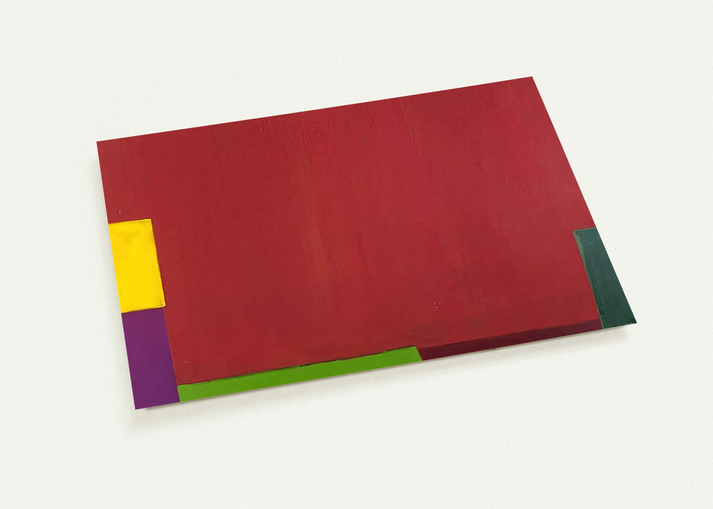
18.6.65 - 1965 By John Hoyland Pack of 10 Post Cards | John Hoyland Post Cards | A6 (10.5 x 14.8 cm) - 4.1 x 5.8 inches
18.6.65 - 1965 By John Hoyland Pack of 10 Post Cards | John Hoyland Post Cards | A6 (10.5 x 14.8 cm) - 4.1 x 5.8 inches
Couldn't load pickup availability
Capturing the Pulse of British Abstraction: 18.6.65 by John Hoyland
In the mid-1960s, John Hoyland emerged as one of Britain’s most influential abstract painters, fundamentally redefining the relationship between color and space. The piece 18.6.65 captures this pivotal moment in his career, following his transformative journey to New York where he encountered the works of Mark Rothko and Barnett Newman. This work is not merely a composition of shapes; it is an exploration of spatial ambiguity and emotional resonance through bold, saturated pigments.
RedKalion is proud to present this John Hoyland masterpiece in a premium pack of 10 postcards. Each A6 card is designed to serve as both a sophisticated vessel for personal correspondence and a miniature gallery piece. To ensure the integrity of Hoyland’s vision, we utilize 12-color fine art printing technology. Unlike standard 4-color inkjet processes, our method captures the nuanced depth and vibrant tonality that define Hoyland’s color-field aesthetic.
Premium Specifications for the Discerning Collector
- Color Fidelity: Advanced 12-color archival printing ensures vivid, accurate reproductions with stunning depth.
- Paper Quality: Printed on 200 gsm (80 lb) paper with a thickness of 0.26 mm (10.3 mils) for a substantial, luxurious feel.
- Sophisticated Finish: A smooth matte finishing provides a glare-free surface, highlighting the subtle textures of the original work.
- Eco-Conscious Curation: All cards are printed on FSC-certified paper, reflecting our commitment to sustainable artistry.
- Historical Significance: Hoyland’s 1965 series marked a departure from his earlier configurations, moving toward the monumental blocks of color that became his signature style.
Elevate your space or your sentiments with an archival-grade reproduction that endures. These postcards are printed on demand to ensure the highest quality control, allowing you to share a piece of 20th-century art history with every note you send.

Discover Unlimited Art Possibilities
At RedKalion, you can find virtually any artwork from any artist, available in a wide range of sizes to perfectly match your space.
If you didn’t find what you’re looking for, contact us at support@redkalion.com . We will source any artwork and produce it in any size and format you need, including art prints, posters, canvas, framed pieces, framed canvas, and more.
For dedicated art enthusiasts, we also offer handcrafted replicas of any artwork, carefully painted by highly skilled artists using traditional techniques.
For custom requests, contact us at support@redkalion.com .
What makes the print quality of these John Hoyland postcards unique?
We use 12-color fine art printing technology. This exceeds standard 4-color printing by providing superior color vibrancy and accurate depth, capturing the precise nuances of Hoyland’s original 1965 palette.
What type of paper is used for the 18.6.65 collection?
Each postcard is printed on premium 200 gsm (80 lb) paper with a 0.26 mm thickness. The smooth matte finish ensures a clean, glare-free display suitable for framing or mailing.
Are the materials used for these postcards environmentally friendly?
Yes. RedKalion is committed to sustainability; all John Hoyland postcards are printed on environmentally conscious, FSC-certified paper that meets rigorous ecological and social standards.
Is there a minimum order requirement for these postcards?
No. These postcards are printed on demand with no minimum order requirements, ensuring you receive fresh, museum-quality reproductions exactly when you need them.
How long will these archival-grade prints last?
By utilizing 12-color archival inks and high-quality 200 gsm paper, these prints are designed for longevity, resisting fading and maintaining their vibrancy for years to come.
What is the significance of the title 18.6.65?
John Hoyland typically titled his 1960s works based on the date of their completion. 18.6.65 reflects his specific creative exploration on June 18th, 1965, during a high point of his abstract period.
How does Hoyland’s 1965 style differ from earlier works?
In 1965, Hoyland transitioned from smaller, rhythmic shapes to large-scale color-field paintings. This era focused on the interaction between massive blocks of color and the emotional impact of scale.