

RedKalion
19651 - ∞, Detail - Conceptual Art - Roman Opalka Brushed Aluminum Print - 70x100 cm / 28x40 inches | Roman Opalka Aluminum Print | Roman Opalka Prints
19651 - ∞, Detail - Conceptual Art - Roman Opalka Brushed Aluminum Print - 70x100 cm / 28x40 inches | Roman Opalka Aluminum Print | Roman Opalka Prints
Couldn't load pickup availability
An Infinite Legacy: Roman Opalka's Conceptual Masterpiece
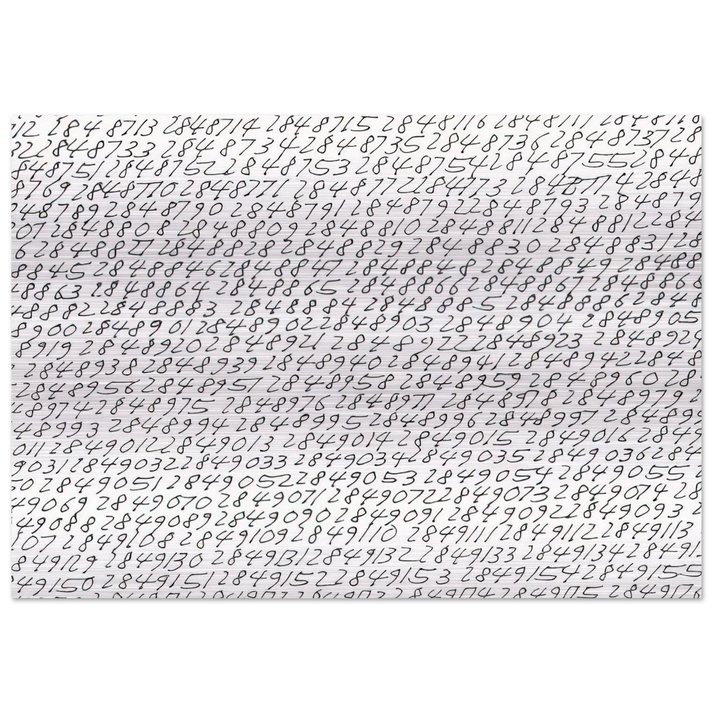
Step into the profound meditation on time and existence with this museum-quality reproduction of Roman Opalka’s 1965 / 1 – ∞, Detail. A foundational pillar of 20th-century conceptual art, Opalka’s life work was a singular, obsessive project: to record the passage of time by painting numbers from one toward infinity. This specific Roman Opalka print captures the meticulous, rhythmic essence of his 'Details,' offering a sophisticated focal point for any contemporary space.
The Intersection of Concept and Materiality
To honor the clinical precision and intellectual depth of Opalka’s vision, RedKalion presents this work on brushed silver Aluminum DIBOND®. This 3mm (0.12") thick archival-grade substrate features a horizontal grain that adds a dynamic, metallic energy to the piece. Unlike traditional paper, the direct-print technology on aluminum ensures that unprinted white areas reveal the raw, silver metallic effect of the material, perfectly complementing the monochromatic palette of Opalka's series.
- Archival Durability: The 3mm DIBOND® core provides a rigid, warp-resistant base designed to last a lifetime.
- Sophisticated Finish: A matte, glare-free surface ensures that the intricate numbering is visible from every angle, even in high-light environments.
- Contemporary Aesthetic: The metallic silver finish and slim profile offer a sleek, industrial elegance that mirrors the artist's own disciplined methodology.
By choosing this Roman Opalka aluminum print, you are not merely purchasing decor; you are acquiring a piece of art history. Opalka began each canvas (which he called a 'Detail') with a dark background, progressively adding 1% more white to each subsequent work until he reached what he called 'blanc sur blanc' (white on white). This reproduction captures that transition, inviting the viewer to contemplate the finite nature of life against the backdrop of the infinite.


Discover Unlimited Art Possibilities
At RedKalion, you can find virtually any artwork from any artist, available in a wide range of sizes to perfectly match your space.
If you didn’t find what you’re looking for, contact us at support@redkalion.com . We will source any artwork and produce it in any size and format you need, including art prints, posters, canvas, framed pieces, framed canvas, and more.
For dedicated art enthusiasts, we also offer handcrafted replicas of any artwork, carefully painted by highly skilled artists using traditional techniques.
For custom requests, contact us at support@redkalion.com .
What makes the brushed aluminum finish unique for this Opalka print?
The brushed silver Aluminum DIBOND® features a visible horizontal grain. In this Roman Opalka reproduction, white areas are left unprinted to reveal the raw metallic texture, creating a sophisticated interplay between the conceptual numbers and the industrial material.
Is the print protected against glare and reflections?
Yes. We use a high-tech direct print method on the aluminum surface, resulting in a matte, glare-free finish. This makes it an ideal choice for rooms with large windows or professional lighting, ensuring the artwork remains clear.
How do I hang my Roman Opalka Aluminum Print?
Every RedKalion aluminum print comes with a specialized hanging kit included. The specific hardware varies by fulfillment country to ensure the most secure and aesthetic mounting for your 70x100 cm masterpiece.
Is this print considered archival quality?
Absolutely. The 3mm Aluminum DIBOND® is a premium, museum-grade material favored by galleries for its rigidity and resistance to environmental factors, ensuring your conceptual art investment does not warp or fade over time.
How is the artwork packaged for shipping?
RedKalion utilizes high-durability, custom-sized protective packaging to ensure your brushed aluminum print arrives in pristine condition. Our global logistics network ensures safe transit and professional handling of all fine art orders.
What is the historical significance of Opalka's '1 – ∞' project?
Started in 1965, this project was Opalka's attempt to map time. He spent his entire life painting numbers sequentially. Each 'Detail' represents a specific moment in his life, ending only with his passing in 2011.
Why does the background color vary in Opalka's 'Details'?
Opalka originally started with a black background. From 1968 onwards, he added 1% more white to the background of each new canvas, intending to eventually reach a state of 'white on white' where time and space merge.