RedKalion
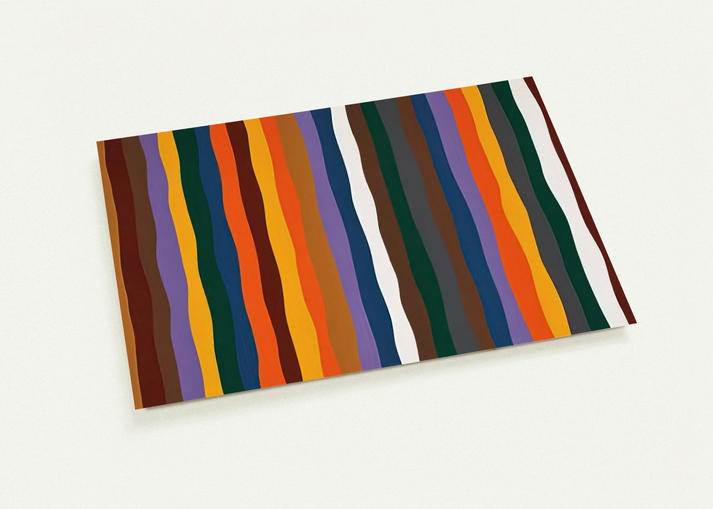
#20 - 1977 By Karl Benjamin Pack of 10 Post Cards | Karl Benjamin Post Cards | A6 (10.5 x 14.8 cm) - 4.1 x 5.8 inches
#20 - 1977 By Karl Benjamin Pack of 10 Post Cards | Karl Benjamin Post Cards | A6 (10.5 x 14.8 cm) - 4.1 x 5.8 inches
Couldn't load pickup availability
Elevate Your Correspondence with the Geometric Precision of Karl Benjamin
Experience the vibrant legacy of West Coast Hard-edge painting with this exclusive pack of 10 Karl Benjamin postcards. Featuring the mesmerizing work #20 - 1977, these postcards represent a pinnacle of Abstract Classicism, where color and form intersect with mathematical grace. RedKalion is proud to offer these museum-quality reproductions, curated for those who appreciate the intersection of mid-century modern aesthetics and contemporary printing excellence.
Museum-Quality Reproductions of #20 - 1977
Karl Benjamin was a pioneer of the 1950s Abstract Classicist movement, renowned for his ability to create spatial depth through flat planes of color. #20 - 1977 showcases his mastery of color theory and rhythm, a hallmark of his later career. Our fine art postcards utilize 12-color printing technology, ensuring that the bold, saturated hues Benjamin intended are reproduced with stunning accuracy and depth—far surpassing the limitations of standard commercial printing.
The RedKalion Standard: Archival Materials and Sustainable Craft
At RedKalion, we believe that art should endure. Each postcard is printed on 200 gsm (80 lb) FSC-certified paper, offering a substantial, premium feel. The smooth matte finish eliminates glare, allowing the geometric clarity of Benjamin's work to shine in any lighting condition. Whether used for heartfelt correspondence or as a curated set of mini-prints for your home or office, these cards embody the archival-grade quality of a gallery-standard reproduction.
- Technological Superiority: 12-color fine art printing for vivid color vibrancy.
- Sustainable Excellence: Printed on demand using environmentally conscious, FSC-certified paper.
- Precise Specifications: A6 format (10.5 x 14.8 cm) with a thickness of 0.26 mm (10.3 mils).
- Glaze-Free Display: Professional smooth matte finish for sophisticated viewing.

Discover Unlimited Art Possibilities
At RedKalion, you can find virtually any artwork from any artist, available in a wide range of sizes to perfectly match your space.
If you didn’t find what you’re looking for, contact us at support@redkalion.com . We will source any artwork and produce it in any size and format you need, including art prints, posters, canvas, framed pieces, framed canvas, and more.
For dedicated art enthusiasts, we also offer handcrafted replicas of any artwork, carefully painted by highly skilled artists using traditional techniques.
For custom requests, contact us at support@redkalion.com .
What are the dimensions and quantities included in this set?
This set includes a pack of 10 flat postcards. Each card is A6 size, measuring 10.5 x 14.8 cm (4.1 x 5.8 inches), perfect for standard mailing or framing as a miniature art series.
What makes the printing quality of RedKalion postcards unique?
We use advanced 12-color fine art printing technology. This process provides much greater color depth and accuracy than standard 4-color printers, capturing the specific nuances of Karl Benjamin's color palettes.
What type of paper is used for these Karl Benjamin postcards?
The cards are printed on 200 gsm (80 lb) paper with a thickness of 0.26 mm. The paper features a smooth matte finish and is FSC-certified for environmental sustainability.
How long will these fine art prints last without fading?
By using archival-grade inks and high-quality matte paper, these reproductions are designed for longevity. The 12-color process ensures the pigments remain vivid and resist fading when kept out of direct sunlight.
How are these postcards shipped to ensure they arrive safely?
Each pack is printed on demand and carefully packaged to prevent bending or moisture damage during transit, ensuring your Karl Benjamin prints arrive in gallery-perfect condition.
Who was Karl Benjamin and what is Hard-edge painting?
Karl Benjamin was a leading American painter associated with 'Hard-edge' painting, a movement characterized by abrupt transitions between color areas, geometric forms, and a clean, non-gestural application of paint.
What is the significance of the year 1977 in Benjamin's work?
By 1977, Benjamin's work had evolved from earlier modular patterns into complex, rhythmic explorations of color relationships and spatial dynamics, as seen in the balanced composition of piece #20.