

RedKalion
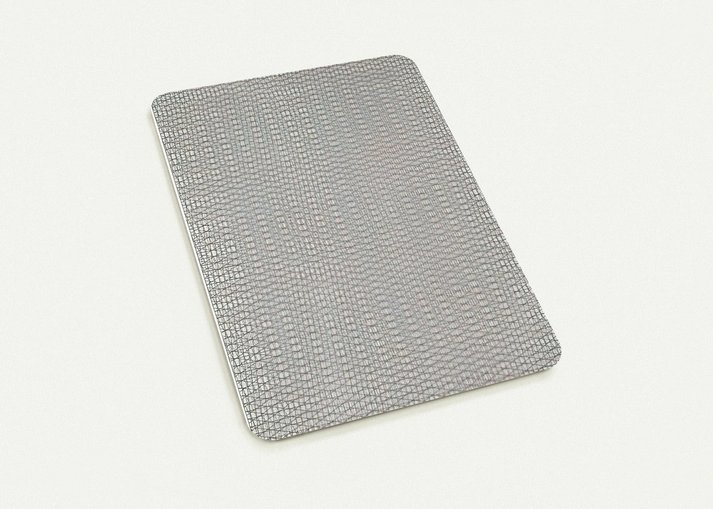
3 grillages superposés 0°, 15°, -15° - 1959 By Francois Morellet Pack of 10 Post Cards | Francois Morellet Post Cards | A6 (10.5 x 14.8 cm) - 4.1 x 5.8 inches
3 grillages superposés 0°, 15°, -15° - 1959 By Francois Morellet Pack of 10 Post Cards | Francois Morellet Post Cards | A6 (10.5 x 14.8 cm) - 4.1 x 5.8 inches
Couldn't load pickup availability
Elevate Your Correspondence with François Morellet’s Geometric Precision
Experience the radical simplicity and intellectual rigor of François Morellet with this exclusive pack of 10 fine art postcards. Featuring his seminal 1959 work, 3 grillages superposés 0°, 15°, -15°, these cards capture the essence of Concrete Art and the systemic abstraction that defined Morellet’s career. By overlaying three identical grids at precise mathematical intervals, Morellet created complex moiré patterns and optical rhythms that challenge the viewer's perception of space and order.
At RedKalion, we honor the legacy of this minimalist master by applying museum-quality reproduction standards to every card. Unlike standard commercial printing, our 12-color fine art printing technology ensures that every line of the superimposed grids is rendered with absolute clarity and deep, saturated blacks, preserving the structural integrity of the original 1959 composition.
- Artist: François Morellet (1926–2016)
- Work: 3 grillages superposés 0°, 15°, -15° (1959)
- Format: Pack of 10 flat post cards, A6 size (10.5 x 14.8 cm)
- Paper Quality: 200 gsm (80 lb) smooth matte finish for a glare-free, sophisticated touch.
- Sustainability: Printed on FSC-certified, environmentally conscious paper.
- Technique: High-fidelity archival printing for lasting color vibrancy.
Whether used for thoughtful correspondence or as a curated set of miniature prints for your workspace, these postcards serve as a testament to the power of geometric systems. RedKalion is dedicated to providing art enthusiasts with archival-grade materials that bridge the gap between historical significance and modern aesthetic excellence.


Discover Unlimited Art Possibilities
At RedKalion, you can find virtually any artwork from any artist, available in a wide range of sizes to perfectly match your space.
If you didn’t find what you’re looking for, contact us at support@redkalion.com . We will source any artwork and produce it in any size and format you need, including art prints, posters, canvas, framed pieces, framed canvas, and more.
For dedicated art enthusiasts, we also offer handcrafted replicas of any artwork, carefully painted by highly skilled artists using traditional techniques.
For custom requests, contact us at support@redkalion.com .
What makes these François Morellet postcards museum-quality?
We use advanced 12-color fine art printing technology rather than standard 4-color processes. This ensures the geometric precision of Morellet’s grids is captured with stunning depth and accuracy, meeting the standards of discerning art collectors.
What is the weight and feel of the postcard paper?
Each card is printed on 200 gsm (80 lb) paper with a thickness of 0.26 mm. The smooth matte finish provides a clean, glare-free surface that feels substantial and premium in hand.
Are these postcards environmentally friendly?
Yes. At RedKalion, we prioritize sustainability. These postcards are printed on demand using FSC-certified paper, ensuring the materials are sourced from responsibly managed forests.
Will the image fade over time?
Our archival-grade inks and 12-color printing process are designed for longevity. The colors remain vibrant and the blacks remain deep for decades, making these cards suitable for both mailing and framing.
What is the standard size of these art postcards?
These are standard A6 postcards, measuring 10.5 x 14.8 cm (4.1 x 5.8 inches). This size is perfect for international mailing or display in standard small frames.
What does the title '3 grillages superposés' signify in Morellet’s work?
It translates to '3 superimposed grids.' This 1959 piece demonstrates Morellet's interest in systematic art, where the interaction of simple geometric layers at specific angles (0°, 15°, -15°) creates complex visual phenomena.
Why did François Morellet choose specific mathematical angles?
Morellet used mathematical systems to remove the 'artist’s hand' and subjective emotion from his work. Angles like 15° were chosen to explore moiré effects and the objective beauty of interference patterns.