
RedKalion
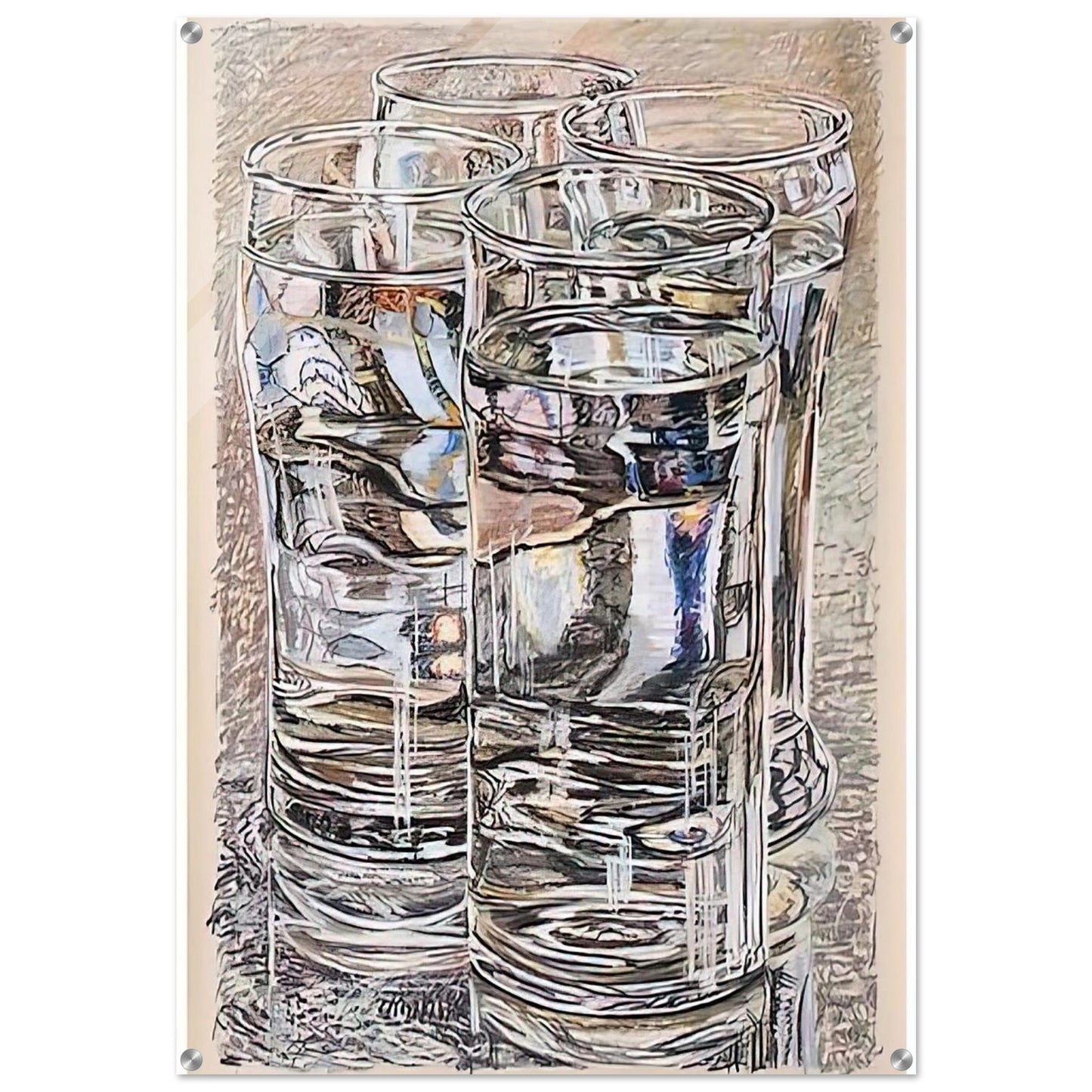
4 GLASSES 1974 - Janet Fish Acrylic Print - 70x100 cm / 28x40″ inches
4 GLASSES 1974 - Janet Fish Acrylic Print - 70x100 cm / 28x40″ inches
Couldn't load pickup availability
Elevate Your Space with Janet Fish’s Luminescent Masterpiece
Experience the mesmerizing interplay of light and transparency with our museum-quality reproduction of Janet Fish’s '4 Glasses' (1974). This quintessential example of contemporary American realism captures the delicate dance of refraction and liquid movement, rendered with a sophistication that transforms everyday objects into a profound visual exploration. At RedKalion, we have meticulously curated this archival fine art print to honor Fish’s pioneering spirit in the 1970s photorealism movement.
The Artistry of Janet Fish
In 1974, Janet Fish was at the height of her investigation into the energy of light. Unlike traditional still-life painters, Fish focuses not just on the objects themselves, but on how light passes through them, creating a vibrant, rhythmic composition. Her technique involves capturing the specific 'mood' of light at different times of day, making '4 Glasses' a dynamic study of luminosity that feels alive and ever-changing.
Premium Acrylic Construction
To do justice to the translucent beauty of this work, RedKalion offers this piece as a 4mm (0.15") acrylic print. This medium is specifically chosen for its ability to enhance the depth and saturation of Fish's palette, providing a sleek, glass-like finish that mirrors the subject matter itself. The straight-cut corners and transparent-to-white background ensures the colors remain vivid and the focus stays entirely on the intricate reflections within the glasses.
Museum-Grade Specifications
- Material: High-grade 4mm acrylic for a vibrant, durable, and sophisticated aesthetic.
- Mounting: Includes a professional hanging kit with screws and pre-drilled holes at each corner (14mm from the edge).
- Design: Modern straight-cut corners that provide a clean, contemporary silhouette for any gallery-style setting.
- Archival Quality: Designed to resist fading and environmental wear, ensuring this masterpiece remains a centerpiece in your collection for decades.
Discover Unlimited Art Possibilities
At RedKalion, you can find virtually any artwork from any artist, available in a wide range of sizes to perfectly match your space.
If you didn’t find what you’re looking for, contact us at support@redkalion.com . We will source any artwork and produce it in any size and format you need, including art prints, posters, canvas, framed pieces, framed canvas, and more.
For dedicated art enthusiasts, we also offer handcrafted replicas of any artwork, carefully painted by highly skilled artists using traditional techniques.
For custom requests, contact us at support@redkalion.com .
What materials are used for the 4 Glasses (1974) print?
This RedKalion print is crafted from 4mm (0.15") high-quality acrylic, providing a sleek, vibrant finish that enhances the light and depth of Janet Fish's original artwork while ensuring long-term durability.
How is the artwork mounted and installed?
Each print includes a premium hanging kit with screws. We provide pre-drilled holes at each corner (14mm from the edge) with 8mm diameters and 15mm screw heads for a secure, professional installation.
How is the print protected during shipping?
We utilize specialized archival-grade packaging to ensure your Janet Fish acrylic print arrives in pristine condition. Each piece is securely buffered and tracked throughout the logistics process to guarantee safety.
Will the colors of the acrylic print fade over time?
No, our museum-quality acrylic prints are UV-resistant and built to archival standards. The 4mm acrylic protects the pigments from environmental factors, preserving the artwork's vibrancy for a lifetime of display.
What is the finish and corner style of this piece?
The print features sophisticated straight-cut corners for a clean, modern look. Transparent areas are defaulted to white, ensuring the complex reflections in Fish’s glassware are presented with maximum clarity and contrast.
What is the historical significance of '4 Glasses' (1974)?
Created in 1974, this piece represents Janet Fish's innovative approach to realism. It broke traditional still-life boundaries by focusing on the 'energy of light' and liquid refraction rather than static objects.
Why did Janet Fish choose glassware as a primary subject?
Fish was fascinated by how light transforms surfaces. Glass allowed her to paint 'the movement of light,' where shapes are defined by highlights and shadows rather than hard outlines, a hallmark of her 1970s style.