

RedKalion
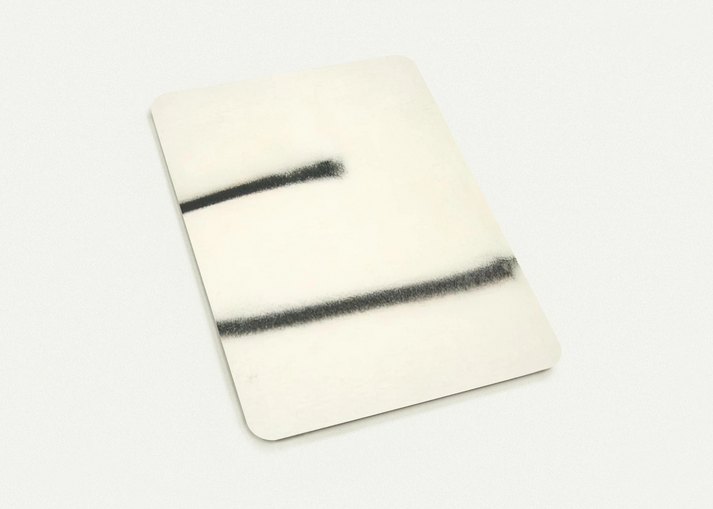
66-6-A - 1966 By Martin Barre Pack of 10 Post Cards | Martin Barre Post Cards | A6 (10.5 x 14.8 cm) - 4.1 x 5.8 inches
66-6-A - 1966 By Martin Barre Pack of 10 Post Cards | Martin Barre Post Cards | A6 (10.5 x 14.8 cm) - 4.1 x 5.8 inches
Couldn't load pickup availability
Elevate Your Correspondence with Martin Barré’s Conceptual Mastery
Immerse your recipients in the avant-garde world of Martin Barré with this exclusive pack of 10 fine art postcards featuring 66-6-A - 1966. As a central figure in French abstraction, Barré’s work from the mid-1960s represents a radical departure from traditional composition, utilizing the aerosol spray can to explore the relationship between the mark and the void. This museum-quality reproduction captures the airy, systematic elegance of his 1966 series, where the line becomes a trace of a physical gesture in space.
Unrivaled Print Precision and Material Quality
At RedKalion, we bridge the gap between historical significance and modern craftsmanship. Each A6 postcard is produced using our advanced 12-color fine art printing technology. Unlike standard 4-color inkjet processes, our method ensures that every subtle tonal shift and spray-painted texture of Barré’s original vision is rendered with stunning depth and color vibrancy. The result is a tactile, visual experience that honors the integrity of the 1960s minimalist movement.
Specifications for the Discerning Collector
- Artist: Martin Barré (1924–1993).
- Title: 66-6-A - 1966.
- Paper Weight: Professional-grade 200 gsm (80 lb) for a sturdy, premium feel.
- Finish: A sophisticated smooth matte finish that eliminates glare and enhances sophisticated aesthetics.
- Dimensions: A6 (10.5 x 14.8 cm / 4.1 x 5.8 inches).
- Eco-Conscious Excellence: Printed on FSC-certified paper to ensure your collection is as sustainable as it is beautiful.
Whether used for thoughtful correspondence or displayed as a curated set of miniature gallery prints, these Martin Barré postcards offer a sophisticated way to share a piece of art history. RedKalion ensures that every print is a durable masterpiece, allowing the minimalist spirit of the 1960s to endure in your personal collection.


Discover Unlimited Art Possibilities
At RedKalion, you can find virtually any artwork from any artist, available in a wide range of sizes to perfectly match your space.
If you didn’t find what you’re looking for, contact us at support@redkalion.com . We will source any artwork and produce it in any size and format you need, including art prints, posters, canvas, framed pieces, framed canvas, and more.
For dedicated art enthusiasts, we also offer handcrafted replicas of any artwork, carefully painted by highly skilled artists using traditional techniques.
For custom requests, contact us at support@redkalion.com .
What printing technology is used for these Martin Barré postcards?
RedKalion uses 12-color fine art printing technology. This provides superior color vibrancy and depth compared to standard 4-color prints, ensuring the 66-6-A - 1966 reproduction is museum-quality and accurate to the original artwork.
What are the physical dimensions and paper quality?
Each postcard is A6 size (10.5 x 14.8 cm). They are printed on 200 gsm (80 lb) FSC-certified paper with a thickness of 0.26 mm, featuring a smooth matte, glare-free finish for a premium tactile feel.
Is the paper used for these prints environmentally friendly?
Yes, sustainability is a priority for RedKalion. All postcards are printed on FSC-certified paper, ensuring the materials are sourced from responsibly managed forests that provide environmental, social, and economic benefits.
How are these postcards shipped and produced?
Our Martin Barré postcards are printed on demand to reduce waste. There is no minimum order, and they are carefully packaged in packs of 10 to ensure they arrive in pristine condition at your doorstep.
Will the colors fade over time?
No, we use archival-grade inks and high-quality 200 gsm paper. This combination ensures long-term durability and color stability, allowing these fine art reproductions to maintain their visual impact for years.
What is the historical significance of Martin Barré's 66-6-A?
66-6-A belongs to Barré’s spray-painting period. In 1966, he used aerosol cans to create minimalist, systematic lines, emphasizing the process of painting and the spatial relationship between the mark and the canvas surface.
Why is a smooth matte finish preferred for this artwork?
A smooth matte finish is ideal for minimalist works like Barré's. It prevents light reflections and glare, allowing the viewer to appreciate the precise textures and subtle geometric arrangements without visual interference.