
RedKalion
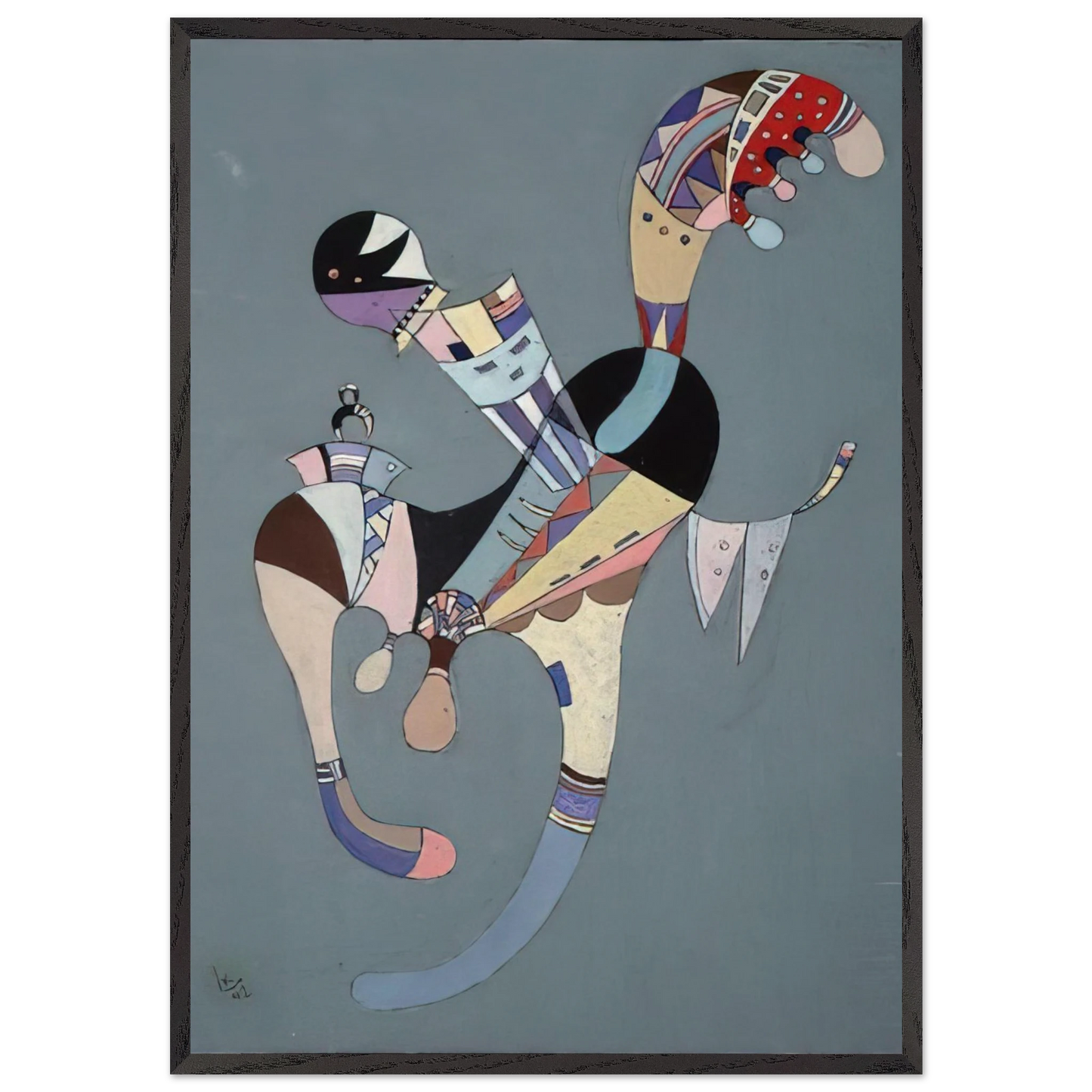
A FLOATING FIGURE 1942 - Wassily Kandinsky 70x100 cm / 28x40 inches Framed Art Print – Black Wooden Frame
A FLOATING FIGURE 1942 - Wassily Kandinsky 70x100 cm / 28x40 inches Framed Art Print – Black Wooden Frame
Couldn't load pickup availability
Elevate Your Space with Wassily Kandinsky’s "A Floating Figure" (1942)
Experience the transcendental brilliance of Wassily Kandinsky with this museum-quality reproduction of his 1942 masterpiece, A Floating Figure. Created during his late Parisian period, this work represents the pinnacle of Kandinsky's biomorphic abstraction. Unlike his earlier geometric periods, his later works are characterized by whimsical, cell-like forms and organic shapes that seem to drift across a dreamlike void. This 70x100 cm (28x40 inches) framed art print captures every nuanced color and intricate line of the original composition, inviting a sense of rhythmic movement and intellectual curiosity into your home.
The RedKalion Standard: Unrivaled Archival Quality
At RedKalion, we believe that world-class art deserves world-class materials. This fine art print is meticulously rendered on 250 gsm (110 lb) archival-grade paper. The natural white, uncoated matte finish ensures that the vibrant colors remain true to the artist's vision without the distraction of glare. This heavy-weight, museum-quality paper is specifically selected for its longevity, ensuring your investment remains a centerpiece for decades. To protect the integrity of the print, each piece is shielded by shatterproof, transparent plexiglass, offering both clarity and security.
Masterful Framing and Sustainable Craftsmanship
Your Kandinsky masterpiece arrives in a premium black wooden frame, expertly crafted from responsibly sourced oak and ash. We have selected a 20mm (0.79") profile—providing a more substantial and luxurious presence than standard 14mm gallery frames. Our commitment to sustainability is reflected in our use of FSC-certified materials, ensuring that your décor choices support global reforestation efforts. Each frame includes a professional hanging kit, making it ready-to-hang the moment it arrives at your door.
Historical Context: The Biomorphic Evolution
By 1942, Kandinsky had moved away from the rigid constructivism of his Bauhaus years, embracing a softer, more lyrical vocabulary inspired by microscopic organisms and embryology. A Floating Figure reflects his fascination with the invisible forces of life, translated through a palette that is both sophisticated and ethereal. Owning this reproduction is more than a design choice; it is an acquisition of art history, meticulously curated by RedKalion to meet the standards of the most discerning collectors.
Discover Unlimited Art Possibilities
At RedKalion, you can find virtually any artwork from any artist, available in a wide range of sizes to perfectly match your space.
If you didn’t find what you’re looking for, contact us at support@redkalion.com . We will source any artwork and produce it in any size and format you need, including art prints, posters, canvas, framed pieces, framed canvas, and more.
For dedicated art enthusiasts, we also offer handcrafted replicas of any artwork, carefully painted by highly skilled artists using traditional techniques.
For custom requests, contact us at support@redkalion.com .
What are the specifications of the paper used for this Kandinsky print?
We use 250 gsm (110 lb) archival museum-quality paper. It features a natural white, matte, and uncoated finish, which is ideal for fine art reproductions to prevent glare and ensure long-term color preservation.
Does the framed art print come ready to hang?
Yes, each framed print includes a professional hanging kit. The frame is pre-assembled with shatterproof plexiglass, making it ready to hang directly on your wall upon arrival.
What materials are used for the frame?
The frame is made from responsibly sourced oak and ash wood. It measures 20mm (0.79") in both thickness and width, offering a premium look that is sturdier than standard frames.
How is the artwork protected during shipping?
We use shatterproof plexiglass to protect the print and ship each piece in robust, secure packaging to ensure it arrives in pristine, museum-quality condition.
Is the paper used for the print environmentally friendly?
Absolutely. We use FSC-certified paper or equivalent sustainable materials, ensuring that your art print is produced with the highest environmental and social standards in mind.
What is the significance of the year 1942 in Kandinsky's career?
1942 falls within Kandinsky's late Parisian period. During this time, he moved toward biomorphic abstraction, incorporating organic, fluid shapes inspired by biology and cellular life into his compositions.
What does biomorphic abstraction mean in A Floating Figure?
Biomorphic abstraction refers to the use of rounded, organic shapes that resemble living organisms. In this 1942 work, Kandinsky uses these forms to create a sense of weightlessness and life.