
RedKalion
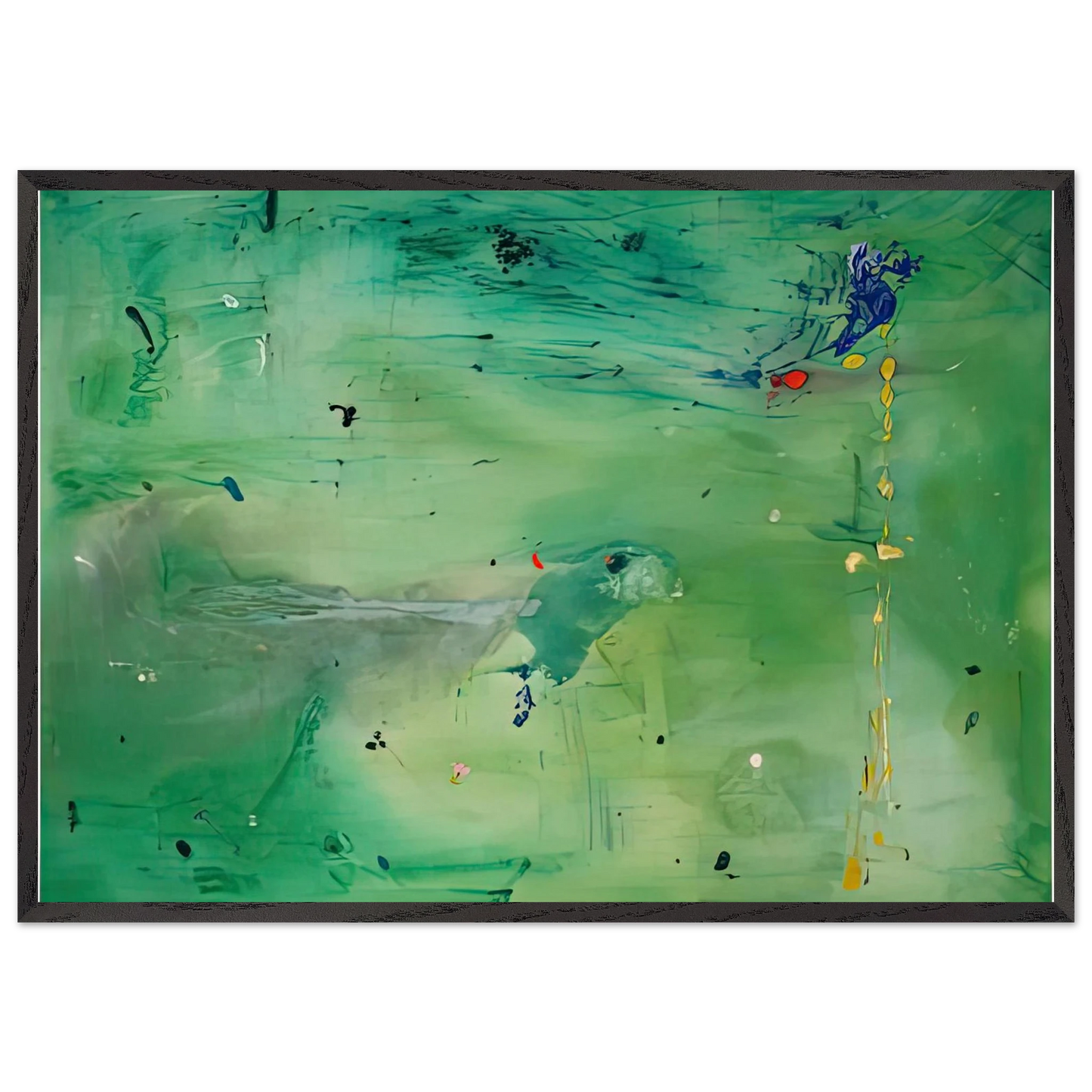
A Green Thought in a Green Shade 1981- - Helen Frankenthaler 70x100 cm / 28x40 inches Framed Art Print – Black Wooden Frame
A Green Thought in a Green Shade 1981- - Helen Frankenthaler 70x100 cm / 28x40 inches Framed Art Print – Black Wooden Frame
Couldn't load pickup availability
An Atmospheric Masterpiece: A Green Thought in a Green Shade (1981)
Experience the profound tranquility of Helen Frankenthaler’s 1981 masterwork, A Green Thought in a Green Shade. This exceptional fine art print captures the essence of the Color Field movement, showcasing Frankenthaler’s transition into more complex, atmospheric layers during the early 1980s. The title, borrowed from Andrew Marvell’s seventeenth-century poem 'The Garden', reflects a deep, meditative engagement with nature translated through the language of abstraction.
As a cornerstone of postwar American art, Frankenthaler’s 'soak-stain' technique revolutionized how color interacts with surface. In this reproduction, the ethereal washes of green and subtle tonal shifts are preserved with meticulous clarity. This 70x100 cm (28x40 inches) piece serves as more than decor; it is a sophisticated dialogue between the viewer and the history of modernism, perfect for elevating any curated living space or executive office.
Museum-Grade Quality by RedKalion
At RedKalion, we believe that world-class art deserves world-class materials. This archival reproduction is printed on 250 gsm (110 lb) natural white museum-quality paper, chosen for its ability to hold depth and nuance without the glare of traditional photographic finishes. The matte, uncoated surface ensures an authentic, painterly feel that honors the original canvas.
- Frame Material: Premium black wooden frame crafted from responsibly sourced ash and oak.
- Profile: A substantial 20mm (0.79") width and depth, providing a more presence-heavy aesthetic than standard 14mm frames.
- Protection: Shatterproof, transparent plexiglass ensures your artwork remains pristine and safe for years to come.
- Installation: Arrives ready-to-hang with a professional hanging kit included.
- Sustainability: Printed on FSC-certified materials, reflecting our commitment to the environment and future generations.
Discover Unlimited Art Possibilities
At RedKalion, you can find virtually any artwork from any artist, available in a wide range of sizes to perfectly match your space.
If you didn’t find what you’re looking for, contact us at support@redkalion.com . We will source any artwork and produce it in any size and format you need, including art prints, posters, canvas, framed pieces, framed canvas, and more.
For dedicated art enthusiasts, we also offer handcrafted replicas of any artwork, carefully painted by highly skilled artists using traditional techniques.
For custom requests, contact us at support@redkalion.com .
What materials are used for this fine art print?
We use 250 gsm (110 lb) archival museum-quality paper. It is natural white, uncoated, and matte-finished to ensure the colors of Frankenthaler’s work remain vibrant and true to the original for decades without yellowing.
Is the frame ready to hang upon arrival?
Yes. This 70x100 cm print comes in a 20mm thick black wooden frame and includes a complete hanging kit. It is designed to be displayed immediately upon unboxing with no additional assembly required.
What is the significance of the 20mm frame thickness?
Our frames are 20mm (0.79") wide and deep, which is thicker than the industry standard of 14mm. This adds a sophisticated, gallery-style weight to the artwork, enhancing its visual presence on your wall.
How is the artwork protected during shipping and display?
Each print is protected by shatterproof, transparent plexiglass, which offers superior durability over standard glass while maintaining perfect clarity. We use secure, reinforced packaging to ensure your museum-quality print arrives in flawless condition.
Are the materials used for the frame and paper sustainable?
Sustainability is central to RedKalion. We use FSC-certified wood for our ash and oak frames and paper from certified sustainable sources, ensuring that your art investment supports responsible forestry practices.
What inspired the title 'A Green Thought in a Green Shade'?
The title is a direct reference to the 17th-century poem 'The Garden' by Andrew Marvell. It reflects Helen Frankenthaler's interest in the intersection of literature and the meditative, immersive qualities of nature and color.
What was Helen Frankenthaler's specific technique for this piece?
Frankenthaler utilized her signature 'soak-stain' technique, thinning oil or acrylic paint to the consistency of watercolor, allowing it to merge with the fibers of the surface to create luminous, weightless fields of color.