RedKalion
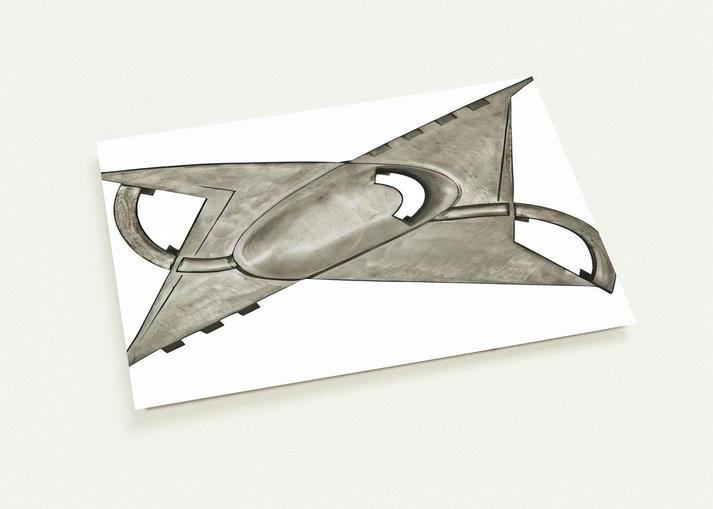
A partir d'un centre concave - Kinetic Art By Gyula Kosice Pack of 10 Post Cards | Gyula Kosice Post Cards | A6 (10.5 x 14.8 cm) - 4.1 x 5.8 inches
A partir d'un centre concave - Kinetic Art By Gyula Kosice Pack of 10 Post Cards | Gyula Kosice Post Cards | A6 (10.5 x 14.8 cm) - 4.1 x 5.8 inches
Couldn't load pickup availability
Elevate Your Correspondence with Kinetic Avant-Garde
Immerse yourself in the visionary world of Gyula Kosice with this exclusive pack of 10 museum-quality postcards. Featuring the seminal work A partir d'un centre concave, these cards are more than simple stationery; they are a tribute to one of the most influential figures in 20th-century Kinetic Art. Kosice, a co-founder of the Madí movement, revolutionized modern sculpture by integrating movement, light, and water into his practice. This specific work exemplifies his mastery of geometric abstraction and spatial dynamics.
Museum-Grade Reproduction Quality
At RedKalion, we believe that even the smallest prints should reflect the integrity of the original masterpiece. Our fine art postcards are produced using sophisticated 12-color printing technology, ensuring a depth of color and precision that far exceeds standard commercial printing. Each card is printed on 200 gsm (80 lb) FSC-certified paper, offering a substantial, premium feel and a smooth matte finish that eliminates glare and enhances the intricate details of Kosice's composition.
Sophisticated Details for the Discerning Collector
- Artist: Gyula Kosice, pioneer of the Madí movement.
- Title: A partir d'un centre concave.
- Format: Pack of 10 flat postcards, A6 (10.5 x 14.8 cm).
- Paper: 200 gsm archival-grade paper with a 0.26 mm thickness.
- Sustainability: Printed on environmentally conscious, FSC-certified materials.
- Longevity: 12-color pigment-based inks for exceptional vibrancy and resistance to fading.
Whether used for sophisticated personal notes or displayed as a curated set of miniature fine art prints, this collection allows you to share a piece of art history that endures.

Discover Unlimited Art Possibilities
At RedKalion, you can find virtually any artwork from any artist, available in a wide range of sizes to perfectly match your space.
If you didn’t find what you’re looking for, contact us at support@redkalion.com . We will source any artwork and produce it in any size and format you need, including art prints, posters, canvas, framed pieces, framed canvas, and more.
For dedicated art enthusiasts, we also offer handcrafted replicas of any artwork, carefully painted by highly skilled artists using traditional techniques.
For custom requests, contact us at support@redkalion.com .
What printing technology is used for these Gyula Kosice postcards?
We utilize advanced 12-color fine art printing technology. This ensures vivid, accurate color reproduction and stunning depth, surpassing the quality of standard 4-color inkjet processes used in mass-market stationery.
What is the weight and finish of the paper?
These postcards are printed on premium 200 gsm (80 lb) paper with a thickness of 0.26 mm. The smooth matte finish provides a clean, glare-free display and a professional, substantial feel in the hand.
Are the materials used for these art prints eco-friendly?
Yes. RedKalion is committed to sustainability. Our postcards are printed on FSC-certified paper, ensuring that the materials are sourced from responsibly managed forests that provide environmental, social, and economic benefits.
How long will the colors of these postcards last?
Our 12-color archival-grade inks are designed for longevity. When kept out of direct sunlight, these prints maintain their vibrancy and resist fading for decades, making them suitable for both mailing and framing.
What are the shipping logistics for RedKalion orders?
Each set is printed on demand to ensure the highest quality control and minimize waste. We ship globally using protective packaging to ensure your museum-quality reproductions arrive in pristine condition.
Who was Gyula Kosice and why is his work significant?
Gyula Kosice was a visionary artist and co-founder of the Madí movement. He was a pioneer in using non-traditional materials like Plexiglas and neon, fundamentally changing the trajectory of Kinetic Art and spatial abstraction.
What is the 'Madí movement' referenced in this artwork?
Founded in 1946, the Madí movement sought to liberate art from traditional constraints. It focused on geometric rigor, invention, and the use of modern materials, emphasizing the artwork as an objective reality rather than a representation.