
RedKalion
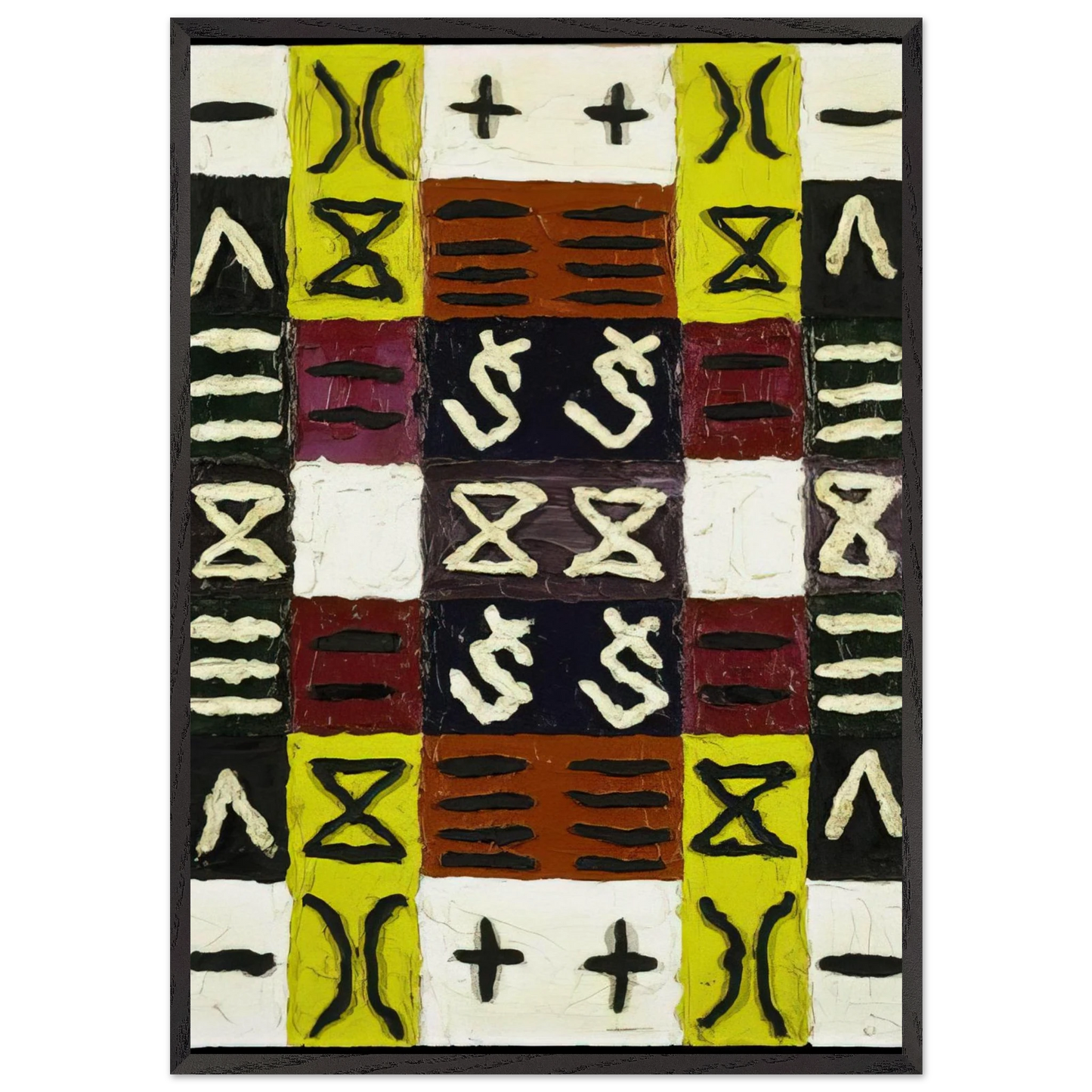
A Perfect Equal Area I - 1960 - Alfred Jensen 70x100 cm / 28x40 inches Framed Art Print – Black Wooden Frame
A Perfect Equal Area I - 1960 - Alfred Jensen 70x100 cm / 28x40 inches Framed Art Print – Black Wooden Frame
Couldn't load pickup availability
Alfred Jensen’s Mathematical Masterpiece: A Perfect Equal Area I (1960)
Immerse your space in the intellectual depth of Alfred Jensen’s 'A Perfect Equal Area I' (1960). This museum-quality reproduction captures the rigorous logic and vibrant color theory that defined Jensen’s unique approach to abstract expressionism. Known for his 'diagrammatic' paintings, Jensen synthesized ancient number systems, calendar cycles, and Goethe’s color theories into structured, grid-based compositions that remain unparalleled in 20th-century art.
At RedKalion, we honor the tactile complexity of Jensen's original work through our archival-grade fine art prints. Each piece is meticulously produced on 250 gsm (110 lb) natural white paper. This heavy-duty, uncoated museum-quality paper features a sophisticated matte finish that prevents glare, allowing the intricate numerical patterns and bold hues of the 1960 composition to shine with clarity and depth.
Our commitment to excellence extends to the physical presentation. This 70x100 cm (28x40 inches) framed art print is housed in a premium black wooden frame, crafted from responsibly sourced oak and ash. With a robust profile of 20mm (0.79") in width and thickness, the frame offers a substantial, modern presence that surpasses standard gallery offerings. Protected by shatterproof, transparent plexiglass, your investment is safeguarded for generations.
RedKalion’s Curatorial Standards
- Archival Longevity: We utilize acid-free, FSC-certified materials to ensure your print resists yellowing and degradation.
- Sustainable Luxury: Our frames are constructed from sustainable wood, aligning museum-quality aesthetics with environmental responsibility.
- Ready to Exhibit: Your artwork arrives with a pre-installed hanging kit, professionally secured for immediate installation.
Elevate your interior with an archival masterpiece that endures—a testament to Alfred Jensen's vision and RedKalion's dedication to the finest traditions of art curation.
Discover Unlimited Art Possibilities
At RedKalion, you can find virtually any artwork from any artist, available in a wide range of sizes to perfectly match your space.
If you didn’t find what you’re looking for, contact us at support@redkalion.com . We will source any artwork and produce it in any size and format you need, including art prints, posters, canvas, framed pieces, framed canvas, and more.
For dedicated art enthusiasts, we also offer handcrafted replicas of any artwork, carefully painted by highly skilled artists using traditional techniques.
For custom requests, contact us at support@redkalion.com .
What paper quality is used for the Alfred Jensen print?
We use 250 gsm (110 lb) archival museum-quality paper. It is natural white, uncoated, and features a matte finish to ensure deep color saturation without distracting reflections.
How is the black wooden frame constructed?
The frame is made from responsibly sourced oak and ash wood, measuring 20mm thick. This is wider than standard frames, providing a premium, gallery-style aesthetic for your artwork.
Is the artwork protected from damage during shipping?
Yes, each print is protected by shatterproof plexiglass and shipped in robust, protective packaging to ensure it arrives in pristine condition, ready for your wall.
Will the print colors fade over time?
No, we use archival-grade materials and acid-free FSC-certified paper that prevents yellowing, ensuring the vibrant colors of Jensen’s work remain stable for decades.
Is the hanging hardware included with the frame?
Absolutely. Every framed print includes a professional hanging kit, allowing you to display your museum-quality reproduction immediately upon arrival.
Who was Alfred Jensen and why is this piece significant?
Alfred Jensen was a visionary abstract artist who used mathematical systems and color theory. 'A Perfect Equal Area I' represents his peak 1960 period of diagrammatic complexity.
What does 'Equal Area' refer to in Jensen's work?
It refers to Jensen's obsession with grids and mathematical balance, where he mapped specific numerical sequences onto geometric spaces to create visual harmony through logic.