

RedKalion
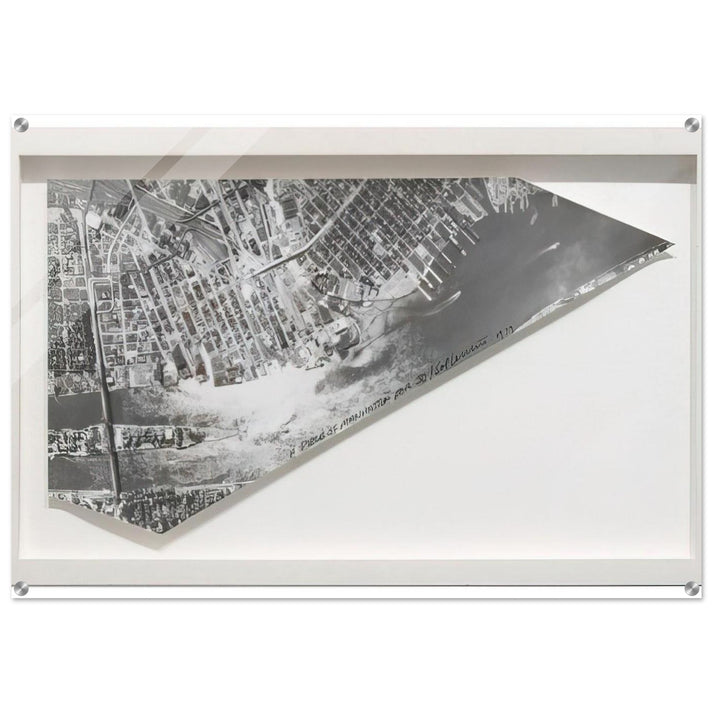
A Piece of Manhattan - Sol LeWitt Acrylic Print - 70x100 cm / 28x40″ inches
A Piece of Manhattan - Sol LeWitt Acrylic Print - 70x100 cm / 28x40″ inches
Couldn't load pickup availability
Elevate Your Space with 'A Piece of Manhattan' by Sol LeWitt
Experience the architectural rhythm of the city through the eyes of a pioneer of Conceptualism. Sol LeWitt’s 'A Piece of Manhattan' is a masterful exploration of geometric logic and spatial harmony. This premium acrylic print translates LeWitt’s intellectual rigor into a stunning visual statement, making it a cornerstone for any modern or minimalist interior.
The Legacy of Sol LeWitt
Sol LeWitt redefined the relationship between the artist and the artwork, famously stating that 'the idea becomes a machine that makes the art.' In this piece, the grid—a hallmark of his career—is utilized to deconstruct the urban essence of Manhattan. By focusing on mathematical precision and line work, LeWitt captures the structural soul of the metropolis without the distraction of literal representation.
Museum-Quality Acrylic Craftsmanship
At RedKalion, we bridge the gap between historical significance and contemporary presentation. This reproduction is meticulously printed on 4mm (0.15") high-grade acrylic, providing a sleek, glass-like finish that enhances color depth and vibrancy. The straight-cut corners and high-clarity material ensure that every line of LeWitt's vision is rendered with absolute fidelity.
- Archival Durability: The 4mm acrylic substrate is naturally UV-resistant, ensuring your masterpiece remains vibrant for generations.
- Sleek Modern Aesthetics: Features straight-cut corners for a sharp, contemporary profile that complements LeWitt’s minimalist style.
- Ready for Installation: Each print comes equipped with a professional hanging kit, including screws and pre-drilled holes at each corner (14mm from the edge) for a secure, floating effect.
- Visual Clarity: To ensure the highest contrast, any transparent areas in the original design default to a crisp white background.
By choosing a RedKalion archival reproduction, you are not just purchasing a print; you are investing in a piece of art history curated for the modern collector. Transform your environment with a work that balances intellectual depth with sophisticated design.


Discover Unlimited Art Possibilities
At RedKalion, you can find virtually any artwork from any artist, available in a wide range of sizes to perfectly match your space.
If you didn’t find what you’re looking for, contact us at support@redkalion.com . We will source any artwork and produce it in any size and format you need, including art prints, posters, canvas, framed pieces, framed canvas, and more.
For dedicated art enthusiasts, we also offer handcrafted replicas of any artwork, carefully painted by highly skilled artists using traditional techniques.
For custom requests, contact us at support@redkalion.com .
What materials are used for this Sol LeWitt reproduction?
This fine art print is crafted using 4mm (0.15") high-quality acrylic, providing a durable, vibrant, and sleek finish that enhances the geometric precision of LeWitt's work.
How does the acrylic print handle light and color?
The museum-quality acrylic allows light to reflect internally, creating a sense of depth and luminosity that traditional paper prints cannot achieve, ensuring archival-grade color saturation.
Is the mounting hardware included with the print?
Yes, each 70x100 cm print includes a professional hanging kit with screws. The acrylic features 8mm pre-drilled holes in each corner for easy and secure installation.
How is the artwork protected during shipping?
RedKalion employs specialized protective packaging to ensure your acrylic print arrives in pristine condition, ready to be displayed as a centerpiece in your collection.
What is the longevity of an acrylic art print?
Acrylic prints are highly durable and resistant to moisture and UV fading, making them an ideal choice for long-term display in both residential and professional settings.
What is the significance of 'A Piece of Manhattan' in art history?
This work exemplifies Sol LeWitt's Conceptualism, where the artist uses a grid-based system to explore urban structure, prioritizing the intellectual concept over traditional illustrative techniques.
Why did Sol LeWitt use grids in his artwork?
LeWitt utilized the grid as a 'democratic' structure—a neutral starting point that allowed him to explore infinite variations of form and space without personal bias or narrative.