

RedKalion
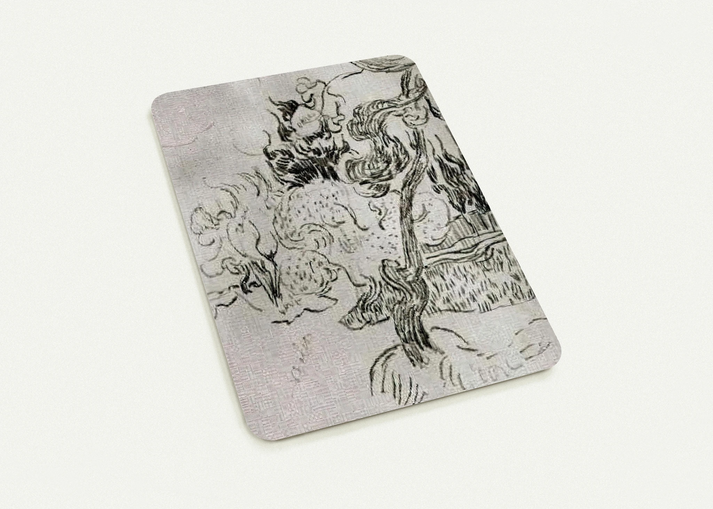
A Pine Tree and Cypresses in the Garden of the Asylum By Vincent van Gogh Pack of 10 Post Cards | Vincent van Gogh Post Cards | A6 (10.5 x 14.8 cm) - 4.1 x 5.8 inches
A Pine Tree and Cypresses in the Garden of the Asylum By Vincent van Gogh Pack of 10 Post Cards | Vincent van Gogh Post Cards | A6 (10.5 x 14.8 cm) - 4.1 x 5.8 inches
Couldn't load pickup availability
An Archival Encounter with Van Gogh’s Saint-Rémy Period
Experience the swirling, emotional landscape of Vincent van Gogh’s 'A Pine Tree and Cypresses in the Garden of the Asylum' through this exquisite pack of 10 museum-quality postcards. Painted in 1889 during his convalescence at Saint-Paul-de-Mausole, this work captures the artist’s unique ability to find rhythmic, pulsating life within the quietude of a garden. These are not merely stationery; they are faithful reproductions of a pivotal moment in Post-Impressionist history.
Unrivaled 12-Color Precision
At RedKalion, we believe fine art deserves more than standard printing. Our postcards are rendered using 12-color fine art printing technology. Unlike typical 4-color processes, this method captures the subtle shifts in Van Gogh’s ochre, deep greens, and cerulean sky with stunning depth and accuracy. Every brushstroke is reproduced with the clarity required for a true archival masterpiece.
Museum-Grade Physicality
Each card is printed on 200 gsm (80 lb) FSC-certified paper, offering a substantial thickness of 0.26 mm (10.3 mils). The smooth matte finish eliminates glare, allowing the vibrant colors to take center stage. Whether you are sending a thoughtful sentiment or curating a miniature gallery wall, these cards provide a tactile experience that speaks to the quality of the original canvas.
- Artist: Vincent van Gogh (1889)
- Format: Pack of 10 Flat Postcards
- Size: A6 (10.5 x 14.8 cm / 4.1 x 5.8 inches)
- Sustainability: Printed on demand using environmentally conscious materials
- Finish: Glare-free matte for professional display
Elevate your correspondence or your home decor with an archival reproduction that honors the legacy of one of history’s most influential masters.


Discover Unlimited Art Possibilities
At RedKalion, you can find virtually any artwork from any artist, available in a wide range of sizes to perfectly match your space.
If you didn’t find what you’re looking for, contact us at support@redkalion.com . We will source any artwork and produce it in any size and format you need, including art prints, posters, canvas, framed pieces, framed canvas, and more.
For dedicated art enthusiasts, we also offer handcrafted replicas of any artwork, carefully painted by highly skilled artists using traditional techniques.
For custom requests, contact us at support@redkalion.com .
What makes the printing quality of these Van Gogh postcards unique?
We utilize 12-color fine art printing technology, which provides significantly better color vibrancy and depth compared to standard 4-color inkjet reproductions, ensuring museum-quality results.
What type of paper is used for this A6 fine art set?
The postcards are printed on 200 gsm (80 lb) paper with a thickness of 0.26 mm, featuring a smooth matte finish for a premium, glare-free feel.
Is the paper used for these postcards environmentally friendly?
Yes, all RedKalion postcards are printed on FSC-certified, environmentally conscious paper, supporting responsible forest management worldwide.
How do you ensure the colors of 'A Pine Tree and Cypresses' are accurate?
Our advanced color-matching profile and 12-color ink system specifically target the complex pigments used by Van Gogh, ensuring a high-fidelity archival reproduction.
Are these postcards suitable for framing as miniature art?
Absolutely. The archival-grade paper and vibrant 12-color printing make these postcards ideal for framing as a set or individually to enhance small spaces.
When and where did Vincent van Gogh paint 'A Pine Tree and Cypresses'?
Van Gogh painted this work in late 1889 while staying at the Saint-Paul-de-Mausole asylum in Saint-Rémy-de-Provence, France.
What does the cypress tree symbolize in Van Gogh’s work?
Cypresses often represented both mourning and immortality for Van Gogh, who was captivated by their dark, flame-like shapes and their resilience in the Provencal wind.