

RedKalion
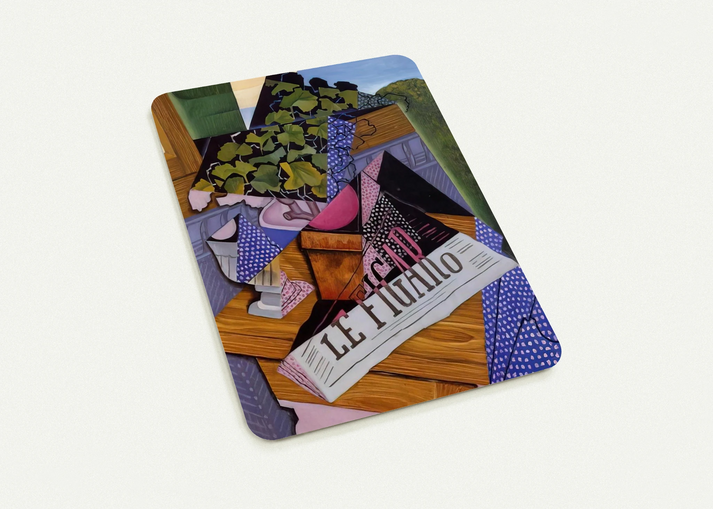
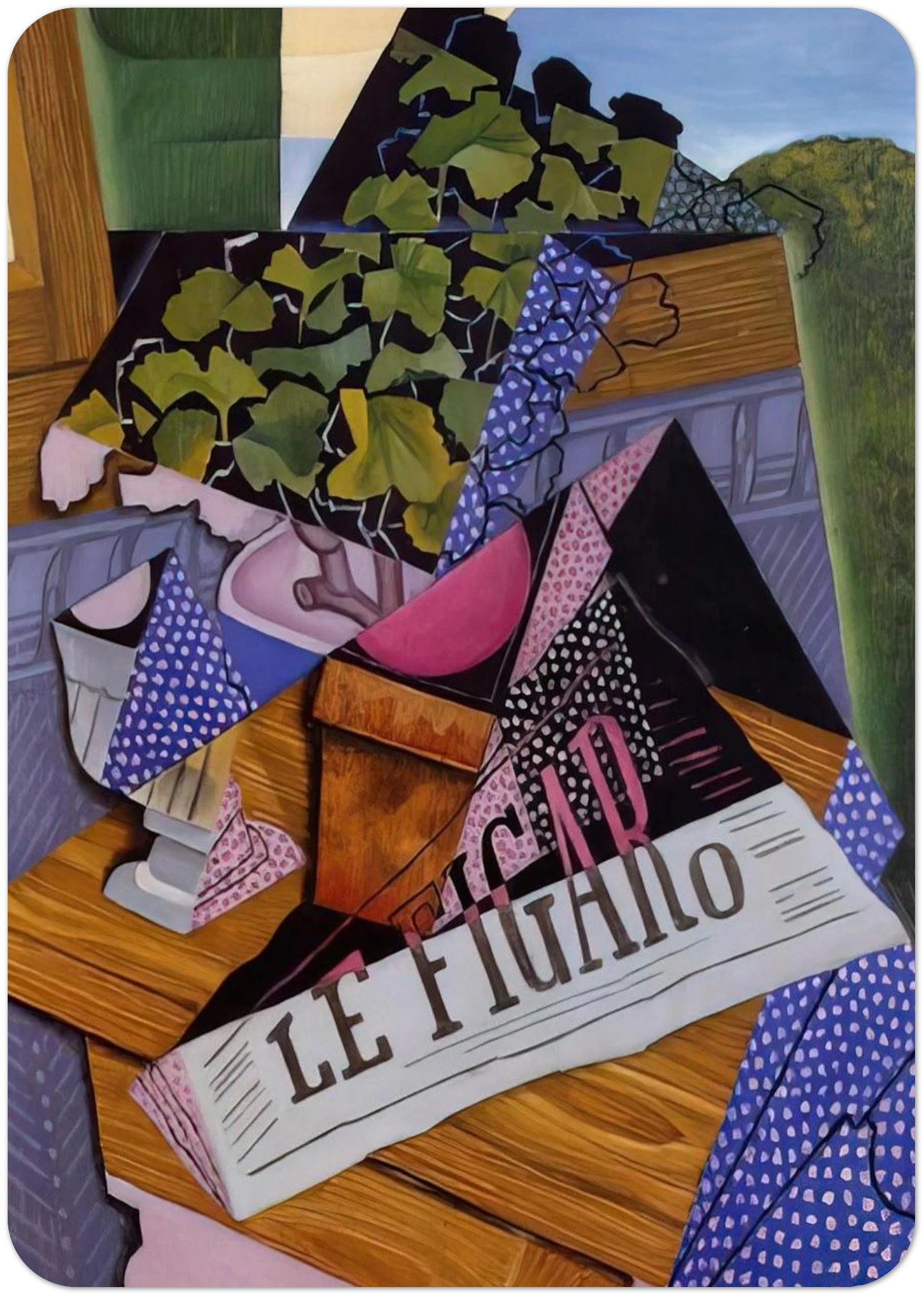
A POT OF GERANIUMS 1915 By Juan Gris Pack of 10 Post Cards | Juan Gris Post Cards | A6 (10.5 x 14.8 cm) - 4.1 x 5.8 inches
A POT OF GERANIUMS 1915 By Juan Gris Pack of 10 Post Cards | Juan Gris Post Cards | A6 (10.5 x 14.8 cm) - 4.1 x 5.8 inches
Couldn't load pickup availability
Elevate Your Correspondence with Juan Gris’s Cubist Masterpiece
Invite the structural brilliance of the early 20th-century avant-garde into your personal exchanges with this exclusive pack of 10 postcards featuring A Pot of Geraniums (1915) by Juan Gris. This fine art print reproduction captures the essence of Synthetic Cubism, a movement where Gris excelled by harmonizing mathematical precision with vibrant, rhythmic color. Unlike his contemporaries, Gris brought a unique clarity and 'flat' architectural logic to his still lifes, making this piece a definitive example of modern art history.
Museum-Quality Reproductions for the Discerning Collector
At RedKalion, we believe that even a postcard should be a work of art. These postcards are not mere stationary; they are museum-quality reproductions crafted using our advanced 12-color fine art printing technology. This process ensures a depth of color and tonal accuracy that traditional 4-color printing simply cannot replicate, preserving the subtle shifts in Gris's palette.
Premium Material and Sustainable Craftsmanship
- Exquisite Texture: Printed on heavy 200 gsm (80 lb) paper with a thickness of 0.26 mm, providing a sturdy, premium feel.
- Sophisticated Finish: A smooth matte finish eliminates glare, allowing the geometric complexity of the artwork to shine under any lighting.
- Archival Integrity: We utilize FSC-certified, environmentally conscious paper to ensure your sentiments endure as long as the art itself.
- Precision Sizing: Each card is cut to A6 dimensions (10.5 x 14.8 cm), making them ideal for mailing or small-scale framing.
Whether you are a collector of Juan Gris postcards or looking to share a piece of art history with friends, these archival-grade prints represent the pinnacle of curated stationery. Elevate your space or your message with a legacy of modernism that resonates with sophistication.


Discover Unlimited Art Possibilities
At RedKalion, you can find virtually any artwork from any artist, available in a wide range of sizes to perfectly match your space.
If you didn’t find what you’re looking for, contact us at support@redkalion.com . We will source any artwork and produce it in any size and format you need, including art prints, posters, canvas, framed pieces, framed canvas, and more.
For dedicated art enthusiasts, we also offer handcrafted replicas of any artwork, carefully painted by highly skilled artists using traditional techniques.
For custom requests, contact us at support@redkalion.com .
What printing technology is used for these Juan Gris postcards?
We use 12-color fine art printing technology. This ensures vivid, museum-quality color accuracy and stunning depth that far exceeds standard 4-color inkjet reproductions.
What is the weight and finish of the paper?
The postcards are printed on premium 200 gsm (80 lb) FSC-certified paper with a thickness of 0.26 mm. They feature a smooth matte finish for a glare-free, sophisticated display.
Are these postcards environmentally friendly?
Yes. We use FSC-certified paper from sustainably managed forests and print each order on demand to reduce waste and minimize our environmental footprint.
How are the postcards packaged for shipping?
Each pack of 10 postcards is securely packaged to ensure they arrive in pristine condition, ready for mailing, gifting, or framing as miniature fine art prints.
Will the colors fade over time?
No. By using archival-grade inks and acid-free 200 gsm paper, our prints are designed for longevity, maintaining their vibrancy for decades when kept away from direct sunlight.
What art movement does 'A Pot of Geraniums' represent?
This 1915 work is a prime example of Synthetic Cubism. Juan Gris utilized geometric overlapping and a structured palette to reimagine traditional still-life subjects.
Why is 1915 considered a significant year for Juan Gris?
In 1915, Gris perfected his 'flat' style of Cubism, moving away from the analytical fragmentation of Picasso toward a more cohesive, architectural, and colorful composition.