

RedKalion
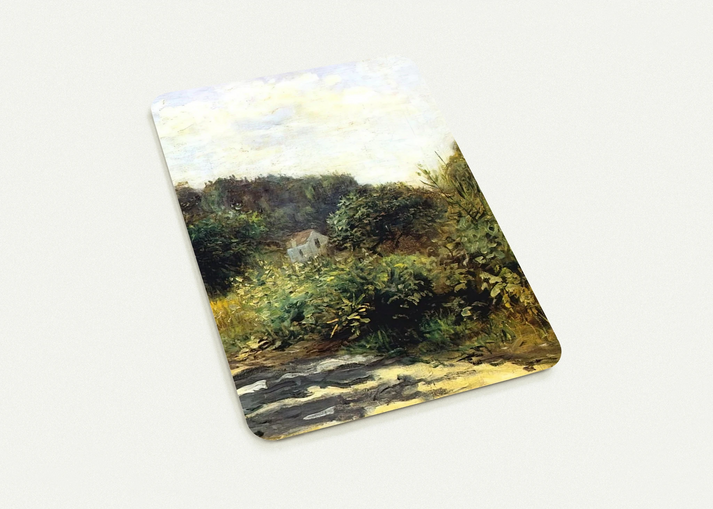
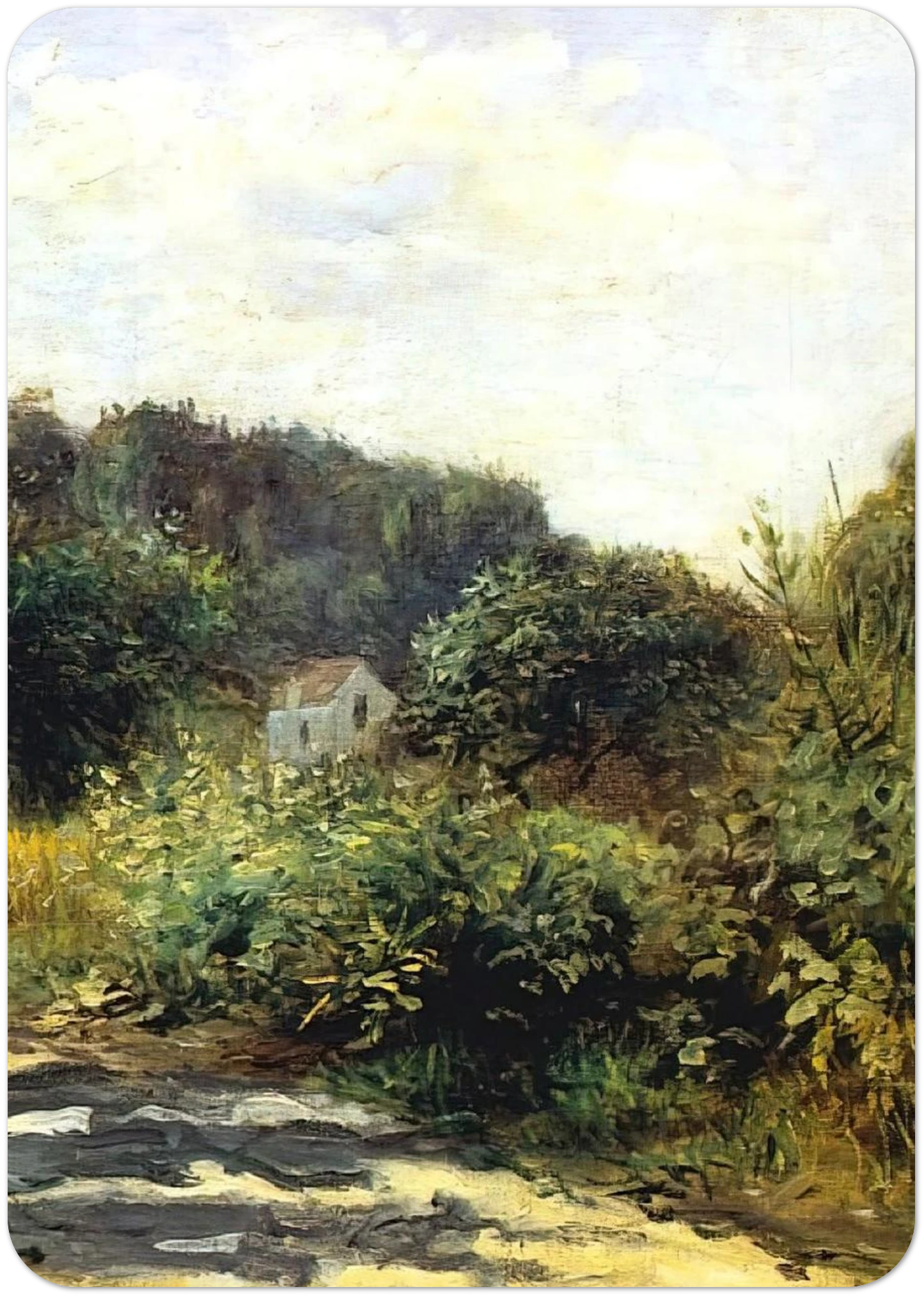
A Road in Louveciennes By Pierre-Auguste Renoir Pack of 10 Post Cards | Pierre-Auguste Renoir Post Cards | A6 (10.5 x 14.8 cm) - 4.1 x 5.8 inches
A Road in Louveciennes By Pierre-Auguste Renoir Pack of 10 Post Cards | Pierre-Auguste Renoir Post Cards | A6 (10.5 x 14.8 cm) - 4.1 x 5.8 inches
Couldn't load pickup availability
Elevate Your Correspondence with Pierre-Auguste Renoir’s Impressionist Vision
Experience the tranquil beauty of the French countryside through this exquisite pack of 10 postcards featuring Pierre-Auguste Renoir's masterpiece, A Road in Louveciennes. Painted around 1870, this work captures a pivotal moment in the Impressionist movement, showcasing Renoir’s mastery of light, shadow, and the transient atmosphere of a quiet suburban road. At RedKalion, we preserve the integrity of this archival masterpiece, ensuring every brushstroke and dappled sunbeam is rendered with museum-quality precision.
Museum-Grade Reproduction for Discerning Collectors
Each postcard is produced using our advanced 12-color fine art printing technology. Unlike standard 4-color inkjet processes, our method captures the profound depth and subtle color variations inherent in Renoir’s palette. The result is a vibrant, accurate reproduction that honors the original oil painting’s luminosity.
- Sophisticated Texture: A smooth matte finish ensures a clean, glare-free display, allowing the art to be appreciated under any lighting condition.
- Substantial Quality: Printed on 200 gsm (80 lb) paper with a thickness of 0.26 mm (10.3 mils), these cards offer a premium, sturdy feel.
- Sustainable Excellence: We utilize FSC-certified paper, ensuring your appreciation for art aligns with environmental responsibility.
- Precision Sized: Perfectly scaled to A6 (10.5 x 14.8 cm) for standard mailing or elegant framing.
Art Historical Context: The Light of Louveciennes
During the early 1870s, Renoir frequently visited and lived in Louveciennes, a village that served as a laboratory for the Impressionist style. In A Road in Louveciennes, Renoir eschews rigid form in favor of capturing the 'fleeting moment.' By using this set of postcards, you are not merely sending a message; you are sharing a piece of art history that celebrates the simple elegance of 19th-century French life. RedKalion is proud to provide these archival-grade reproductions that serve as a testament to Renoir’s enduring legacy.


Discover Unlimited Art Possibilities
At RedKalion, you can find virtually any artwork from any artist, available in a wide range of sizes to perfectly match your space.
If you didn’t find what you’re looking for, contact us at support@redkalion.com . We will source any artwork and produce it in any size and format you need, including art prints, posters, canvas, framed pieces, framed canvas, and more.
For dedicated art enthusiasts, we also offer handcrafted replicas of any artwork, carefully painted by highly skilled artists using traditional techniques.
For custom requests, contact us at support@redkalion.com .
What is included in the 'A Road in Louveciennes' postcard set?
This set includes 10 premium postcards featuring Pierre-Auguste Renoir's masterpiece. Each card is sized A6 (10.5 x 14.8 cm), perfect for correspondence or small-scale art displays.
What printing technology is used for these Renoir reproductions?
We use 12-color fine art printing technology. This ensures superior color vibrancy and accuracy, capturing the subtle tonal shifts of the original Impressionist painting far better than standard inkjet printing.
What type of paper is used for these fine art postcards?
Each postcard is printed on 200 gsm (80 lb) FSC-certified paper with a thickness of 0.26 mm. It features a smooth matte finish for a sophisticated, glare-free look.
Are these postcards eco-friendly?
Yes. RedKalion uses environmentally conscious, FSC-certified paper. Additionally, our print-on-demand model reduces waste by ensuring we only produce what is needed.
Will the colors fade over time?
No. By utilizing archival-grade inks and high-quality 200 gsm paper, these postcards are designed for longevity, maintaining their vibrancy and detail for years to come.
When did Renoir paint 'A Road in Louveciennes'?
Renoir painted this work circa 1870. It is a quintessential example of his early Impressionist period, focusing on suburban landscapes and the interplay of natural light.
What is the significance of Louveciennes in Renoir's work?
Louveciennes was a frequent subject for Renoir and Pissarro. The village provided the perfect setting for Renoir to experiment with shadows and the atmospheric effects of the changing seasons.