RedKalion
A STORM 1932 - Rene Magritte 70x100 cm / 28x40 inches Framed Art Print – Black Wooden Frame
A STORM 1932 - Rene Magritte 70x100 cm / 28x40 inches Framed Art Print – Black Wooden Frame
Couldn't load pickup availability
The Poetic Enigma of René Magritte’s "A Storm" (1932)
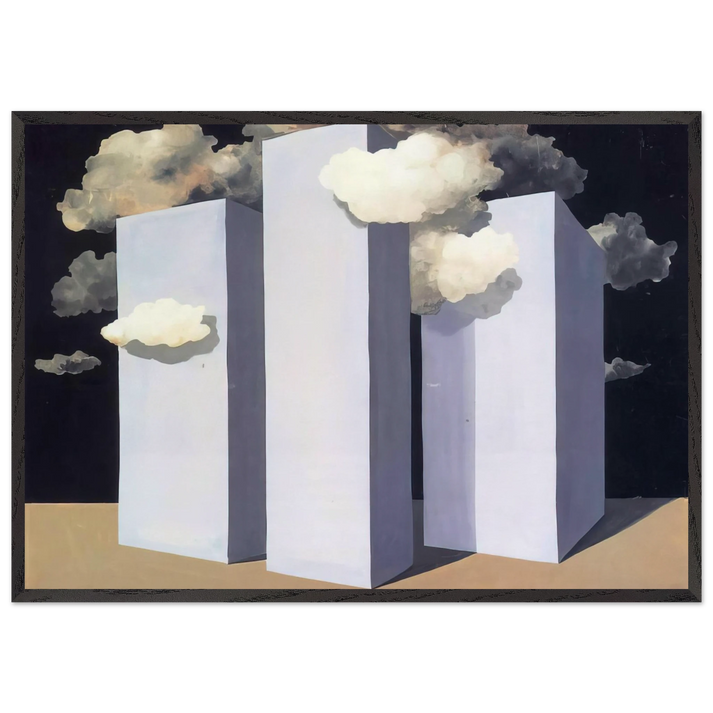
Step into the contemplative world of Belgian Surrealism with our museum-quality reproduction of A Storm (1932) by the legendary René Magritte. This 70x100 cm (28x40 inches) framed art print captures a pivotal moment in Magritte's career, where he began to master the art of the 'visible mystery.' Unlike the chaotic depictions of nature found in Romanticism, Magritte’s storm is a psychological landscape, evoking a quiet, profound tension that transforms any room into a gallery of intellectual depth.
Archival Craftsmanship by RedKalion
At RedKalion, we believe that world-class art deserves world-class presentation. This piece is printed on 250 gsm (110 lb) archival museum-quality paper. The natural white, matte, and uncoated finish ensures that the subtle nuances of Magritte's palette—those deep grays and ethereal highlights—are rendered with absolute fidelity, free from distracting glares. The 0.29 mm (11.4 mils) thickness of the paper guarantees a substantial feel and long-term durability, preventing the warping often seen in lesser reproductions.
Premium Framing and Sustainable Design
Your A Storm 1932 - Rene Magritte print arrives housed in a sophisticated black frame, meticulously crafted from responsibly sourced oak and ash wood. While standard frames often utilize a thin 14mm profile, we employ a 20mm (0.79") thick and wide frame, providing a more robust, gallery-worthy presence on your wall. Each print is protected by shatterproof, transparent plexiglass, ensuring your investment remains pristine for decades. This ready-to-hang masterpiece includes a professional hanging kit, allowing you to elevate your interior design the moment it arrives.
- Artist: René Magritte (1932)
- Paper: FSC-certified 250 gsm archival paper
- Frame: 20mm Black Oak/Ash wood
- Dimensions: 70x100 cm / 28x40 inches
- Sustainability: Printed with eco-conscious materials and techniques

Discover Unlimited Art Possibilities
At RedKalion, you can find virtually any artwork from any artist, available in a wide range of sizes to perfectly match your space.
If you didn’t find what you’re looking for, contact us at support@redkalion.com . We will source any artwork and produce it in any size and format you need, including art prints, posters, canvas, framed pieces, framed canvas, and more.
For dedicated art enthusiasts, we also offer handcrafted replicas of any artwork, carefully painted by highly skilled artists using traditional techniques.
For custom requests, contact us at support@redkalion.com .
What are the specifications of the paper used for this Magritte print?
We use 250 gsm (110 lb) natural white, matte, uncoated museum-quality paper. This archival-grade material ensures that the colors of 'A Storm' remain vibrant and the paper remains durable for generations without yellowing.
Is the black wooden frame sustainably sourced?
Yes, our frames are made from responsibly sourced oak and ash wood, typically FSC-certified. This ensures a premium, high-density finish that supports both the artwork and the environment.
Does the framed print arrive ready to hang?
Absolutely. Your 70x100 cm Magritte print includes a professional hanging kit. The frame is pre-assembled with shatterproof plexiglass, meaning it is ready to hang directly on your wall upon delivery.
What is the difference between this frame and standard frames?
RedKalion frames are 20mm (0.79") thick and wide, which is significantly more robust than the standard 14mm (0.55") frames. This provides a premium, high-end gallery aesthetic for your fine art collection.
How is the artwork protected during shipping?
We use shatterproof plexiglass and specialized protective packaging to ensure your framed art print arrives in perfect condition. Our shipping process is designed to handle large-format prints like this 28x40 inch piece with extreme care.
What was René Magritte's intention with the 'A Storm' painting?
In 1932, Magritte was exploring the concept of the 'hidden' within the 'visible.' 'A Storm' represents a psychological state rather than just weather, using Surrealist techniques to evoke a sense of mystery and quiet anticipation.
Why is the 1932 period significant for Magritte's work?
1932 marks a transitional phase where Magritte refined his 'poetic imagery.' This period focused on the relationship between objects and their environment, leading to his most famous Surrealist breakthroughs in the following years.