
RedKalion
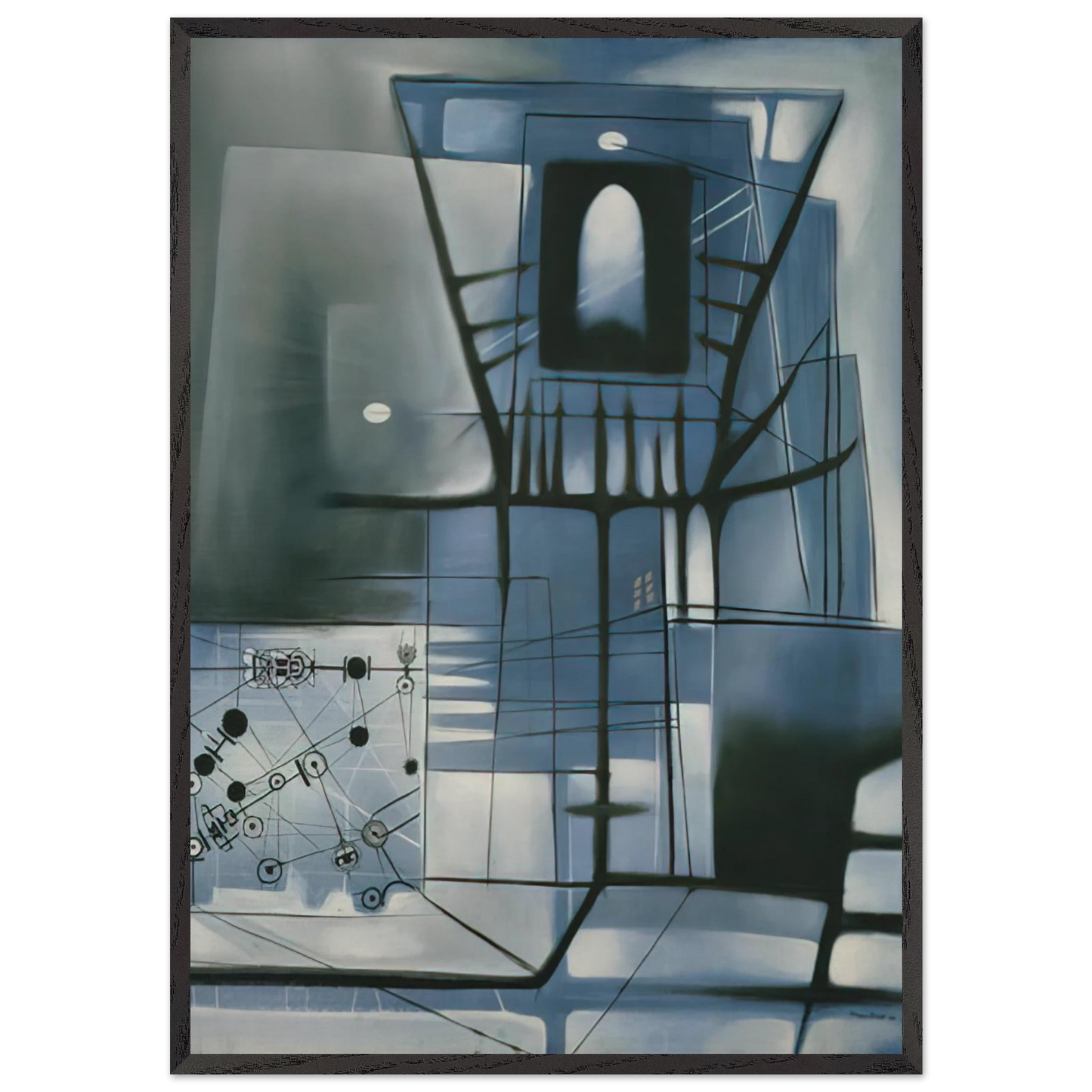
A Time for Fear - 1949 - Jimmy Ernst 70x100 cm / 28x40 inches Framed Art Print – Black Wooden Frame
A Time for Fear - 1949 - Jimmy Ernst 70x100 cm / 28x40 inches Framed Art Print – Black Wooden Frame
Couldn't load pickup availability
Elevate Your Space with Jimmy Ernst’s ‘A Time for Fear’ (1949)
Incorporate a definitive moment of mid-century American abstraction into your collection with this museum-quality reproduction of Jimmy Ernst’s ‘A Time for Fear’ (1949). As the son of surrealist pioneer Max Ernst, Jimmy Ernst forged a distinct visual language that masterfully balanced the tension between European Surrealism and the emerging American Abstract Expressionist movement. This 1949 masterpiece captures the psychological landscape of the early Cold War era through intricate, web-like geometries and a sophisticated, linear architectural style.
The Artistry and Historical Context
‘A Time for Fear’ exemplifies Ernst’s signature precision. Moving away from the organic spontaneity of his contemporaries, Ernst utilized a meticulous ‘spider-web’ technique to create a sense of structural fragility. The title reflects the underlying anxiety of the post-WWII world, yet the execution offers a meditative, intellectual order. At RedKalion, we ensure this historical complexity is preserved through state-of-the-art giclée printing techniques that capture every nuanced line and tonal shift of the original 1949 composition.
Museum-Grade Physical Specifications
This 70x100 cm (28x40 inches) fine art print is produced to meet the highest archival standards. RedKalion’s commitment to quality ensures that your investment remains a centerpiece for decades:
- Premium Paper: Printed on 250 gsm (110 lb) natural white, archival-grade paper. The matte, uncoated finish eliminates glare, allowing the intricate details of the artwork to be viewed from any angle.
- Solid Wood Framing: Housed in a sophisticated black wooden frame crafted from responsibly sourced oak and ash. With a professional 20mm (0.79") thickness and width, it provides a more substantial and premium presence than standard frames.
- Superior Protection: Each piece is shielded by shatterproof, transparent plexiglass, ensuring the artwork remains pristine while being safe for any environment.
- Ready to Hang: Your artwork arrives with a pre-installed hanging kit, allowing for an effortless transition from our gallery to your wall.
By choosing this Jimmy Ernst reproduction, you are not merely purchasing a print; you are acquiring a piece of curated history. RedKalion stands as a premier authority in fine art, dedicated to providing archival masterpieces that endure and inspire.
Discover Unlimited Art Possibilities
At RedKalion, you can find virtually any artwork from any artist, available in a wide range of sizes to perfectly match your space.
If you didn’t find what you’re looking for, contact us at support@redkalion.com . We will source any artwork and produce it in any size and format you need, including art prints, posters, canvas, framed pieces, framed canvas, and more.
For dedicated art enthusiasts, we also offer handcrafted replicas of any artwork, carefully painted by highly skilled artists using traditional techniques.
For custom requests, contact us at support@redkalion.com .
What makes this Jimmy Ernst print museum-quality?
We use 250 gsm archival-grade, natural white paper with a matte finish. This ensures the 1949 artwork maintains its color integrity and detail without glare, meeting the standards required for museum exhibitions and long-term fine art preservation.
What are the specifications of the black wooden frame?
The frame is crafted from FSC-certified black oak or ash wood. It measures 20mm (0.79") in both width and thickness, offering a robust, premium profile that is significantly more durable than the industry-standard 14mm frames.
Is the artwork protected during shipping and display?
Yes, each print is protected by high-quality, shatterproof plexiglass. This provides the clarity of glass while ensuring the artwork is safe from breakage during transit and remains protected from dust and environmental wear once hung.
Are the materials used for this print sustainable?
Sustainability is a core value at RedKalion. We exclusively use FSC-certified wood for our frames and paper, or equivalent regional certifications, ensuring your art print is as environmentally responsible as it is beautiful.
How is the artwork prepared for hanging?
Your Jimmy Ernst framed print arrives fully assembled and ready-to-hang. We include a complete hanging kit, allowing you to easily mount this large-format 70x100 cm piece directly onto your wall upon arrival.
What is the significance of the 1949 date in Jimmy Ernst's career?
1949 was a pivotal year for Jimmy Ernst, marking his transition toward more complex, linear abstractions. It represents his attempt to visualize the internal psychological tensions and geopolitical anxieties of the post-war American landscape.
What technique did Jimmy Ernst use in 'A Time for Fear'?
Ernst utilized a meticulous, precisionist approach often described as a 'web' or 'lattice' technique. He focused on fine lines and architectural structures to create depth and a sense of fragile balance within the abstract form.