


RedKalion
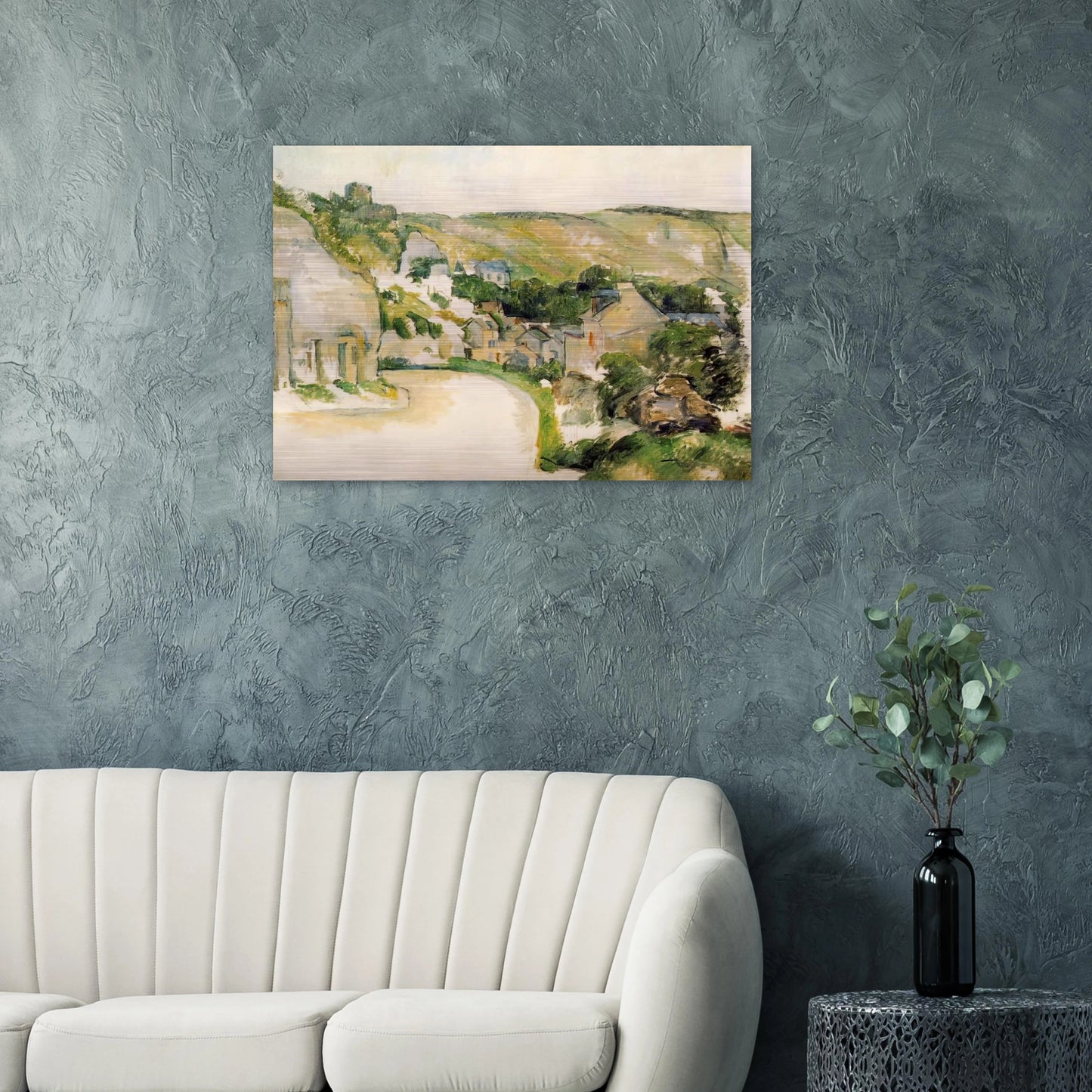
A Turn in the Road at La Roche-Guyon - Paul Cézanne Brushed Aluminum Print - 70x100 cm / 28x40 inches | Paul Cézanne Aluminum Print | Paul Cézanne Prints
A Turn in the Road at La Roche-Guyon - Paul Cézanne Brushed Aluminum Print - 70x100 cm / 28x40 inches | Paul Cézanne Aluminum Print | Paul Cézanne Prints
Couldn't load pickup availability
Elevate Your Space with Cézanne's Modernist Vision
Experience the structural mastery of Paul Cézanne with this exquisite reproduction of A Turn in the Road at La Roche-Guyon. Painted during a pivotal period in the mid-1880s, this work represents Cézanne’s departure from fleeting Impressionism toward the geometric permanence that would later inspire Cubism. Our museum-quality reproduction captures the rhythmic 'constructive strokes' and earthy palette that define Cézanne's genius, transforming any room into a gallery of high art.
The Sophistication of Brushed Aluminum DIBOND®
This is not a traditional canvas; it is a contemporary masterpiece of engineering. Printed on 3mm (0.12") Brushed Silver Aluminum DIBOND®, the artwork takes on a dynamic, three-dimensional quality. The horizontal grain of the metallic finish interacts with the light in your room, while the unprinted white areas reveal a striking silver sheen. This fine art print features a matte, glare-free finish, ensuring that the subtle nuances of Cézanne's landscape remain visible from every angle without distracting reflections.
Historical Significance & Expert Craftsmanship
In A Turn in the Road at La Roche-Guyon, Cézanne explores the 'passage' technique—a method of blending planes of color to create both volume and depth. At RedKalion, we honor this legacy by utilizing direct-print technology on high-grade AluDibond. This process ensures vivid color saturation and exceptional durability. The rigid base provides a sleek, frame-free look that is both durable and timeless, serving as a definitive focal point for the discerning collector.
- Material: Premium Brushed Silver Aluminum DIBOND® with a metallic finish.
- Visual Effect: Horizontal grain for a dynamic, shimmering look.
- Durability: 3mm thick, archival-grade, and warp-resistant.
- Finish: Matte and glare-free, perfect for high-light environments.
- Ready to Display: Includes a professional hanging kit tailored to your region.
By choosing a RedKalion reproduction, you are investing in an archival-grade masterpiece that bridges the gap between 19th-century innovation and 21st-century sophistication. Bring home a piece of history that endures.


Discover Unlimited Art Possibilities
At RedKalion, you can find virtually any artwork from any artist, available in a wide range of sizes to perfectly match your space.
If you didn’t find what you’re looking for, contact us at support@redkalion.com . We will source any artwork and produce it in any size and format you need, including art prints, posters, canvas, framed pieces, framed canvas, and more.
For dedicated art enthusiasts, we also offer handcrafted replicas of any artwork, carefully painted by highly skilled artists using traditional techniques.
For custom requests, contact us at support@redkalion.com .
What makes the brushed aluminum finish unique for a Paul Cézanne print?
The brushed silver aluminum DIBOND® features a horizontal grain that gives the artwork a metallic, dynamic look. White areas are not printed, allowing the natural silver sheen to show through, adding a contemporary depth to Cézanne’s classic composition.
What are the physical dimensions and thickness of this artwork?
This specific edition of 'A Turn in the Road at La Roche-Guyon' measures 70x100 cm (28x40 inches) and is 3mm (0.12") thick, providing a rigid, durable, and premium gallery feel.
How is the reproduction printed for maximum quality?
We use state-of-the-art direct printing on AluDibond. This ensures vivid colors and a matte, glare-free finish, preserving the intricate brushstrokes and structural integrity of the original painting.
Does this Paul Cézanne aluminum print come ready to hang?
Yes, every RedKalion aluminum print includes a professional hanging kit. The specific hardware provided is optimized based on the fulfillment country to ensure a secure and elegant display.
How long will this archival-grade print last?
Our aluminum DIBOND® prints are designed for archival longevity. They are highly durable, resistant to warping, and the direct-print technology ensures the colors remain vibrant and fade-resistant for decades.
What is the significance of 'A Turn in the Road at La Roche-Guyon' in art history?
This piece is a hallmark of Cézanne’s mature style, where he began simplifying natural forms into geometric shapes. It serves as a foundational link between Impressionism and the birth of 20th-century Modernism.
Why did Cézanne choose La Roche-Guyon as a subject?
Cézanne visited La Roche-Guyon while staying with Renoir in 1885. He was drawn to its rugged terrain and winding roads, which allowed him to experiment with perspective and the architectural structure of the landscape.