RedKalion
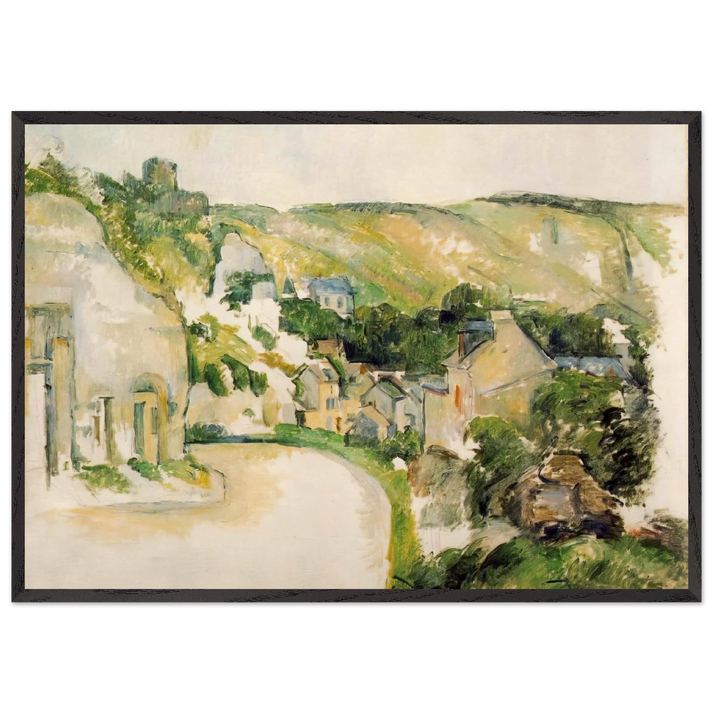
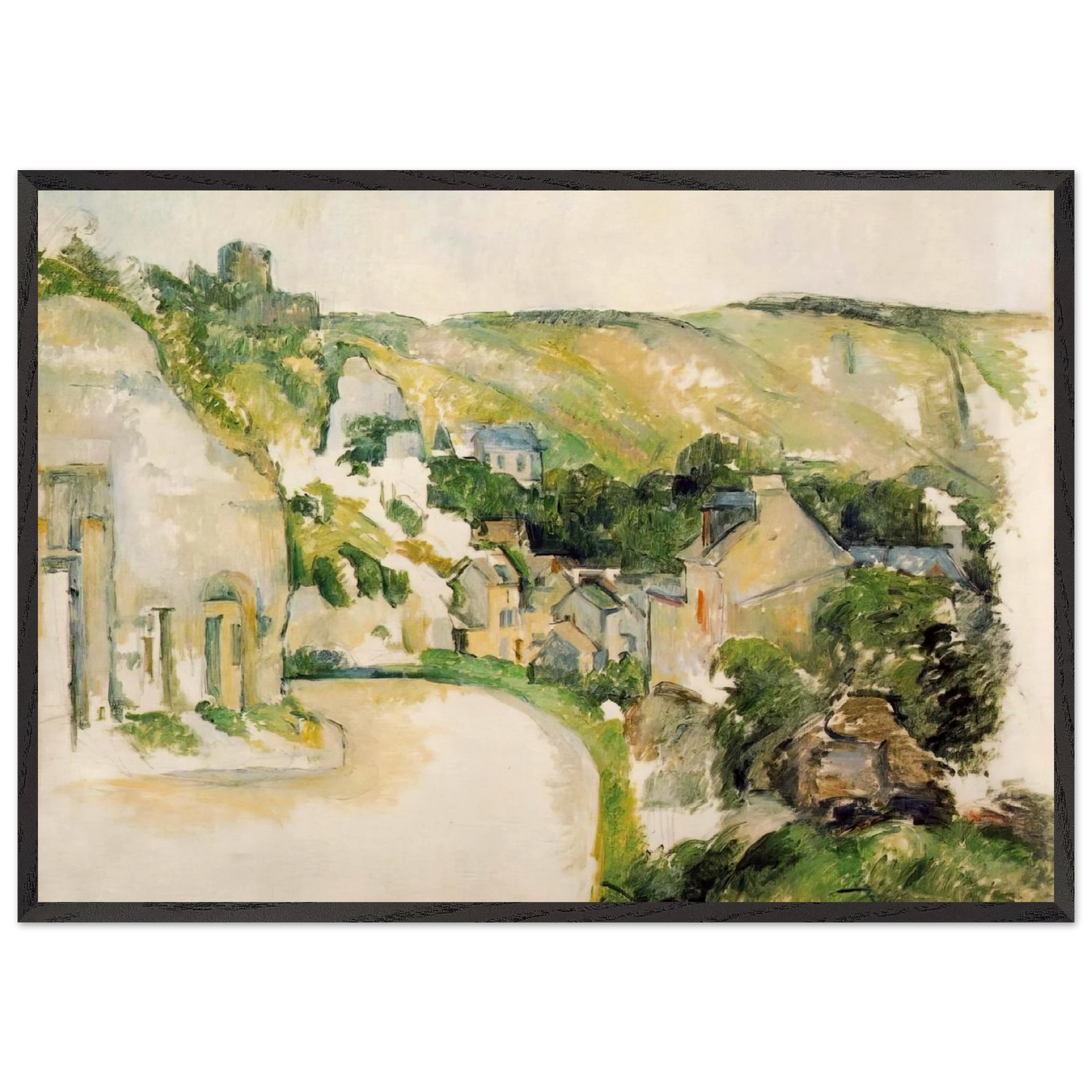
A Turn in the Road at La Roche-Guyon - Paul Cezanne 70x100 cm / 28x40 inches Framed Art Print – Black Wooden Frame
A Turn in the Road at La Roche-Guyon - Paul Cezanne 70x100 cm / 28x40 inches Framed Art Print – Black Wooden Frame
Couldn't load pickup availability
Elevate Your Collection with Paul Cézanne’s Post-Impressionist Masterpiece
Step into the architectural landscape of Paul Cézanne’s 'A Turn in the Road at La Roche-Guyon'. Painted circa 1885, this work captures a pivotal moment in art history where the fluid light of Impressionism began to solidify into the structural geometry of modernism. This museum-quality reproduction allows you to experience Cézanne's 'constructive stroke'—his unique method of using rhythmic, parallel brushwork to build form and depth.
Artistic Significance and Historical Context
During his stay at La Roche-Guyon, Cézanne moved away from the fleeting moments of his contemporaries, seeking to 'make of Impressionism something solid and durable, like the art of the museums.' In this piece, the winding road serves as a structural anchor, guiding the eye through a harmonious blend of earthy ochres and cool verdant tones. As a fine art print curated by RedKalion, every nuance of the original palette is preserved, reflecting the artist's obsession with the underlying permanence of nature.
Premium Archival Specifications
At RedKalion, we believe a masterpiece deserves an equally masterful presentation. This 70x100 cm (28x40 inches) framed art print is produced using industry-leading materials designed to last for generations:
- Archival Museum-Quality Paper: Printed on 250 gsm (110 lb) natural white, matte, and uncoated paper that ensures depth of color without glare.
- Solid Wood Framing: Housed in a premium black wooden frame crafted from responsibly sourced oak and ash. The frame features a contemporary 20mm (0.79") profile, providing a more substantial presence than standard thin frames.
- Shatterproof Protection: Each print is shielded by high-clarity, shatterproof plexiglass, ensuring safety and durability without compromising the visual experience.
- Sustainable Excellence: We utilize FSC-certified materials, aligning historical beauty with environmental responsibility.
Arriving ready-to-hang with an included mounting kit, this archival piece transforms any space into a private gallery, offering a sophisticated window into the genius of the 'Father of Modern Art.'
Discover Unlimited Art Possibilities
At RedKalion, you can find virtually any artwork from any artist, available in a wide range of sizes to perfectly match your space.
If you didn’t find what you’re looking for, contact us at support@redkalion.com . We will source any artwork and produce it in any size and format you need, including art prints, posters, canvas, framed pieces, framed canvas, and more.
For dedicated art enthusiasts, we also offer handcrafted replicas of any artwork, carefully painted by highly skilled artists using traditional techniques.
For custom requests, contact us at support@redkalion.com .
What are the specific frame measurements and materials?
Our frames are crafted from solid black oak or ash wood, measuring 20mm (0.79") in both thickness and width. This provides a robust, premium feel compared to the common 14mm frames found elsewhere.
What makes the paper quality 'museum-grade'?
We use 250 gsm (110 lb) archival-grade paper with a matte finish. At 0.29 mm thickness, this natural white, uncoated paper prevents yellowing and ensures long-term structural integrity for your Cézanne print.
Is the artwork ready to hang upon delivery?
Yes, every framed print arrives ready-to-hang. We include a dedicated hanging kit with each order, allowing you to display your new Paul Cézanne masterpiece immediately upon arrival.
How is the print protected during shipping?
Each frame is fitted with shatterproof plexiglass for safety and wrapped in protective packaging. This ensures your 70x100 cm art print arrives in pristine, museum-ready condition.
How long will the colors of this print last?
By utilizing archival-quality paper and museum-grade inks, our prints are designed to resist fading for decades. When kept out of direct intense sunlight, the colors will remain vibrant for generations.
What is the significance of 'A Turn in the Road at La Roche-Guyon'?
This 1885 painting marks Cézanne's transition toward Post-Impressionism. It showcases his focus on the geometric simplification of nature, which famously paved the way for Cubism and modern abstract art.
Why did Cézanne use the 'constructive stroke' in this piece?
Cézanne used parallel, diagonal brushstrokes to create a sense of volume and mass. This technique allows the landscape to feel both vibrant and architecturally solid, a hallmark of his revolutionary style.